Nick Russell – författare
Visar alla böcker från författaren Nick Russell. Handla med fri frakt och snabb leverans.
5 produkter
5 produkter
215 kr
Skickas inom 3-6 vardagar
168 kr
Tillfälligt slut
Glorious Victorian Homes
150 Years of Architectural History in British Columbia's Capital
Häftad, Engelska, 2016
206 kr
Tillfälligt slut
In the process of modernization, many North American cities have razed their residential neighborhoods to make way for apartment buildings, condominiums, and cookie-cutter cul de sacs. Such is not the case in Victoria, BC, an idyllic city with more than 150 years of architectural history lining its picturesque streets. Take a walk through the city's charming neighborhoods and discover a continuum of styles, from pioneer log, through Gothic, Edwardian, Arts and Crafts, and Moderne styles, right up to glass and steel. Learn from the sturdy brick, dormer windows, and sweeping verandas the evolution of Victoria's architecture, culture and economy. With more than 100 photographs of Victoria's most glorious homes, this collection provides basic information for each phase of the city's architectural timeline, and delves into the history of the homes, the architects who built them, and the details that make them uniquely Victorian. And if the photographs aren't enough, author Nick Russell provides street addresses for every residence, so readers can see these gorgeous relics of decades past from their own point of view.
1 207 kr
Skickas inom 10-15 vardagar
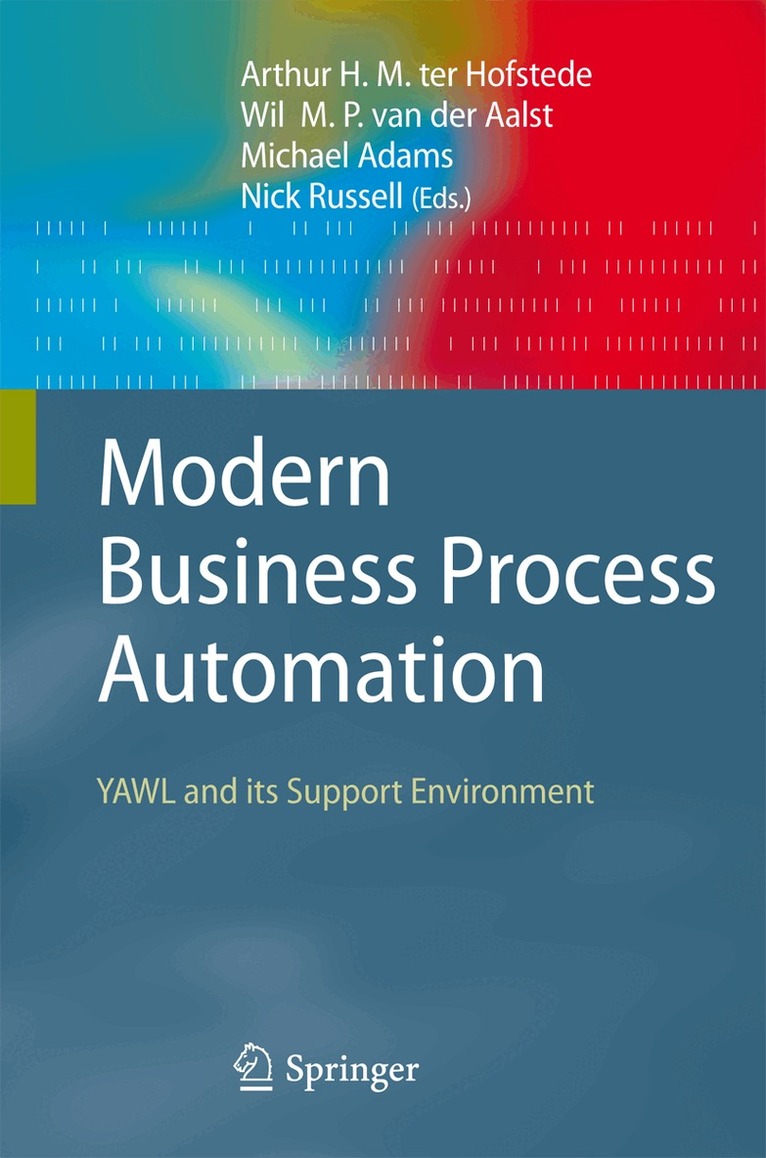
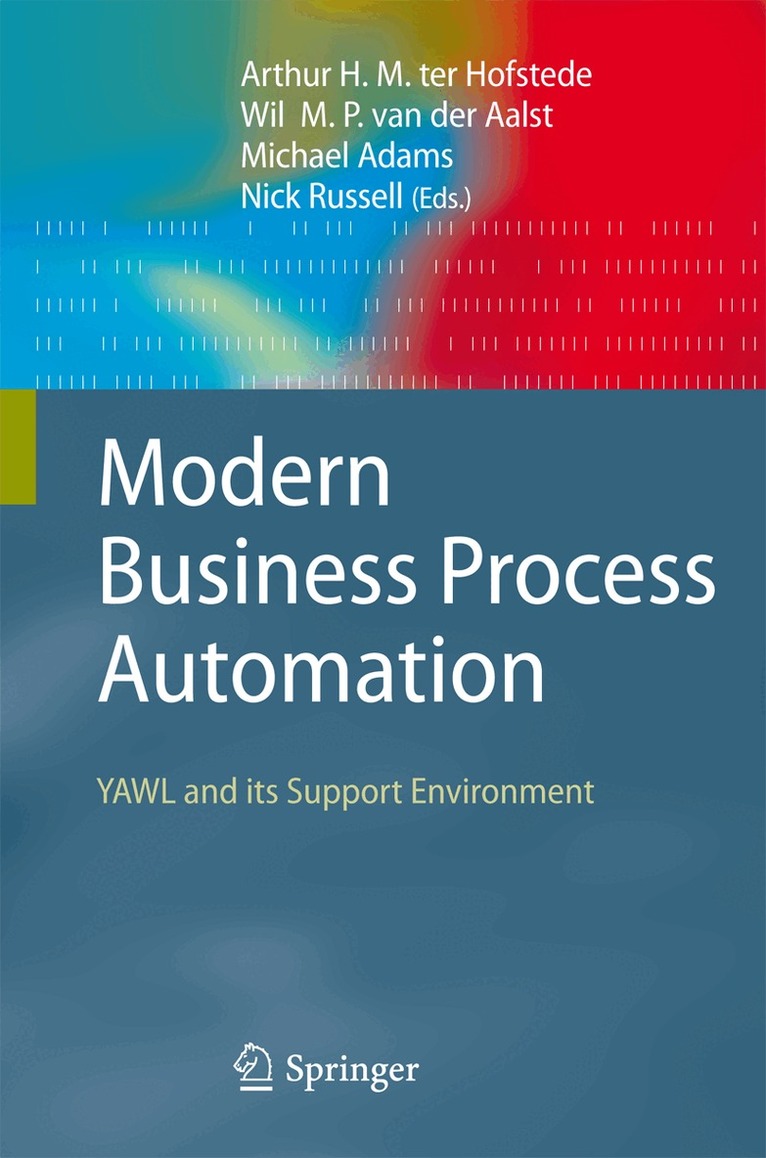
The ?eld of Business Process Management (BPM) is marred by a seemingly e- less sequence of (proposed) industry standards. Contrary to other ?elds (e.g., civil or electronic engineering), these standards are not the result of a widely supported consolidationofwell-understoodandwell-establishedconceptsandpractices.Inthe BPM domain, it is frequently the case that BPM vendors opportunistically become involved in the creation of proposed standards to exert or maintain their in?uence and interests in the ?eld. Despite the initial fervor associated with such standardi- tion activities, it is no less frequent that vendors either choose to drop their support for standards that they earlier championed on an opportunistic basis or elect only to partially support them in their commercial offerings. Moreover, the results of the standardization processes themselves are a concern. BPM standards tend to deal with complex concepts, yet they are never properly de?ned and all-too-often not informed by established research. The result is a plethoraof languagesand tools, with no consensuson conceptsand their implem- tation. They also fail to provide clear direction in the way in which BPM standards should evolve. One can also observe a dichotomy between the “business” side of BPM and its “technical” side. While it is clear that the application of BPM will fail if not placed in a proper business context, it is equally clear that its application will go nowhere if it remains merely a motivational exercise with schemas of business processes hanging on the wall gathering dust.
880 kr
Skickas inom 10-15 vardagar
The ?eld of Business Process Management (BPM) is marred by a seemingly e- less sequence of (proposed) industry standards. Contrary to other ?elds (e.g., civil or electronic engineering), these standards are not the result of a widely supported consolidationofwell-understoodandwell-establishedconceptsandpractices.Inthe BPM domain, it is frequently the case that BPM vendors opportunistically become involved in the creation of proposed standards to exert or maintain their in?uence and interests in the ?eld. Despite the initial fervor associated with such standardi- tion activities, it is no less frequent that vendors either choose to drop their support for standards that they earlier championed on an opportunistic basis or elect only to partially support them in their commercial offerings. Moreover, the results of the standardization processes themselves are a concern. BPM standards tend to deal with complex concepts, yet they are never properly de?ned and all-too-often not informed by established research. The result is a plethoraof languagesand tools, with no consensuson conceptsand their implem- tation. They also fail to provide clear direction in the way in which BPM standards should evolve. One can also observe a dichotomy between the “business” side of BPM and its “technical” side. While it is clear that the application of BPM will fail if not placed in a proper business context, it is equally clear that its application will go nowhere if it remains merely a motivational exercise with schemas of business processes hanging on the wall gathering dust.