Nick Srnicek – författare
Visar alla böcker från författaren Nick Srnicek. Handla med fri frakt och snabb leverans.
20 produkter
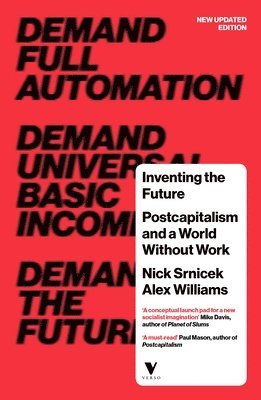
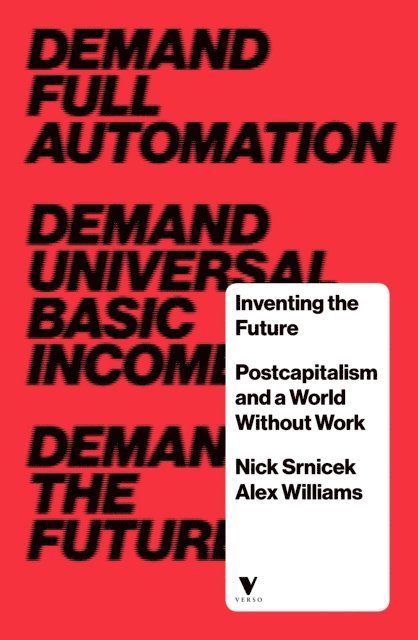
Inventing the Future
Postcapitalism and a World Without Work
Av Nick Srnicek, Alex Williams
Häftad, 2016
135 kr
Lägg i varukorg
Neoliberalism isn't working. Austerity is forcing millions into poverty and many more into precarious work, while the left remains trapped in stagnant political practices that offer no respite.Inventing the Future is a bold new manifesto for life after capitalism. Against the confused understanding …
Silicon Empires
The Fight for the Future of AI
Av Nick Srnicek
Häftad, 2025
168 kr
Lägg i varukorg
Since the emergence of ChatGPT, generative AI has been heralded as a technology poised to revolutionize our world. But beyond the hype and hyperbole, who truly wields power over this transformative technology?In Silicon Empires, Nick Srnicek explores the geopolitical economy of artificial …
Platform Capitalism
Av Nick Srnicek
Häftad, 2016
147 kr
Lägg i varukorg
What unites Google and Facebook, Apple and Microsoft, Siemens and GE, Uber and Airbnb? Across a wide range of sectors, these firms are transforming themselves into platforms: businesses that provide the hardware and software foundation for others to operate on. This transformation signals a major …
Platform Capitalism
Av Nick Srnicek
Inbunden, 2016
636 kr
Lägg i varukorg
What unites Google and Facebook, Apple and Microsoft, Siemens and GE, Uber and Airbnb? Across a wide range of sectors, these firms are transforming themselves into platforms: businesses that provide the hardware and software foundation for others to operate on. This transformation signals a major …
Platform Capitalism
Av Nick Srnicek
E-bok, 2016
163 kr
Lägg i varukorg
What unites Google and Facebook, Apple and Microsoft, Siemens and GE, Uber and Airbnb? Across a wide range of sectors, these firms are transforming themselves into platforms: businesses that provide the hardware and software foundation for others to operate on. This transformation signals a major …
Silicon Empires
The Fight for the Future of AI
Av Nick Srnicek
Inbunden, 2025
483 kr
Lägg i varukorg
Since the emergence of ChatGPT, generative AI has been heralded as a technology poised to revolutionize our world. But beyond the hype and hyperbole, who truly wields power over this transformative technology?In Silicon Empires, Nick Srnicek explores the geopolitical economy of artificial …
Silicon Empires
The Fight for the Future of AI
Av Nick Srnicek
E-bok, 2025
245 kr
Lägg i varukorg
Since the emergence of ChatGPT, generative AI has been heralded as a technology poised to revolutionize our world. But beyond the hype and hyperbole, who truly wields power over this transformative technology?In Silicon Empires, Nick Srnicek explores the geopolitical economy of artificial …
Inventing the Future
Postcapitalism and a World Without Work
Av Nick Srnicek, Alex Williams
E-bok, 2015
130 kr
Lägg i varukorg
Neoliberalism isn''t working. Austerity is forcing millions into poverty and many more into precarious work, while the left remains trapped in stagnant political practices that offer no respite. Inventing the Future is a bold new manifesto for life after capitalism. Against the confused …
After Work
A History of the Home and the Fight for Free Time
Inbunden, 2023
208 kr
Lägg i varukorg
Does it ever feel like you have no free time? You come home after work and instead of finding a space of rest and relaxation, you're confronted by a pile of new tasks to complete - cooking, cleaning, looking after the kids, and so on.In this ground-breaking book, Helen Hester and Nick Srnicek lay …
After Work
A History of the Home and the Fight for Free Time
Häftad, 2027
258 kr
Kommande
Does it ever feel like you have no free time? You come home after work and instead of finding a space of rest and relaxation, you're confronted by a pile of new tasks to complete - cooking, cleaning, looking after the kids, and so on.In this ground-breaking book, Helen Hester and Nick Srnicek lay …
After Work
A History of the Home and the Fight for Free Time
E-bok, 2023
133 kr
Lägg i varukorg
Does it ever feel like you have no free time? You come home after work and instead of finding a space of rest and relaxation, you''re confronted by a pile of new tasks to complete - cooking, cleaning, looking after the kids, and so on. In this ground-breaking book, Helen Hester and Nick Srnicek lay …
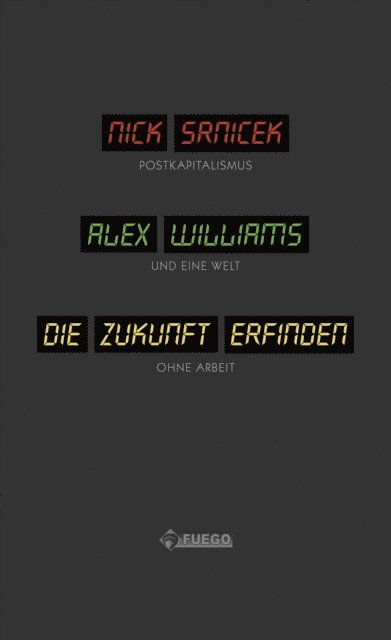
Die Zukunft erfinden
Postkapitalismus und eine Welt ohne Arbeit
Av Alex Williams, Nick Srnicek
E-bok, 2016
191 kr
Lägg i varukorg
"Die Zukunft erfinden" ist ein Manifest für das Leben nach dem Kapitalismus. Gegen die Konfusion, die politisch links wie rechts herrscht, wenn es darum geht, unsere High-Tech-Welt zu verstehen, stellt sich das Buch der Aufgabe, das emanzipatorische und zukunftsorientierte Potential der heutigen …
Plattform-Kapitalismus
Av Nick Srnicek
E-bok, 2018
91 kr
Lägg i varukorg
Was vereint Google, Facebook, Apple, Microsoft, Monsanto, Uber und Airbnb? Sie alle sind Unternehmen, die Hardware und Software für andere bereitstellen, mit dem Ziel, möglichst geschlossene sozio-ökonomische Tech-Systeme zu schaffen. Google kontrolliert die Recherche, Facebook regiert Social Media …
Plattform-Kapitalismus
Av Nick Srnicek
E-bok, 2018
91 kr
Lägg i varukorg
Was vereint Google, Facebook, Apple, Microsoft, Monsanto, Uber und Airbnb? Sie alle sind Unternehmen, die Hardware und Software für andere bereitstellen, mit dem Ziel, möglichst geschlossene sozio-ökonomische Tech-Systeme zu schaffen. Google kontrolliert die Recherche, Facebook regiert Social Media …
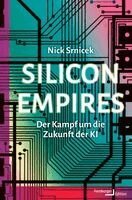
Silicon Empires
Der Kampf um die Zukunft der KI
Av Nick Srnicek
E-bok, 2026
255 kr
Lägg i varukorg
Kunstliche Intelligenz soll unsere Welt revolutionieren. Doch wer hat die Macht uber diese transformative Technologie? In Silicon Empires untersucht Nick Srnicek die geopolitische Okonomie der kunstlichen Intelligenz. Er zeigt, wie machtige Unternehmen und Staaten darum kampfen, sie zu …
Silicon Empires
Der Kampf um die Zukunft der KI
Av Nick Srnicek
E-bok, 2026
255 kr
Lägg i varukorg
Kunstliche Intelligenz soll unsere Welt revolutionieren. Doch wer hat die Macht uber diese transformative Technologie? In Silicon Empires untersucht Nick Srnicek die geopolitische Okonomie der kunstlichen Intelligenz. Er zeigt, wie machtige Unternehmen und Staaten darum kampfen, sie zu …
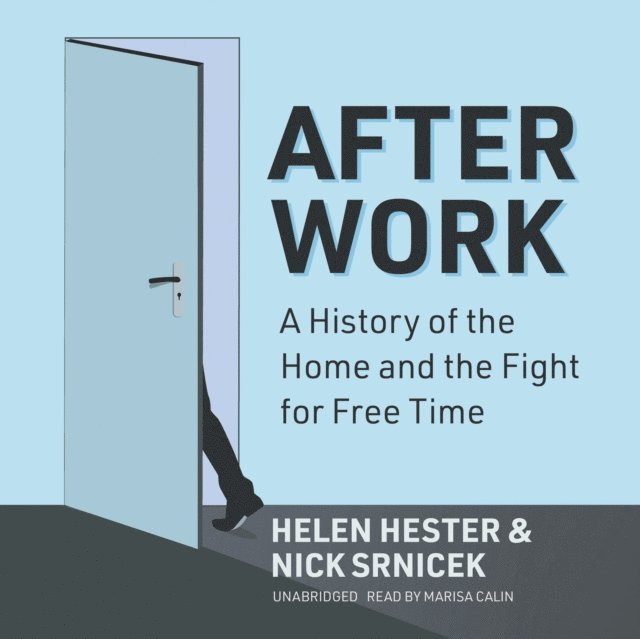
After Work
A History of the Home and the Fight for Free Time
Ljudbok, 2023
745 kr
Lägg i varukorg
A vital and timely proposal for a feminist post-work politics Would you let a robot clean your house? When we think about work, we still tend to think about workplaces—if we think about reducing work, we think about reducing working hours and spending more time at home. But the home has never been …
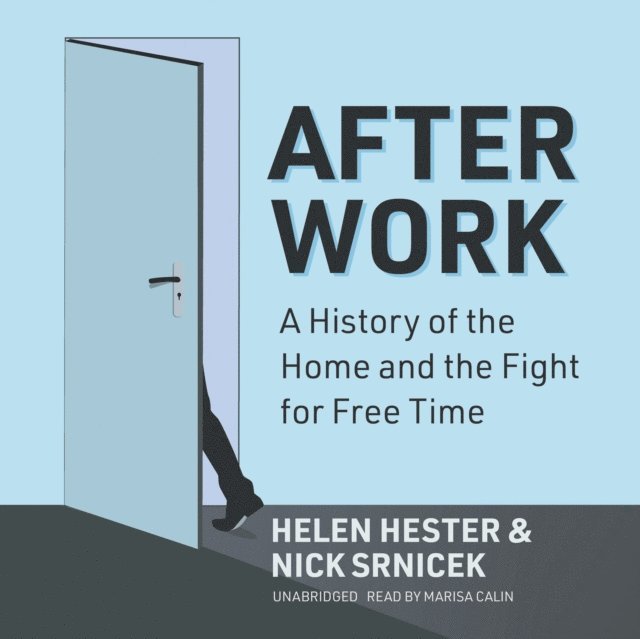
After Work
A History of the Home and the Fight for Free Time
Ljudbok, 2023
246 kr
Lägg i varukorg
A vital and timely proposal for a feminist post-work politics Would you let a robot clean your house? When we think about work, we still tend to think about workplaces—if we think about reducing work, we think about reducing working hours and spending more time at home. But the home has never been …