Nick van der Bijl - Böcker
Visar alla böcker från författaren Nick van der Bijl. Handla med fri frakt och snabb leverans.
7 produkter
7 produkter
183 kr
Skickas
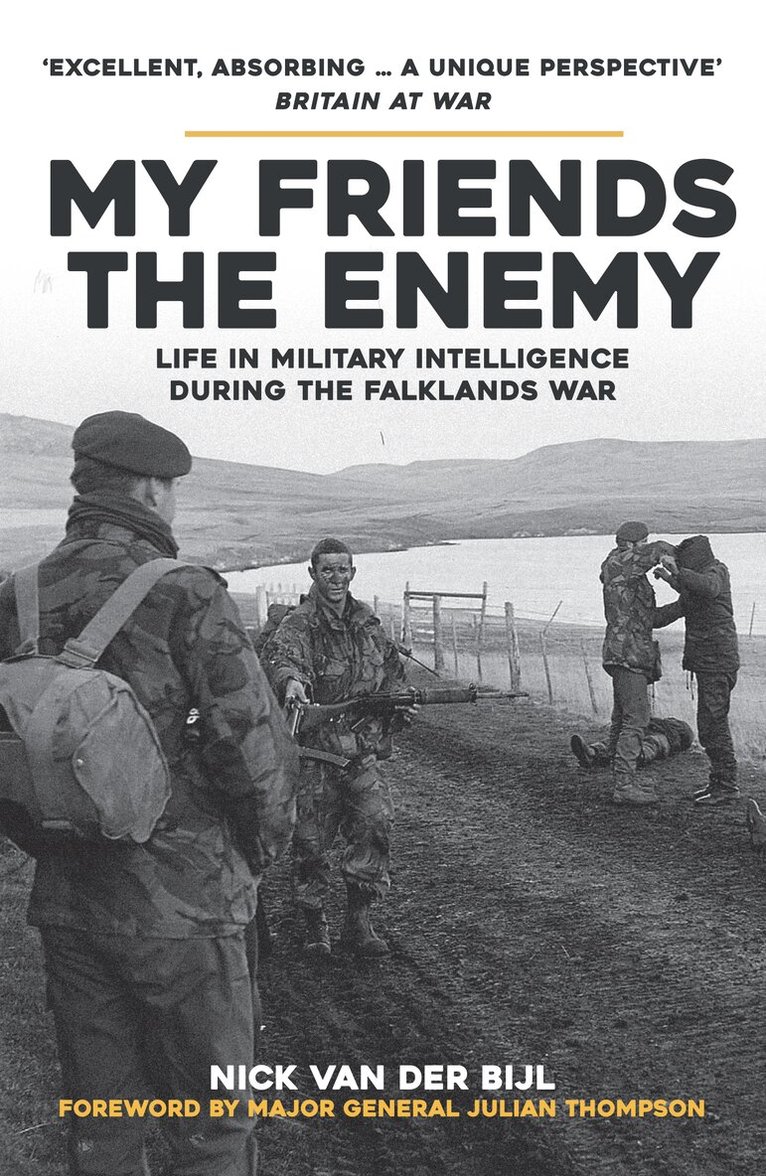
In early April 1982, the UK despatched a Task Force to the South Atlantic to recover the Falkland Islands and South Georgia from occupation by Argentina. A distance of over 8,000 miles, it was the second longest amphibious operation from home base to objective in modern military history. On 21 May, 3 Commando landed at San Carlos on East Falklands and a week later defeated the Argentinian garrison at Goose Green. Within the week 5 Infantry Brigade landed and by the middle of June, both brigades liberated Port Stanley against a numerically superior force.The images here, almost all of which are previously unpublished, illustrate the Argentinian occupation of the Falklands and give an overview of the conditions in which both sides fought the land war. The Argentines were largely based in Port Stanley and Goose Green on East Falkland and Port Howard and Fox Bay on West Falklands. Van der Bijl also looks at the repatriation of prisoners and, finally, the Islands today.Nick van der Bijl is the author of My Friends, The Enemy: Life in Military Intelligence During the Falkands War, and was part of the British intelligence team during the conflict. In possession of unseen Argentinian photographs, he is in a unique position to offer an important new perspective on the conflict.
163 kr
Tillfälligt slut
In December 1962, nationalists in Brunei, the hugely wealthy small kingdom on the North Coast of Borneo, formed the Army of North Kalimantan (TNKU) and, demanding greater democracy, engineered a rebellion against the Sultan and seized a large number of hostages. Perceived to be an attempt by communists to destabilise the Sultanate and seize power, within twelve hours of its outbreak, British forces were despatched by ship and aircraft from Singapore to restore order, the first unit to arrive being 1/2nd Gurkhas, who entered the capital. Within the week, the 1 Queens Own Highlanders had recaptured the strategically important oilfields and occupied Seria, 42 Commando, Royal Marines attacked Limbang and 1 Green Jackets landed in west Brunei. The next six months were spent rounding up TNKU and, since there were major concerns that Indonesia could be behind the Revolt, the charismatic Major General Walter Walker, then commanding 17th Gurkha Division, was sent to Brunei to command operations. By mid-May 1963, the surviving TNKU had been captured. While rapidly suppressed, the Revolt was the catalyst for the three year Confrontation with Indonesia 1963-66.
266 kr
Skickas
In The Mau Mau Rebellion, the author describes the background to and the course of a short but brutal late colonial campaign in Kenya. The Mau Mau, a violent and secretive Kikuyu society, aimed to restore the proud tribe's pre-colonial superiority and rule. The 1940s saw initial targeting of Africans working for the colonial government and by 1952 the situation had deteriorated so badly that a State of Emergency was declared. The plan for mass arrests leaked and many leaders and supporters escaped to the bush where the gangs formed a military structure. Brutal attacks on both whites and loyal natives caused morale problems and local police and military were overwhelmed. Reinforcements were called in, and harsh measures including mass deportation, protected camps, fines, confiscation of property and extreme intelligence gathering employed were employed. War crimes were committed by both sides. As this well researched book demonstrates the campaign was ultimately successful militarily, politically the dye was cast and paradoxically colonial rule gave way to independence in 1956.
266 kr
Tillfälligt slut
The book examines the military history of Aden Colony from 1839 including the fractious turn of the century Border Commissions with Turkey and the defeat of British forces near Aden by the Turks in 1915. Great Britain successfully defended the base for the rest of The Great War and throughout the Second World War. The period after 1945 was one of rising tension as Great Britain drew down its Imperial commitments from the Near and Middle East. Britain's intention to retain a military base in Aden was rejected by Egypt, who, having embarrassed Great Britain during the 1956 Suez Crisis, set about supporting Yemeni aspirations with subversion, in concert with the Soviet Union and China. This led to Aden coming under increasing pressure from Yemeni nationalism during the late 1950 and early 1960s. When an attempt was made to murder the British High Commissioner, a State Emergency was declared. Initially, while operations were confined to the mountainous Radfan region near the border, the internal security of Aden became increasingly fragile as nationalists escalated attacks on the Security Forces and Service dependants with grenade, shootings and bomb attacks in the narrow streets.When the British declared that they would leave in 1967, the British forces were caught up in interfactional fighting with 20 June 1967 proving a black day with twenty British soldiers murdered. This led to the famous occupation of Crater district by Lt Col 'Mad Mitch' Mitchell and his Argyll and Sutherland Highlanders. By November that year, after conducting a masterly withdrawal in contact, the British left Aden for good.
175 kr
Skickas inom 10-15 vardagar
The largest, but least-known of all Britain's elite wartime Commando raiding units, No.10 (Inter-Allied) was recruited from volunteers from many nations who had fled to Britain after their own countries fell to the Nazis.Alongside Poles, Frenchmen, Dutchmen, Belgians and Norwegians, the unit included a small number of remarkably brave German and Austrian refugees. These commandos took part in daring raids, intelligence missions and conventional infantry battles, earning many decorations for gallantry and leadership.Detailing the wartime exploits of these courageous fighters, some of whom went on to form the nucleus of their liberated nations' new special forces, this book gives an insight into a fascinating unit that is often overlooked.
153 kr
Skickas inom 10-15 vardagar
Contrary to some opinions expressed at the time, Argentine troops deployed to the Falklands, and which engaged the British troops sent to recapture the islands, were not largely 16-year-old conscripts but experienced, well-trained troops. Certain "elite" units were also deployed to the islands by the Argentinians including 601 and 602 Marine Commando Companies and 5th Marine Infantry Battalion. Although plagued by bad relations between officers and men, the Argentine force fought determindley during many of the engagements of the Falklands War and battles such as Goose Green and the assault on Mount Tumbledown were bloody, hard-fought affairs. This book looks at the arms, equipment and organization of the Argentine troops who captured and attempted, unsuccessfully, to hold the Falkland Islands.
175 kr
Skickas inom 10-15 vardagar
The origin of the Royal Marines dates back to the formation of the Admiral's Regiment in the 17th century. Since then Marines have participated in more battles on land and sea than any other branch of the British Armed Forces. Their 'elite' status rests in the commandos the one formation that is trained to be delivered to battle by helicopter or landing craft from ships.This book examines the units, organization and operations of the Royal Marines, focusing on their activity in World War II's various theatres and their post-war operations in Northern Ireland, the Falklands and the Gulf.