
Nicola Stevens – författare
Visar alla böcker från författaren . Handla med fri frakt och snabb leverans.
2 produkter
2 produkter
E-bok
Engelska, 201176 kr
Läs direkt efter köp
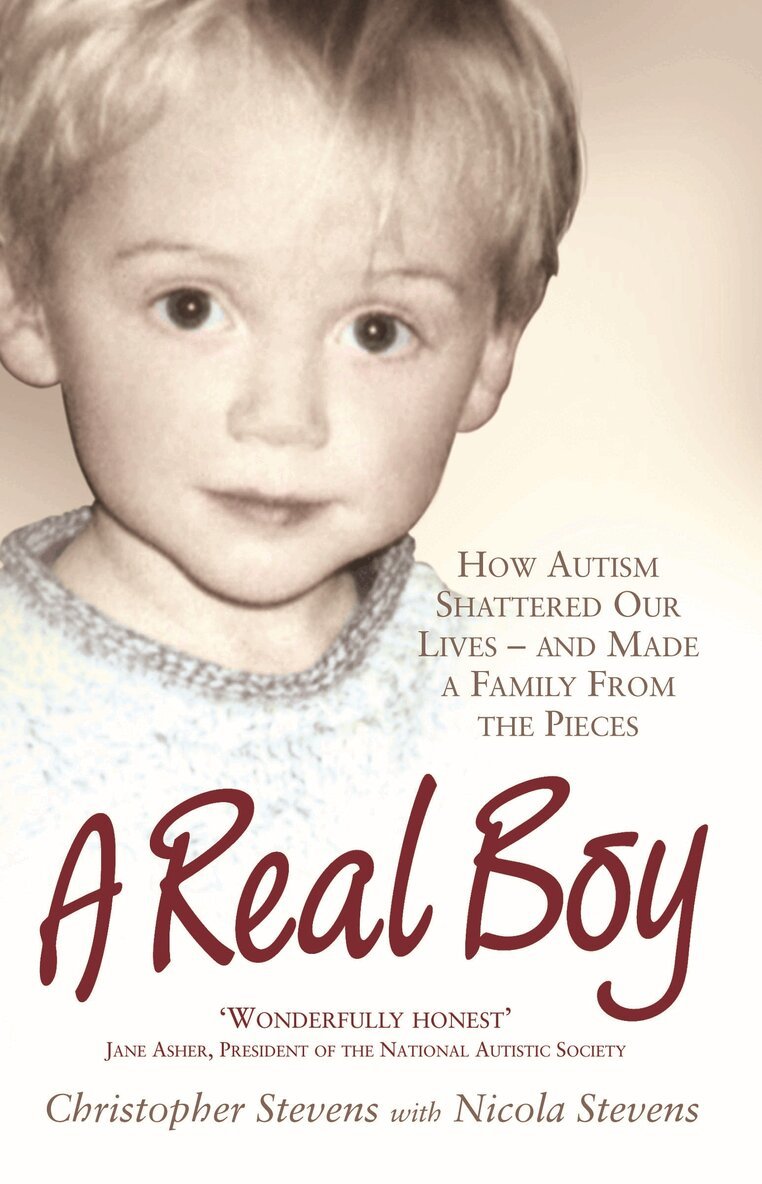
We feel like parents in a fairytale turned to stone by a curse and condemned to stand like statues with our hearts thudding in our chests as our son plays wild games, all alone in the palace. He sees us he knows us, he expects us always to be in our right places - but he has no idea that we are human too. David is eleven years old. He is happy, healthy and affectionate. He loves school, climbing trees and Disney songs. But he's also profoundly autistic.Imagine being, like David, unable to speak more than a few words and unable to express your most basic needs. He is oblivious to danger and blind to other people's emotions, including the pleas of his parents. He is unaware of the chaos that he creates and is completely unmoved by the heartbreak that he causes. This extraordinarily moving account describes the heartbreak, and the unexpected joy, of autism. With raw honesty, Christopher and Nicola Stevens lay bare their experiences, which are by turns harrowing, hilarious, and inspirational.Autism is often depicted as a lonely affliction but, as David's story unfolds, his parents reveal how the condition has given them an unbreakable togetherness; an insight into prejudice, as well as kindness; an understanding of life without words or language; and an intense appreciation of their children. Caring for David is an all-consuming experience...and through it they have learned, most of all, the meaning of unconditional love.
E-bok
PDF, Engelska, 2023145 kr
Läs direkt efter köp
Academic Paper from the year 2020 in the subject Psychology - Work, Business, Organisation, grade: 1,0, MSB Medical School Berlin - Hochschule fur Gesundheit und Medizin, language: English, abstract: Toxic leadership is a serious issue that can certainly have many different facets and causes. For today management is still an area that is fairly dominated by male employees. This paper aims to take a closer look at the socio-cultural causes of toxic leadership that could lie in the role of the traditional man. I ask myself the question: How does our cultural understanding of how male leadership should look influence how leaders deal with subordinates could find expression in toxic leadership? This paper introduces the reader to a recently proposed organizational culture called masculinity contest culture (MCC), where negatively expressed masculinity norms serve as a fertile breeding ground for toxic leadership. Furthermore, I introduce another study that connects toxic leadership with the Social dominance orientation (SDO) and status enhancement motive, which could be closely related to the MCC. The last study deals with gender differences aligning with characteristics of follower groups from Padilla et.al. (2007) toxic triangle and gender differences in the perception of toxic leadership. They found that women view toxic leadership more negatively, as well as detect significantly more subtle forms of toxic leadership than men.