
Nicole MAller – författare
1 143 kr
Läs direkt efter köp
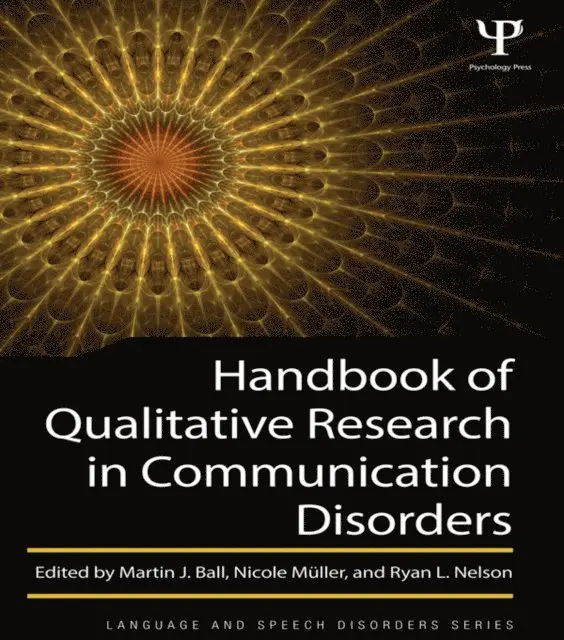
This volume provides a comprehensive and in-depth handbook of qualitative research in the field of communication disorders. It introduces and illustrates the wide range of qualitative paradigms that have been used in recent years to investigate various aspects of communication disorders.
The first part of the Handbook introduces in some detail the concept of qualitative research and its application to communication disorders, and describes the main qualitative research approaches. The contributions are forward-looking rather than merely giving an overview of their topic. The second part illustrates these approaches through a series of case studies of different communication disorders using qualitative methods of research.
This Handbook is an essential resource for senior undergraduate and graduate students, researchers and practitioners, in communication disorders and related fields.
1 143 kr
Läs direkt efter köp
This volume provides a comprehensive and in-depth handbook of qualitative research in the field of communication disorders. It introduces and illustrates the wide range of qualitative paradigms that have been used in recent years to investigate various aspects of communication disorders.
The first part of the Handbook introduces in some detail the concept of qualitative research and its application to communication disorders, and describes the main qualitative research approaches. The contributions are forward-looking rather than merely giving an overview of their topic. The second part illustrates these approaches through a series of case studies of different communication disorders using qualitative methods of research.
This Handbook is an essential resource for senior undergraduate and graduate students, researchers and practitioners, in communication disorders and related fields.

866 kr
Läs direkt efter köp

866 kr
Läs direkt efter köp
1 111 kr
Läs direkt efter köp
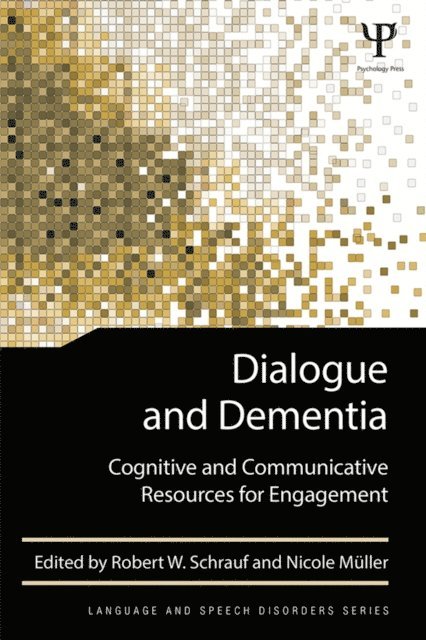
This volume takes the positive view that conversation between persons with dementia and their interlocutors is a privileged site for ongoing cognitive engagement. The book aims to identify and describe specific linguistic devices or strategies at the level of turn-by-turn talk that promote and extend conversation, and to explore real-world engagements that reflect these strategies.
Final reflections tie these linguistic strategies and practices to wider issues of the "self" and "agency" in persons with dementia. Thematically, the volume fosters an integrated perspective on communication and cognition in terms of which communicative resources are recognized as cognitive resources, and communicative interaction is treated as reflecting cognitive engagement. This reflects perspectives in cognitive anthropology and cognitive science that regard human cognitive activity as distributed and culturally rooted.
This volume is intended for academic researchers and advanced students in applied linguistics, linguistic and medical anthropology, nursing, and social gerontology; and practice professionals in speech-language pathology and geropsychology.
1 111 kr
Läs direkt efter köp
This volume takes the positive view that conversation between persons with dementia and their interlocutors is a privileged site for ongoing cognitive engagement. The book aims to identify and describe specific linguistic devices or strategies at the level of turn-by-turn talk that promote and extend conversation, and to explore real-world engagements that reflect these strategies.
Final reflections tie these linguistic strategies and practices to wider issues of the "self" and "agency" in persons with dementia. Thematically, the volume fosters an integrated perspective on communication and cognition in terms of which communicative resources are recognized as cognitive resources, and communicative interaction is treated as reflecting cognitive engagement. This reflects perspectives in cognitive anthropology and cognitive science that regard human cognitive activity as distributed and culturally rooted.
This volume is intended for academic researchers and advanced students in applied linguistics, linguistic and medical anthropology, nursing, and social gerontology; and practice professionals in speech-language pathology and geropsychology.