Nigel E. Stork - Böcker
Visar alla böcker från författaren Nigel E. Stork. Handla med fri frakt och snabb leverans.
2 produkter
2 produkter
2 967 kr
Skickas inom 10-15 vardagar
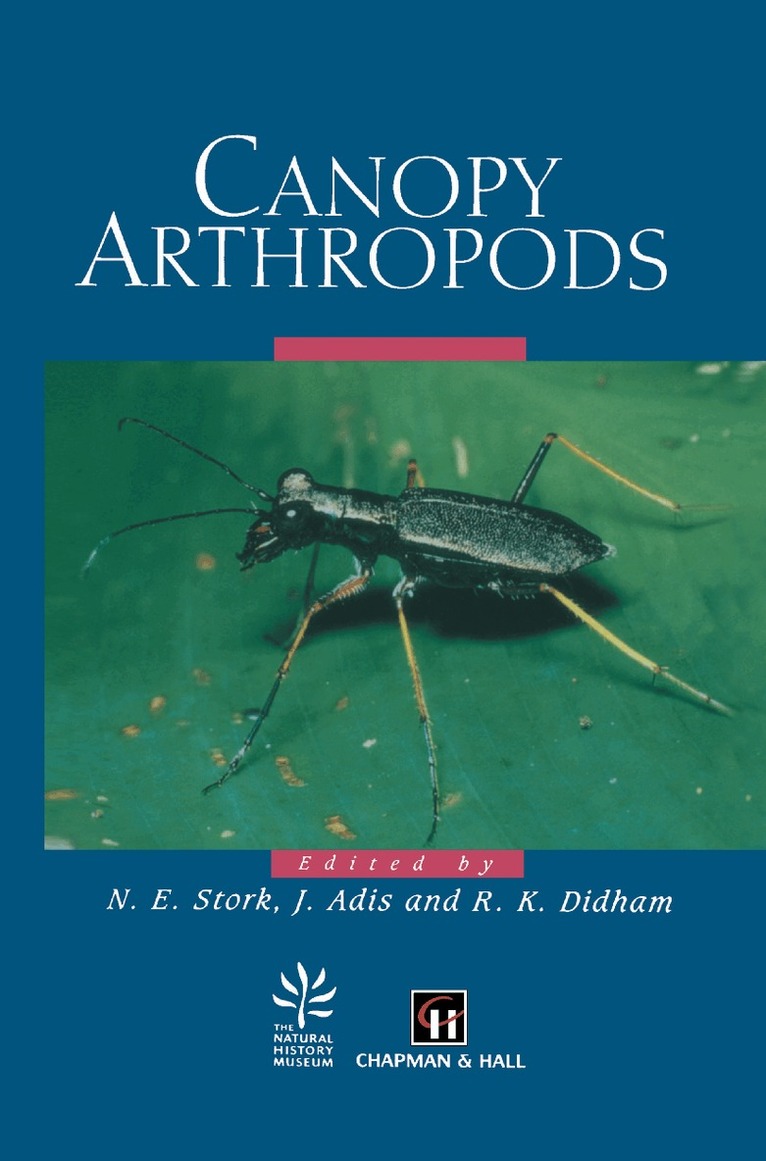
There has been a revolution in the study and understanding of the diversity and structure of arthropod communities in the forest canopy. This has been enhanced by the development of the new techniques to access the canopy and to sample arthropods. This volume brings together a range of the most recent studies on canopy arthropods. The book is arranged in five parts. The first part has two introductory chapters reviewing the principal methods used for sampling arthropods from trees, followed by chapters examining the effectiveness of the insecticide fogging method, including length of "drop time", concentration of insecticide and faunal recovery. The second part has chapters reviewing aspects of beetle community structure and species richness at different sites around the world, including North and South America, tropical Asia, New Caledonia, Australia, and, for the first time, Africa. Part three focuses on the diversity and community structure of other arthropod groups, such as ants, acridid Orthoptera and Diptera.Part four has chapters which examine aspects of the biology of canopy arthropods, including arboreal dung beetle behaviour, bioacoustic monitoring of canopy insect communities, and the spatiotemporal habitat utilization of arboreal Collembola. Finally, part five addresses the impact of disturbance and forest fragmentation on canopy arthropods. In a concluding chapter, we discuss the role that future canopy arthropod studies can play in providing useful information to guide environmental and conservation management decisions.
2 121 kr
Skickas inom 10-15 vardagar
This book covers the full breadth of forest entomology. It combines the work of forest entomologists working on the impact and management of forest pests with those involved in diversity assessment and conservation of insects in forests. Forests and Insects demonstrates that both these disciplines demand an understanding of population and community biology. The book covers such topics as colonization of trees by insects, population dynamics of forest insects, insect natural enemies, the effects of climate change and pollution on forest pests, spatial variation in the abundance of insects,the mineralization of carbon by termites, the impact of herbivorous insects, and the conservation of forest insect diversity, including the effects of forest fragmentation and deforestation. This Royal Entomological Society Symposium volume will be of great interest to all agricultural and forest entomologists, population and community biologists, pest management specialists and anyone concerned with the conservation of forest biodiversity.