
Nikhil Govind – författare
Visar alla böcker från författaren . Handla med fri frakt och snabb leverans.
13 produkter
13 produkter
Inbunden, Engelska, 2019
580 kr
Skickas inom 5-8 vardagar
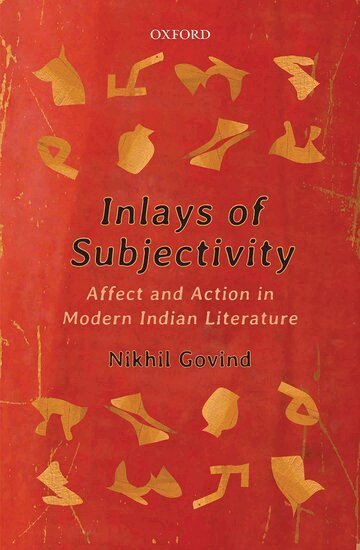
This book discusses the question of subjectivity in modern Indian literature using some of the most influential literary texts of the last hundred years. Scholarship in Indian literature tends to be divided along the lines of region, language, historical period, class, caste and so on. However, this book, by foregrounding a concept---subjectivity---allows the concept to determine the architecture of the book. Thus there are chapters on the various modes of subjectivity---a sense of ethical subjectivity is often awakened by a fierce sense of injustice, and the first two chapters discuss this, in the context of a contemporary Malayalam novel by KR Meera, and Urmila Pawar's memoir about her Dalit identity. The next two chapters delve into the literary history of selfhood in India---canonical writers such as the Hindi novelist Agyeya, the Urdu novelist Ismat Chughtai, and the Bengali novelists Saratchandra Chatterjee and RabindranathTagore are discussed. The last chapter revisits these concerns through the many voices employed by the Hindi novelist Krishna Sobti, whose career straddles the second half of the twentieth century.
Inbunden, Engelska, 2014
2 774 kr
Skickas inom 10-15 vardagar
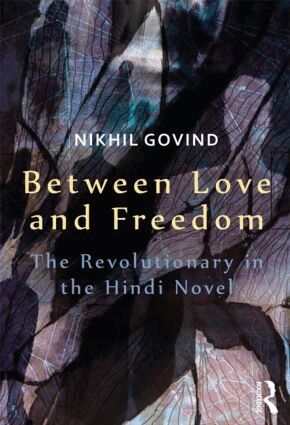
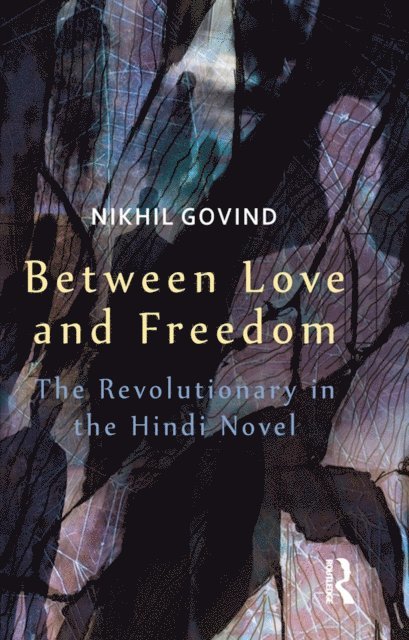
Between Love and Freedom interprets the figure of the revolutionary in the Hindi novel by establishing its lineage in representative Bengali novels, as well as in the contending moralities of Mahatma Gandhi and Bhagat Singh on the idea of violence. It reveals how conventional social realism and emergent modernist modes were brought together in the novelistic tradition by extending the political ideal of anti-colonial revolution into domains of sexual desire and subjective expression, especially in the works of Agyeya, Jainendra, and Yashpal. This work will deeply interest scholars and students of literature, modern Indian history, Hindi, and political science.
Häftad, Engelska, 2016
909 kr
Skickas inom 10-15 vardagar
Between Love and Freedom interprets the figure of the revolutionary in the Hindi novel by establishing its lineage in representative Bengali novels, as well as in the contending moralities of Mahatma Gandhi and Bhagat Singh on the idea of violence. It reveals how conventional social realism and emergent modernist modes were brought together in the novelistic tradition by extending the political ideal of anti-colonial revolution into domains of sexual desire and subjective expression, especially in the works of Agyeya, Jainendra, and Yashpal. This work will deeply interest scholars and students of literature, modern Indian history, Hindi, and political science.
E-bok
Engelska, 20141 083 kr
Läs direkt efter köp
Between Love and Freedom interprets the figure of the revolutionary in the Hindi novel by establishing its lineage in representative Bengali novels, as well as in the contending moralities of Mahatma Gandhi and Bhagat Singh on the idea of violence. It reveals how conventional social realism and emergent modernist modes were brought together in the novelistic tradition by extending the political ideal of anti-colonial revolution into domains of sexual desire and subjective expression, especially in the works of Agyeya, Jainendra, and Yashpal. This work will deeply interest scholars and students of literature, modern Indian history, Hindi, and political science.
E-bok
PDF, Engelska, 20141 080 kr
Läs direkt efter köp
Between Love and Freedom interprets the figure of the revolutionary in the Hindi novel by establishing its lineage in representative Bengali novels, as well as in the contending moralities of Mahatma Gandhi and Bhagat Singh on the idea of violence. It reveals how conventional social realism and emergent modernist modes were brought together in the novelistic tradition by extending the political ideal of anti-colonial revolution into domains of sexual desire and subjective expression, especially in the works of Agyeya, Jainendra, and Yashpal. This work will deeply interest scholars and students of literature, modern Indian history, Hindi, and political science.

E-bok
Engelska, 20251 405 kr
Läs direkt efter köp
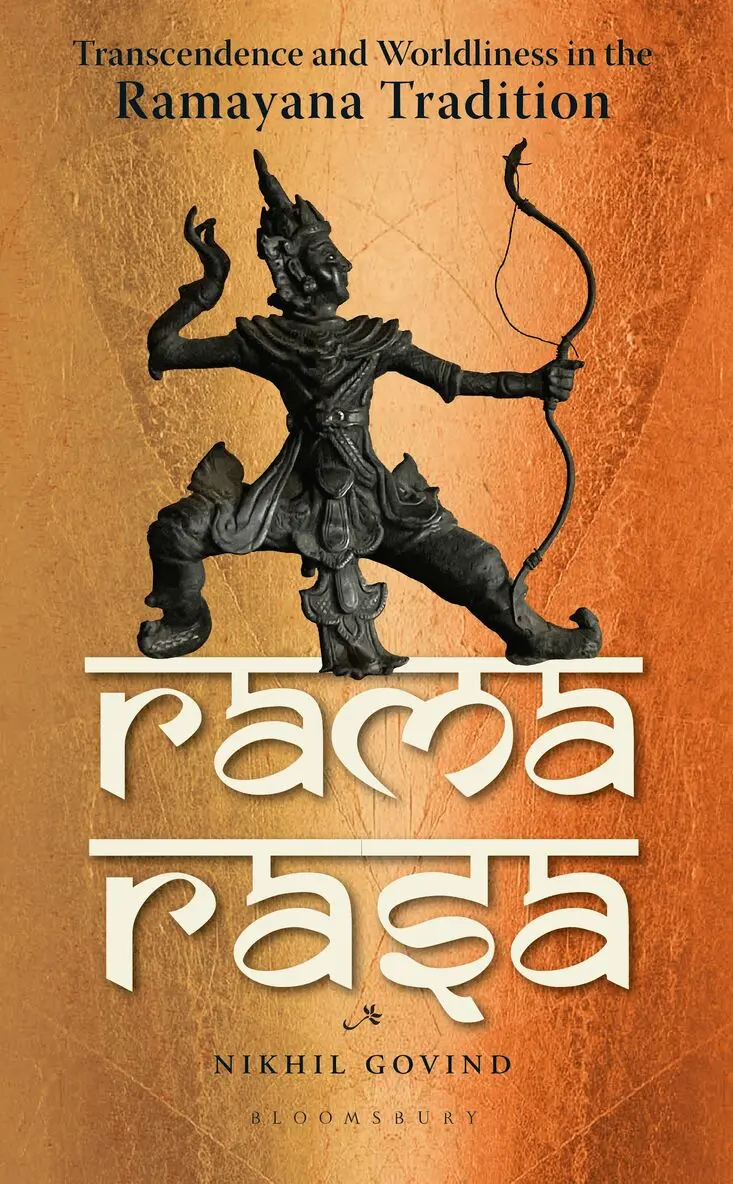
The Ramayana tradition, with its multifarious aesthetic and spiritual claims, reveals its depth and versatility in this study of three influential texts: Bhavabhuthi's Uttara Rama Carita, the anonymous Adhyatma Ramayana, and Tulsidas' Ramcaritmanas.The eighth-century Uttara Rama Carita (Rama's Last Act) is a culmination of the Rama-tradition's aesthetic dimension. It showcases the tradition as crystallizing a pathos of viraha in myriad modes: separation between self and beloved, between parents and children, between royalty and populace, between life and after-life, between bereavement and memory. Drawing from this dramatic tradition, the fourteenth-century Adhyatma Ramayana and Tulsidas' epochal sixteenth-century Ramcaritmanas develop the Rama-narratives in themore soteriological directions of Advaita and Bhakti.Throughout the tradition, Rama's self is understood in both the dimension of time (learning and growth, despite all the wounds the world inflicts), as well as that which exists in the moment in the heated everyday encounter with partner, parents, children, and citizens. Taken together, these three texts provide a refreshing vantage into the Rama-tradition as it boldly takes on humanity's deepest quest for love, justice, and spiritual freedom. This book is written in a style that invites one to respectfully inhabit the tradition and allow the Rama-narrative to emerge, query, and ennoble our shared contemporary moment.
Inbunden, Engelska, 2025
1 275 kr
Skickas inom 5-8 vardagar

E-bok
PDF, Engelska, 20251 405 kr
Läs direkt efter köp
The Ramayana tradition, with its multifarious aesthetic and spiritual claims, reveals its depth and versatility in this study of three influential texts: Bhavabhuthi's Uttara Rama Carita, the anonymous Adhyatma Ramayana, and Tulsidas' Ramcaritmanas.The eighth-century Uttara Rama Carita (Rama's Last Act) is a culmination of the Rama-tradition's aesthetic dimension. It showcases the tradition as crystallizing a pathos of viraha in myriad modes: separation between self and beloved, between parents and children, between royalty and populace, between life and after-life, between bereavement and memory. Drawing from this dramatic tradition, the fourteenth-century Adhyatma Ramayana and Tulsidas' epochal sixteenth-century Ramcaritmanas develop the Rama-narratives in themore soteriological directions of Advaita and Bhakti.Throughout the tradition, Rama's self is understood in both the dimension of time (learning and growth, despite all the wounds the world inflicts), as well as that which exists in the moment in the heated everyday encounter with partner, parents, children, and citizens. Taken together, these three texts provide a refreshing vantage into the Rama-tradition as it boldly takes on humanity's deepest quest for love, justice, and spiritual freedom. This book is written in a style that invites one to respectfully inhabit the tradition and allow the Rama-narrative to emerge, query, and ennoble our shared contemporary moment.
E-bok
Engelska, 20201 241 kr
Läs direkt efter köp
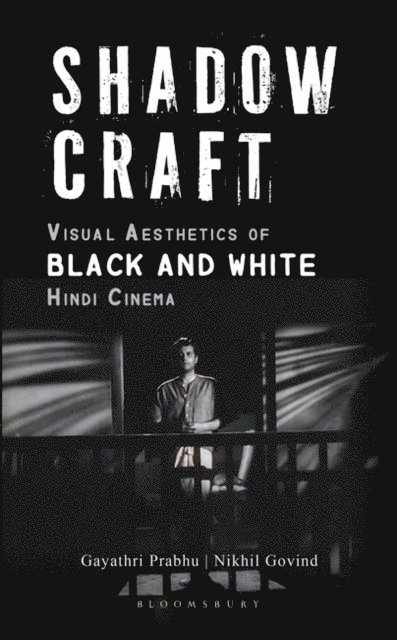
The years between Indian independence (1947) and the dominance of colour cinema (early 1960s) saw the emergence and fruition of a distinct, confident, and nuanced black and white aesthetic in Hindi mainstream cinema. Shadow Craft is an ardent and immersive study of cinematic craftings that emblematise the oeuvres of Kamal Amrohi, Raj Kapoor, Nutan, Bimal Roy, Guru Dutt, and Abrar Alvi. Films such as Aag (1948), Mahal (1949), Seema (1955), Pyaasa (1957), Sujata (1959), Kagaz Ke Phool (1959), Sahib Bibi Aur Ghulam (1962), Bandini (1963) remain formative to the visual psyche of generations of South Asian viewers. This enduring visual language demonstrates a minutely attuned and sympathetic camera, evocative pools of shadow, affect-rich atmospheric composition, and the visual autonomy of performance.With seventy five rare and curated images from the archives, Shadow Craft offers for the first time a consolidated and intimate journey through this pioneering black and white cinema aesthetic at its most expressive and climactic moment.
E-bok
PDF, Engelska, 20211 283 kr
Läs direkt efter köp
The years between Indian independence (1947) and the dominance of colour cinema (early 1960s) saw the emergence and fruition of a distinct, confident, and nuanced black and white aesthetic in Hindi mainstream cinema. Shadow Craft is an ardent and immersive study of cinematic craftings that emblematise the oeuvres of Kamal Amrohi, Raj Kapoor, Nutan, Bimal Roy, Guru Dutt, and Abrar Alvi. Films such as Aag (1948), Mahal (1949), Seema (1955), Pyaasa (1957), Sujata (1959), Kagaz Ke Phool (1959), Sahib Bibi Aur Ghulam (1962), Bandini (1963) remain formative to the visual psyche of generations of South Asian viewers. This enduring visual language demonstrates a minutely attuned and sympathetic camera, evocative pools of shadow, affect-rich atmospheric composition, and the visual autonomy of performance.With seventy five rare and curated images from the archives, Shadow Craft offers for the first time a consolidated and intimate journey through this pioneering black and white cinema aesthetic at its most expressive and climactic moment.
Inbunden, Engelska, 2022
1 275 kr
Skickas inom 5-8 vardagar
E-bok
PDF, Engelska, 20221 405 kr
Läs direkt efter köp
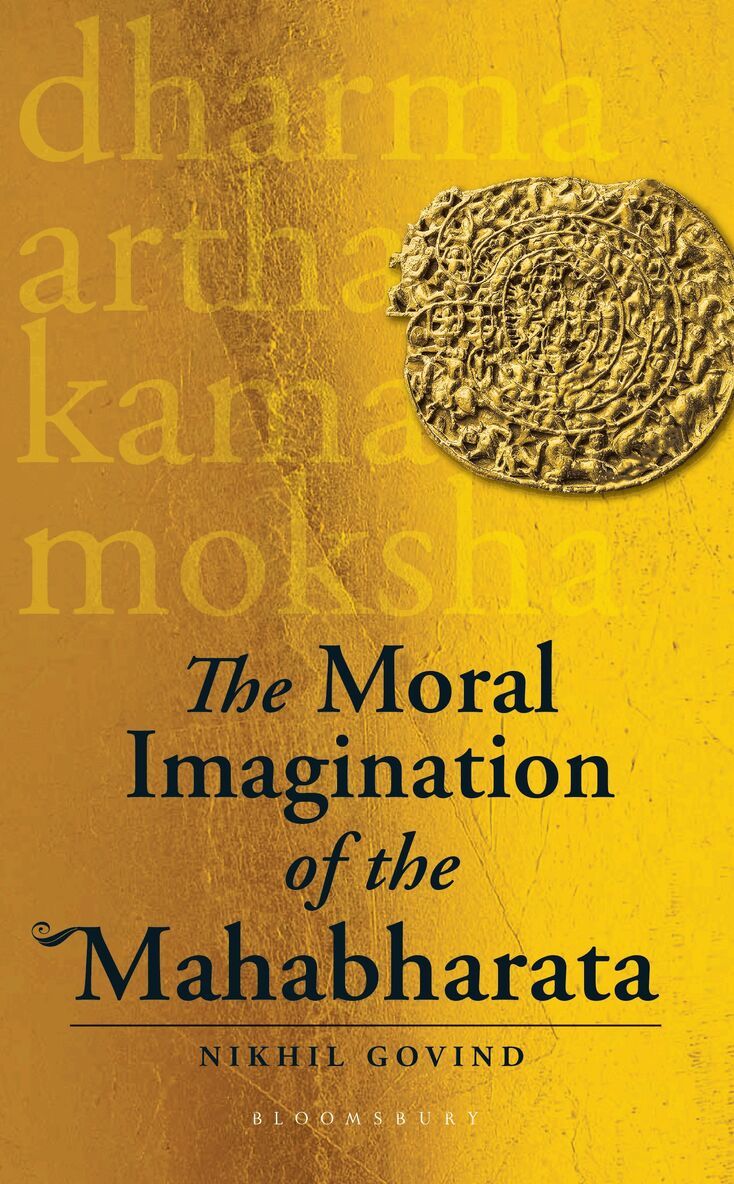
The Mahabharata, one of the most popular epics, has had a remarkable impact on literary and cultural thought in India through the centuries. It is also of immense religious and philosophical importance and is considered itihasa, literally ''that which happened'', or sacred history. Though the setting of the Mahabharata is distant in time, something of its indefatigable, insistent formulation of the pivotal dilemmas of our shared human moral imagination remains insistent and inextinguishable even today. The Moral Imagination of the Mahabharata closely reads the conceptual and narrative intricacies of the epic through the four foundational terms of dharma (law), artha (worldliness), kama (desire) and moksha (freedom), offering riveting insights on the moral psychology of Indic civilization. Drawing from scholarly forays in philology, history, religious studies and pre-modern Asian traditions, this critical attention by a literary scholar to the Mahabharata''s narrative impulses and the internal vigour of select episodes brings to fore the gripping dilemmas that animate the epic.The book travels through an atmospheric and exuberant pre-modern milieu to provoke prescient metaphysical and ethical questions that are only accumulating in relevance in the contemporary world.
E-bok
Engelska, 20221 409 kr
Läs direkt efter köp
The Mahabharata, one of the most popular epics, has had a remarkable impact on literary and cultural thought in India through the centuries. It is also of immense religious and philosophical importance and is considered itihasa, literally ''that which happened'', or sacred history. Though the setting of the Mahabharata is distant in time, something of its indefatigable, insistent formulation of the pivotal dilemmas of our shared human moral imagination remains insistent and inextinguishable even today. The Moral Imagination of the Mahabharata closely reads the conceptual and narrative intricacies of the epic through the four foundational terms of dharma (law), artha (worldliness), kama (desire) and moksha (freedom), offering riveting insights on the moral psychology of Indic civilization. Drawing from scholarly forays in philology, history, religious studies and pre-modern Asian traditions, this critical attention by a literary scholar to the Mahabharata''s narrative impulses and the internal vigour of select episodes brings to fore the gripping dilemmas that animate the epic.The book travels through an atmospheric and exuberant pre-modern milieu to provoke prescient metaphysical and ethical questions that are only accumulating in relevance in the contemporary world.