Ninja Steinbach-Huther – författare
Visar alla böcker från författaren Ninja Steinbach-Huther. Handla med fri frakt och snabb leverans.
2 produkter
2 produkter
E-bok
PDF, Tyska, 2022836 kr
Läs direkt efter köp
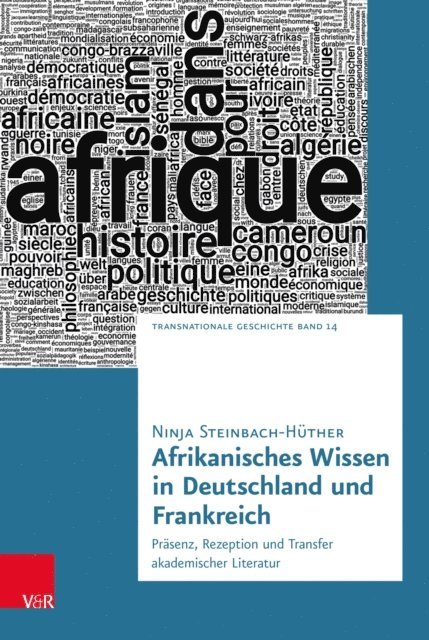
Ninja Steinbach-Hüther stellt die Frage nach dem Platz afrikanischen Wissens auf den Buchmärkten Frankreichs und Deutschlands und untersucht exemplarisch die Präsenz und Rezeption gesellschaftswissenschaftlicher Publikationen afrikanischer Autorinnen und Autoren seit den 1950er Jahren bis zur Gegenwart.Die Studie schärft das Bewusstsein für die afrikanische intellektuelle Produktion vor dem Hintergrund der Marginalisierungsdebatte über afrikanisches Wissen. Sie ergänzt bisherige Forschungen zur akademischen Literaturproduktion afrikanischer Autoren um quantitative Ergebnisse, die die Grundlage für weiterführende qualitative Analysen aus einem neuen Blickwinkel bilden.
E-bok
PDF, Engelska, 2015227 kr
Läs direkt efter köp
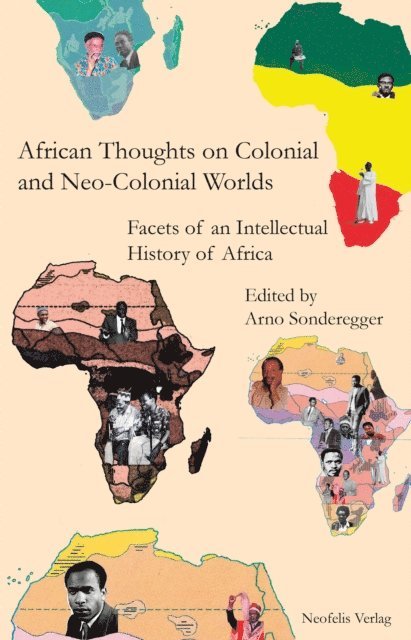
This book shows the many facets of African engagements with the world. It starts from the premise that current global asymmetries ascribing Africa to a marginalized position are the effects of colonial and imperial pasts still lingering on. The decolonization process of the post-war structure which privileges the West in both political and economic terms. While new dependencies emerged, several old bonds were maintained and continue to influence African affairs quite strikingly. It is appropriate, then, to call these continued unequal relations between Africa and the West frankly ''neo-colonial''.This designation applies all the more as the post-colonial states of Africa inherited a complex legacy of foreign rule – colonial frontiers, colonial languages, colonial infrastructure and authoritarian institutions, as well as the social intricacies and imbalances so characteristic of the ''colonial situation''. The contributions to this volume look at various aspects of these complex processes from intellectual history perspectives. The topics dealt with are manifold. Contributions deliberately attack key themes, ideas and discourses of an intellectual history of Africa (''state'', ''modernity'', ''development'', ''dependency'', ''art'', etc.), and introduce important engaged public intellectuals from Africa and the African diaspora. What is Africa, and how is she related to the rest of the world? How can she overcome her internal problems and her external dependencies? – These are perennial questions critically tackled by Africans throughout the 20th century. Dealing with various cases looked at from a variety of perspectives, the contributions to this book offer original insights into the intellectual history of Africa.