Nisha Nath – författare
Visar alla böcker från författaren Nisha Nath. Handla med fri frakt och snabb leverans.
2 produkter
2 produkter
Häftad, Engelska, 2024
575 kr
Skickas inom 3-6 vardagar
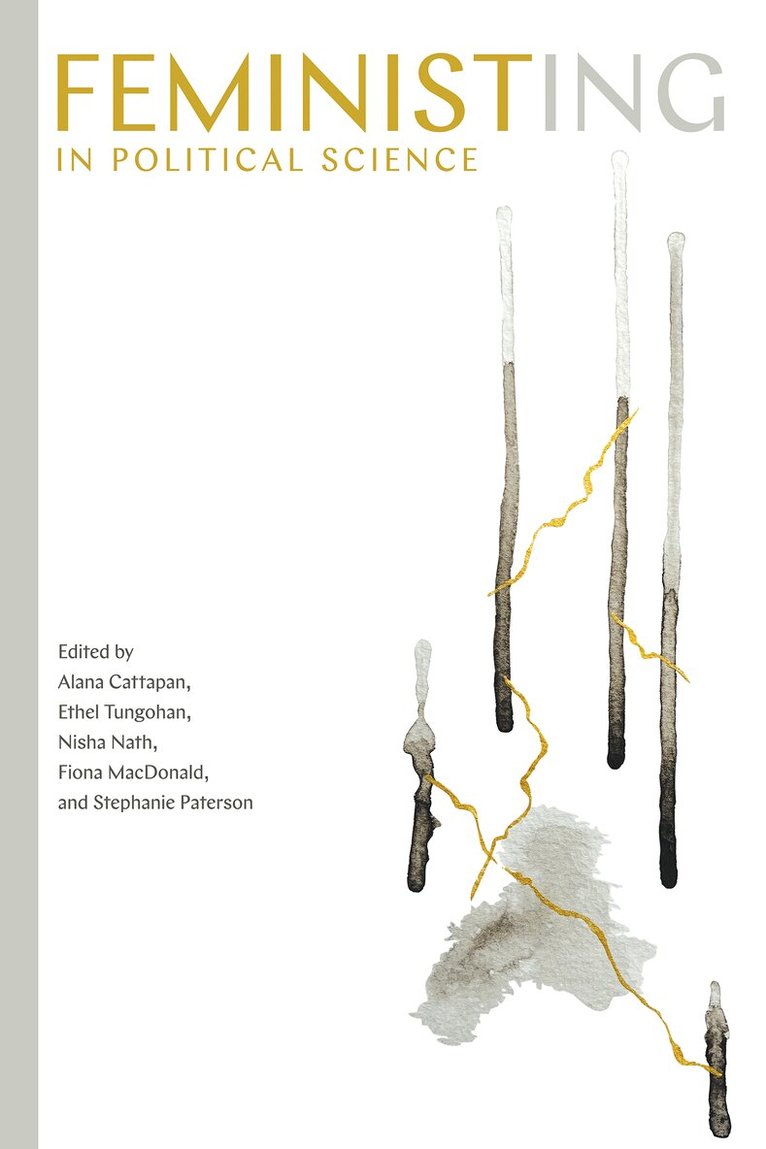
Feministing in Political Science examines what is at stake in contesting the boundaries of the contemporary university. This critique of mainstream Canadian political science pushes beyond typical studies of institutions and political life. Instead, the collection draws together personal essays, pedagogical interventions, dialogues, and original research to reflect on how “feministing” as an orientation and as an analytic can centre experiential knowledge and reshape our understandings of political science. Collectively, these contributions lay bare the ways that power moves in and through the academy, naming the impacts on those who are most structurally precarious, all while pointing to futures available to us through refusal, solidarity, and hope.Contributors: Yasmeen Abu-Laban, Julianne M. Acker-Verney, Kelly Aguirre, Jeanette Ashe, Nicole S. Bernhardt, Amanda Bittner, Alana Cattapan, Elaine Coburn, Jamilah A.Y. Dei-Sharpe, Rita Kaur Dhamoon, Alexandra Dobrowolsky, Nick Dorzweiler, Tammy Findlay, Mariam Georgis, Emily Grafton, Joyce Green, Genevieve Fuji Johnson, Kiera L. Ladner, Lindsay Larios, Manon Laurent, Fiona MacDonald, April Mandrona, Kimberley Ens Manning, Sarah Munawar, Nisha Nath, Michael Orsini, Stephanie Paterson, Tka C. Pinnock, David Semaan, Gina Starblanket, Heidi Kiiwetinepinesiik Stark, Melanee Thomas, Reeta Chowdhari Tremblay, Ethel Tungohan, Nadia Verrelli, Leah F. Vosko, and Chamindra Weerawardhana.
Häftad, Engelska, 2026
213 kr
Kommande
The Letters asks what do equity, diversity, and inclusion–related letters do for the university as an institution and for those who are supposed to benefit from EDI initiatives? What do these letters tell us about institutionalized relationships, control, and creative resistance?Intimate and moving, this erudite collaboration among four publicly engaged scholars traces power as it weaves through institutional correspondence. In grappling with official claims of inclusion, the authors examine how EDI-related letters are used by the university to claim a mythical identity — of being equitable, inclusive, diverse, and decolonizing —while simultaneously warding off criticism. Focused on recuperating the labour and forms of life-writing that members of subordinated groups undertake in institutions, The Letters amplifies structurally marginalized voices to diagnose why and how EDI adversely impacts certain people and poignantly identifies creative ways to intervene against the neoliberal university.