Nobumichi Teramura – författare
1 896 kr
Skickas inom 5-8 vardagar
1 843 kr
Läs direkt efter köp
1 843 kr
Läs direkt efter köp
Ex Aequo et Bono as a Response to the ‘Over-Judicialisation’ of International Commercial Arbitration
2 192 kr
Skickas inom 5-8 vardagar
Ex Aequo et Bono as a Response to the 'Over-Judicialisation' of International Commercial Arbitration
1 864 kr
Läs direkt efter köp
Despite its many distinguished proponents over time, ex aequo et bono – the idea of deciding disputes on the basis of what an adjudicator regards as fair and equitable – has failed to take hold in international commercial arbitration (ICA). Formalisation and fossilisation of arbitral procedure, as manifested in the increasing use of litigation-style practice, unfortunately reign instead. This bold and challenging book argues that parties to an arbitration should be more willing for their cross-border disputes to be decided (and arbitrators should be more prepared to decide those disputes) in accordance with broad principles of equity and fairness, rather than by strict adherence to technical rules of law.
Putting forward suggestions based on extensive research and doctrinal considerations, this book invites us to confront what ICA was supposed to be, what it now is and what it can be. In particular, Dr Teramura discusses how, by resorting to ex aequo et bono, arbitrators can:
construe contractual terms, including the limits; apply trade usages; deal with mandatory rules of a given forum or place of performance; minimise the cost and length of time that arbitration takes; avoid the abuse of discretion; and ensure predictable results.The book examines significant differences in the way that ex aequo et bono arbitration is understood among various state and international institutions. It attempts to identify a ‘common core’ of universally accepted concepts underlying those different understandings. The book argues that ex aequo et bono has the potential to reform ICA without undermining its positive aspects. Along the way, it discusses the implications of ex aequo et bono arbitration on the now widely used UNCITRAL Model Law on ICA. It should thus appeal to lay business persons and commercial law practitioners who are looking for an economical and efficient way to solve business disputes within a globalised arbitration framework.
Ex Aequo et Bono as a Response to the 'Over-Judicialisation' of International Commercial Arbitration
1 798 kr
Läs direkt efter köp
Despite its many distinguished proponents over time, ex aequo et bono – the idea of deciding disputes on the basis of what an adjudicator regards as fair and equitable – has failed to take hold in international commercial arbitration (ICA). Formalisation and fossilisation of arbitral procedure, as manifested in the increasing use of litigation-style practice, unfortunately reign instead. This bold and challenging book argues that parties to an arbitration should be more willing for their cross-border disputes to be decided (and arbitrators should be more prepared to decide those disputes) in accordance with broad principles of equity and fairness, rather than by strict adherence to technical rules of law.
Putting forward suggestions based on extensive research and doctrinal considerations, this book invites us to confront what ICA was supposed to be, what it now is and what it can be. In particular, Dr Teramura discusses how, by resorting to ex aequo et bono, arbitrators can:
construe contractual terms, including the limits; apply trade usages; deal with mandatory rules of a given forum or place of performance; minimise the cost and length of time that arbitration takes; avoid the abuse of discretion; and ensure predictable results.The book examines significant differences in the way that ex aequo et bono arbitration is understood among various state and international institutions. It attempts to identify a ‘common core’ of universally accepted concepts underlying those different understandings. The book argues that ex aequo et bono has the potential to reform ICA without undermining its positive aspects. Along the way, it discusses the implications of ex aequo et bono arbitration on the now widely used UNCITRAL Model Law on ICA. It should thus appeal to lay business persons and commercial law practitioners who are looking for an economical and efficient way to solve business disputes within a globalised arbitration framework.
2 617 kr
Skickas inom 5-8 vardagar
2 150 kr
Läs direkt efter köp
International Arbitration Law Library Volume 59
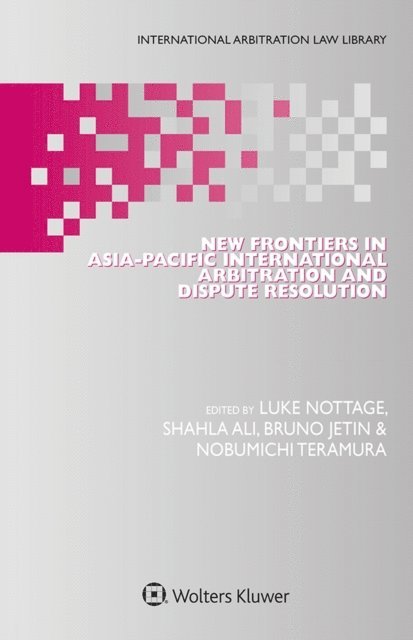
The eastward shift in international dispute resolution has already involved initiatives not only to improve support for international commercial arbitration (ICA) and investor-state dispute settlement (ISDS) but also to develop alternatives such as international commercial courts and mediation. Focusing on these initiatives and their accompanying case law and trends in the Asia-Pacific region, this invaluable book challenges existing procedures and frameworks for cross-border dispute resolution in both commercial and treaty arbitration.
Specially assembled for this project, an outstanding team of experienced and insightful arbitrators and scholars describes pertinent developments including:
ICA and ISDS in the context of China’s Belt and Road Initiative; the Singapore Convention on Mediation; the shift to virtual hearings and other challenges from the COVID-19 pandemic; mistrust of the application of the rule of law in certain East Asian jurisdictions; growing public concern over ISDS arbitration; tensions between confidentiality and transparency; and potential regional harmonisation of the public policy exception to arbitral enforcement.The contributors chart evolving practices and high-profile cases to make informed observations about where changes are needed, as well as educated guesses about the chances of reforms being successful and the consequences if they are not. The main jurisdictions covered are China, Hong Kong, Japan, Malaysia, India, Australia and Singapore.
The first in-depth study of recent trends in dispute resolution practice related to business in the Asia-Pacific region, the book’s practical analysis of new resources for dealing with the increasing competition among countries to become credible regional dispute resolution hubs will prove to be of great value to specialists in the international business law sector. Lawyers will be enabled to make informed decisions on which venue and dispute resolution methods are the most suitable for any specific dispute in the region, and policymakers will confidently assess emerging trends in international dispute resolution policy development and treaty-making.
2 228 kr
Läs direkt efter köp
International Arbitration Law Library Volume 59
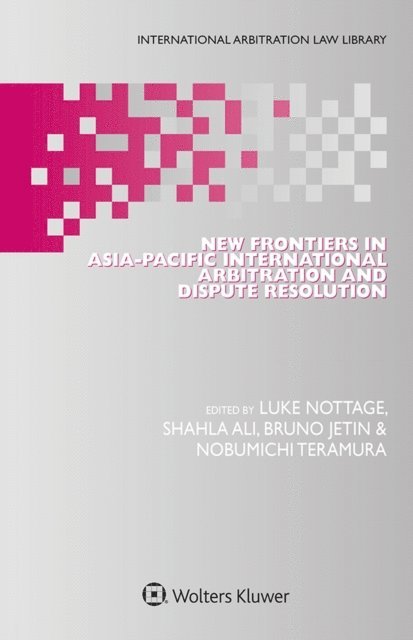
The eastward shift in international dispute resolution has already involved initiatives not only to improve support for international commercial arbitration (ICA) and investor-state dispute settlement (ISDS) but also to develop alternatives such as international commercial courts and mediation. Focusing on these initiatives and their accompanying case law and trends in the Asia-Pacific region, this invaluable book challenges existing procedures and frameworks for cross-border dispute resolution in both commercial and treaty arbitration.
Specially assembled for this project, an outstanding team of experienced and insightful arbitrators and scholars describes pertinent developments including:
ICA and ISDS in the context of China’s Belt and Road Initiative; the Singapore Convention on Mediation; the shift to virtual hearings and other challenges from the COVID-19 pandemic; mistrust of the application of the rule of law in certain East Asian jurisdictions; growing public concern over ISDS arbitration; tensions between confidentiality and transparency; and potential regional harmonisation of the public policy exception to arbitral enforcement.The contributors chart evolving practices and high-profile cases to make informed observations about where changes are needed, as well as educated guesses about the chances of reforms being successful and the consequences if they are not. The main jurisdictions covered are China, Hong Kong, Japan, Malaysia, India, Australia and Singapore.
The first in-depth study of recent trends in dispute resolution practice related to business in the Asia-Pacific region, the book’s practical analysis of new resources for dealing with the increasing competition among countries to become credible regional dispute resolution hubs will prove to be of great value to specialists in the international business law sector. Lawyers will be enabled to make informed decisions on which venue and dispute resolution methods are the most suitable for any specific dispute in the region, and policymakers will confidently assess emerging trends in international dispute resolution policy development and treaty-making.
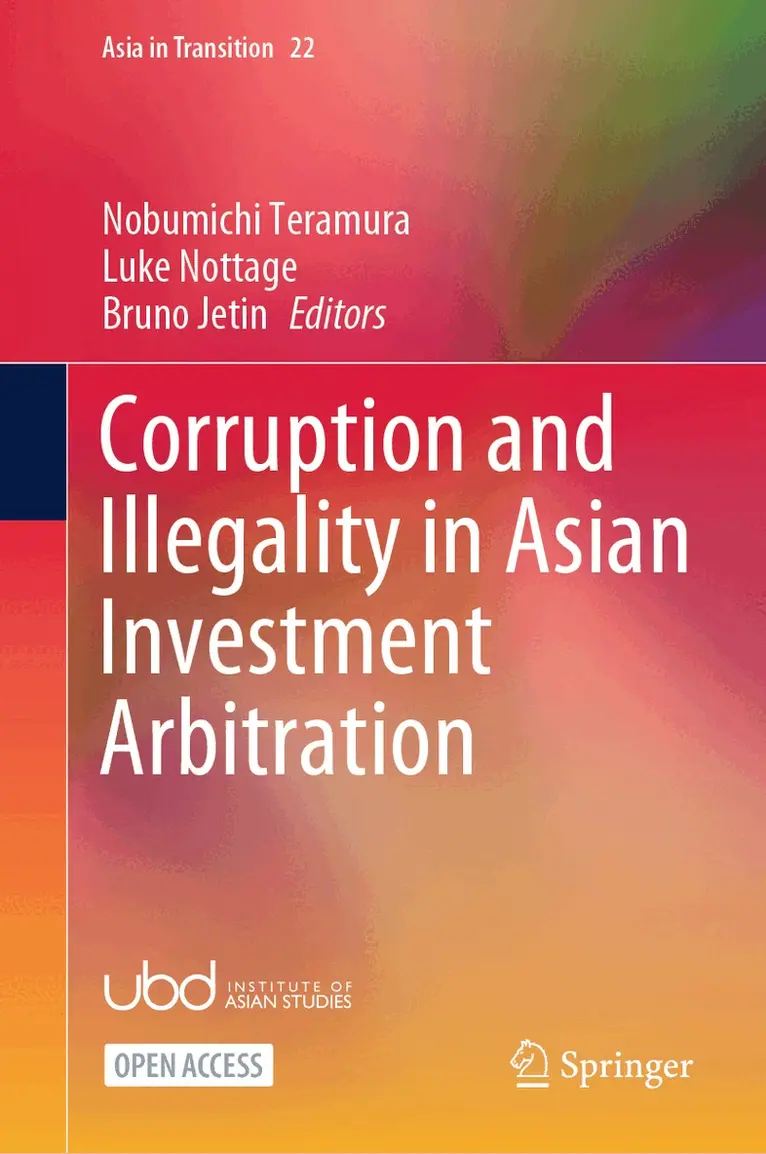
Corruption and Illegality in Asian Investment Arbitration
502 kr
Skickas inom 10-15 vardagar
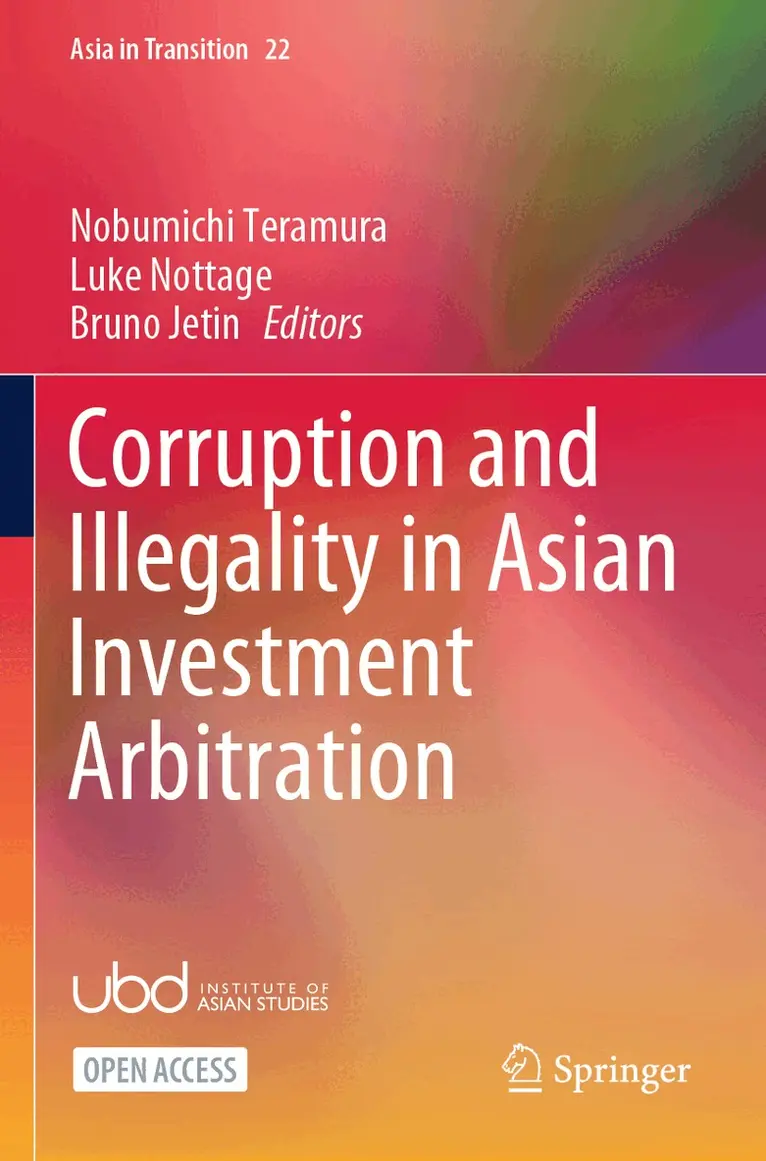
Corruption and Illegality in Asian Investment Arbitration
403 kr
Skickas inom 10-15 vardagar