Noemi Levy - Böcker
Visar alla böcker från författaren Noemi Levy. Handla med fri frakt och snabb leverans.
3 produkter
3 produkter
646 kr
Skickas inom 10-15 vardagar
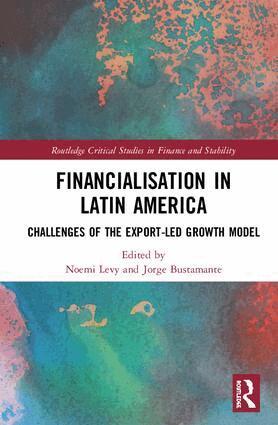
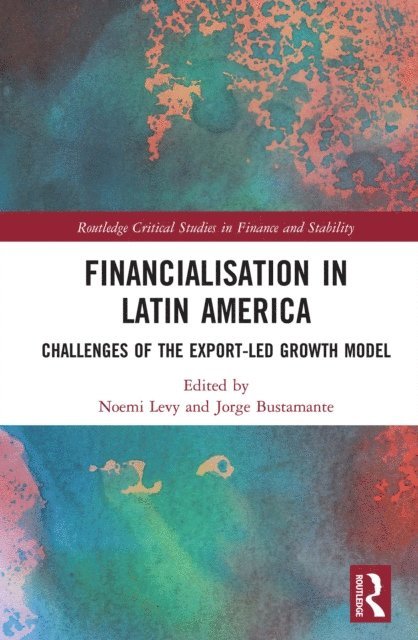
Financial capital continues to dominate Western economic organisations, despite major financial and economic crises. While these have not affected Latin American countries in the same way, other economic problems emerged after the reversion of loose monetary policies that debilitated the export-led growth model. This book discusses the issue of the financialised globalisation model in Latin America, looking at the region’s relationship with the international market.This edited collection is divided into three main sections. The first section discusses regional trends highlighting issues of trade and payments in financialised economies, the impact on deindustrialisation, its effect on inequality, external capital movements and monetary policies. The second section analyses the failure of comparative advantages of the export-led model in Colombia, Argentina and Mexico. Finally, the last section deals with the growth of financial balance sheets in small and developing economies such as Chile; how growth, investment and big corporation evolution were affected in Brazil and Mexico; and the effects of foreign exchange activity in Mexico. Through these discussions, this book aims to deepen the understanding of the crisis of financialisation and the export-led model, raising the question of whether it is possible for this model to continue or if it requires major readjustments to unfold economic growth.This book provides a distinctive analysis of the financialisation mechanisms in developing countries in order to emphasise affinities and differences between the countries of the region in productive and financial terms. It will be of great interest to economic and social science scholars and students, to journalists specialising on economic and development issues, and, more importantly, to policy makers.
2 113 kr
Skickas inom 10-15 vardagar
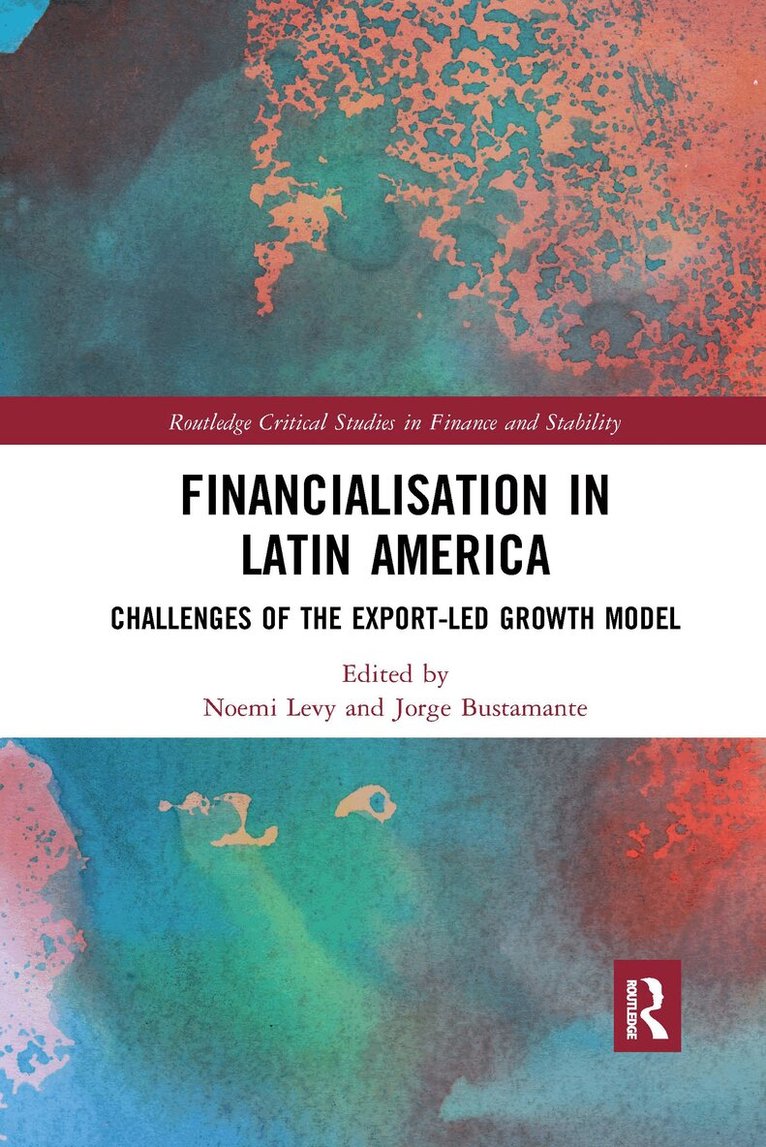
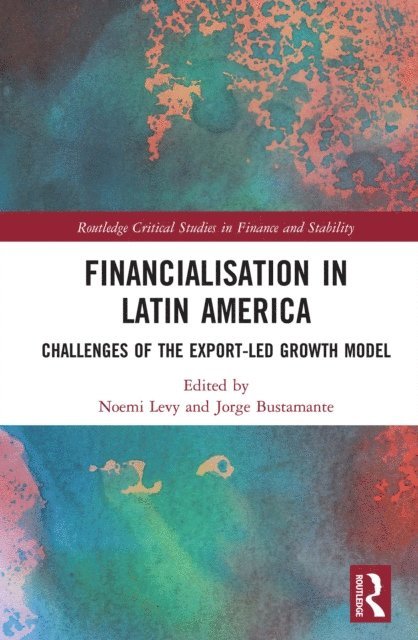
Financial capital continues to dominate Western economic organisations, despite major financial and economic crises. While these have not affected Latin American countries in the same way, other economic problems emerged after the reversion of loose monetary policies that debilitated the export-led growth model. This book discusses the issue of the financialised globalisation model in Latin America, looking at the region’s relationship with the international market.This edited collection is divided into three main sections. The first section discusses regional trends highlighting issues of trade and payments in financialised economies, the impact on deindustrialisation, its effect on inequality, external capital movements and monetary policies. The second section analyses the failure of comparative advantages of the export-led model in Colombia, Argentina and Mexico. Finally, the last section deals with the growth of financial balance sheets in small and developing economies such as Chile; how growth, investment and big corporation evolution were affected in Brazil and Mexico; and the effects of foreign exchange activity in Mexico. Through these discussions, this book aims to deepen the understanding of the crisis of financialisation and the export-led model, raising the question of whether it is possible for this model to continue or if it requires major readjustments to unfold economic growth.This book provides a distinctive analysis of the financialisation mechanisms in developing countries in order to emphasise affinities and differences between the countries of the region in productive and financial terms. It will be of great interest to economic and social science scholars and students, to journalists specialising on economic and development issues, and, more importantly, to policy makers.
Financialization Response to Economic Disequilibria
European and Latin American Experiences
Inbunden, Engelska, 2016
1 945 kr
Skickas inom 7-10 vardagar
Europe's and Latin America's social and economic stagnation is a direct result of the unresolved phenomena of the financialization crisis that broke in 2008 in developed countries. Editors Noemi Levy and Etelberto Ortiz analyze the limitations of economic growth and development under capitalist economic organizations where financial capital is dominant as well as explore alternate economic policies.This book argues that institutional settings based on the international monetary market, the global production organization, and the international commerce arraignments need to be redesigned to improve countries' economic growth, job opportunities, and salaries. In order for economic disequilibria to be reduced among regions, countries, and social classes, economic surplus appropriation must be regulated. Divided into four distinct thematic sections, the chapters discuss how income distribution must be re-evaluated in order to halt the economic crisis of developing countries in Europe and Latin America and to boost a new cycle of economic growth and development.This critical discussion will be of value to economic scholars and researchers, policy makers wishing to learn more about the limitations of economic growth, as well as journalists specializing in economic issues.Contributors include: A. Álvarez, E. Basilio, R. Bellofiore, H. Bougrine, A. Chapoy, A. Cibils, C. Domínguez, F. Garibaldo, M. Guadalupe Huerta, L. Kato, N. Levy, T. López, J. Marroquín, S. Martínez, M. Mortagua, E. Ortiz, L.Á. Ortiz, G. Pinazo, L.-P. Rochon, C.A. Rozo, D. Tropeano. A. Vercelli