Norman W. Paton – författare
Visar alla böcker från författaren Norman W. Paton. Handla med fri frakt och snabb leverans.
7 produkter
7 produkter
Inbunden, Engelska, 1998
1 681 kr
Skickas inom 10-15 vardagar
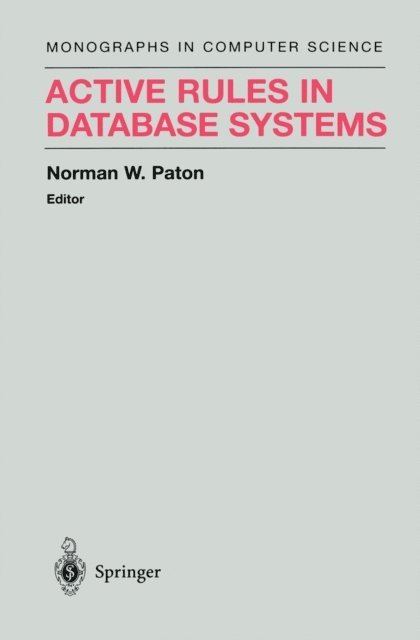
Active rules provide a new and important method for designing databases and the subject is seeing an increasing amount of attention from commercial database companies. This book provides a timely survey of the field from the point of view of some of the subject's most active researchers. The book is divided into several parts, organized by theme: the first, Fundamentals covers the underlying methodology reagrding active rules, next comes a collection of chapters which cover formal specification, rule analysis, performance analysis, and support tools, the third part is devoted to a number of chapters covering the implementation of active rules in a number of commercial systems. Finally, come sections on applications and future directions that research may take. All researchers in databases will find this provides a valuable overview of this topic.
E-bok
PDF, Engelska, 20122 036 kr
Läs direkt efter köp
Active rules provide a new and important method for designing databases and the subject is seeing an increasing amount of attention from commercial database companies. This book provides a timely survey of the field from the point of view of some of the subject''s most active researchers. The book is divided into several parts, organized by theme: the first, Fundamentals covers the underlying methodology reagrding active rules, next comes a collection of chapters which cover formal specification, rule analysis, performance analysis, and support tools, the third part is devoted to a number of chapters covering the implementation of active rules in a number of commercial systems. Finally, come sections on applications and future directions that research may take. All researchers in databases will find this provides a valuable overview of this topic.
E-bok
PDF, Engelska, 2012734 kr
Läs direkt efter köp
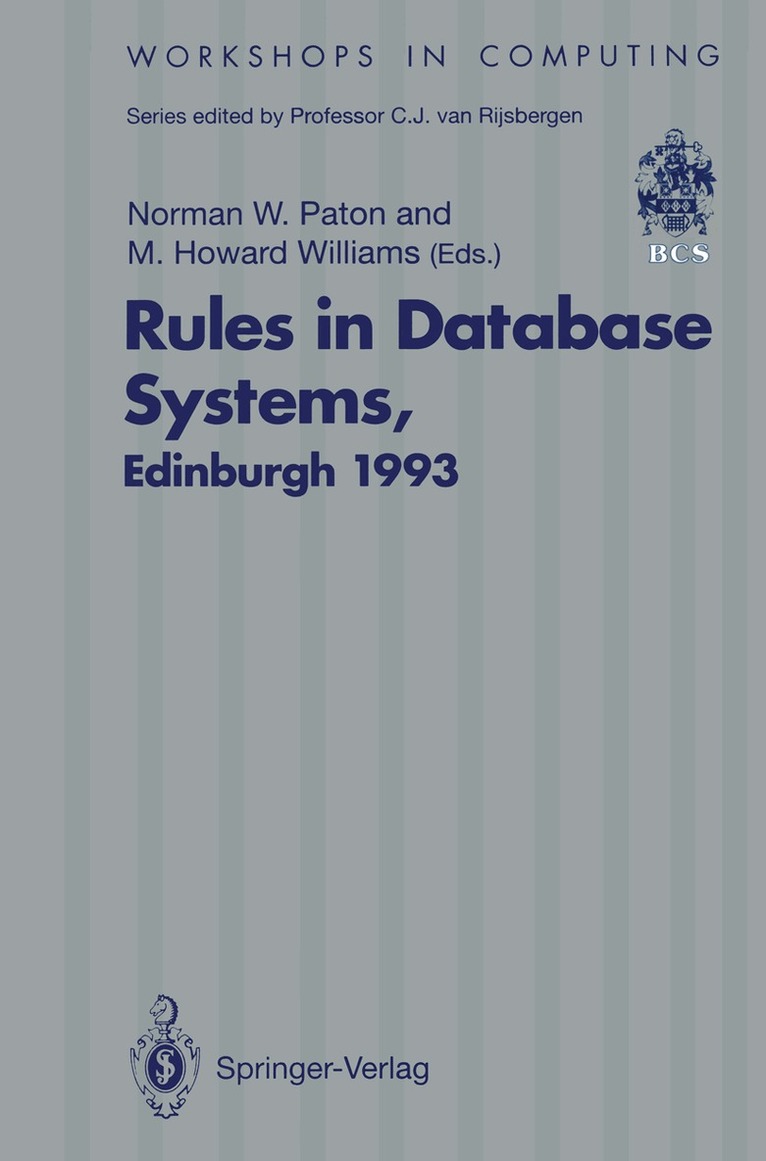
This book is the proceedings of a workshop held at Heriot-Watt University in Edinburgh in August 1993. The central theme of the workshop was rules in database systems, and the papers presented covered a range of different aspects of database rule systems. These aspects are reflected in the sessions of the workshop, which are the same as the sections in this proceedings: Active Databases Architectures Incorporating Temporal Rules Rules and Transactions Analysis and Debugging of Active Rules Integrating Graphs/Objects with Deduction Integrating Deductive and Active Rules Integrity Constraints Deductive Databases The incorporation of rules into database systems is an important area of research, as it is a major component in the integration of behavioural information with the structural data with which commercial databases have traditionally been associated. This integration of the behavioural aspects of an application with the data to which it applies in database systems leads to more straightforward application development and more efficient processing of data. Many novel applications seem to need database systems in which structural and behavioural information are fully integrated. Rules are only one means of expressing behavioural information, but it is clear that different types of rule can be used to capture directly different properties of an application which are cumbersome to support using conventional database architectures. In recent years there has been a surge of research activity focusing upon active database systems, and this volume opens with a collection of papers devoted specifically to this topic.
Häftad, Engelska, 2012
1 681 kr
Skickas inom 10-15 vardagar
Active rules provide a new and important method for designing databases and the subject is seeing an increasing amount of attention from commercial database companies. This book provides a timely survey of the field from the point of view of some of the subject's most active researchers. The book is divided into several parts, organized by theme: the first, Fundamentals covers the underlying methodology reagrding active rules, next comes a collection of chapters which cover formal specification, rule analysis, performance analysis, and support tools, the third part is devoted to a number of chapters covering the implementation of active rules in a number of commercial systems. Finally, come sections on applications and future directions that research may take. All researchers in databases will find this provides a valuable overview of this topic.
Häftad, Engelska, 1994
566 kr
Skickas inom 10-15 vardagar
This book is the proceedings of a workshop held at Heriot-Watt University in Edinburgh in August 1993. The central theme of the workshop was rules in database systems, and the papers presented covered a range of different aspects of database rule systems. These aspects are reflected in the sessions of the workshop, which are the same as the sections in this proceedings: Active Databases Architectures Incorporating Temporal Rules Rules and Transactions Analysis and Debugging of Active Rules Integrating Graphs/Objects with Deduction Integrating Deductive and Active Rules Integrity Constraints Deductive Databases The incorporation of rules into database systems is an important area of research, as it is a major component in the integration of behavioural information with the structural data with which commercial databases have traditionally been associated. This integration of the behavioural aspects of an application with the data to which it applies in database systems leads to more straightforward application development and more efficient processing of data. Many novel applications seem to need database systems in which structural and behavioural information are fully integrated. Rules are only one means of expressing behavioural information, but it is clear that different types of rule can be used to capture directly different properties of an application which are cumbersome to support using conventional database architectures. In recent years there has been a surge of research activity focusing upon active database systems, and this volume opens with a collection of papers devoted specifically to this topic.
Häftad, Engelska, 2009
566 kr
Skickas inom 10-15 vardagar
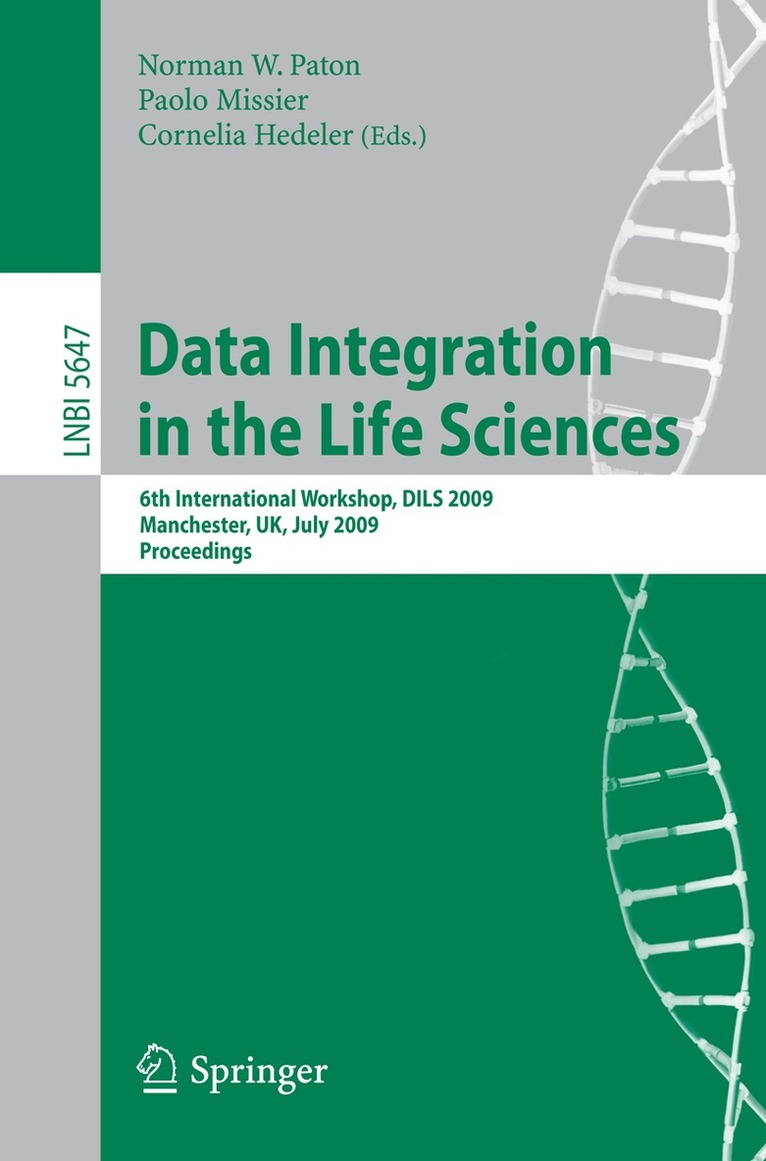
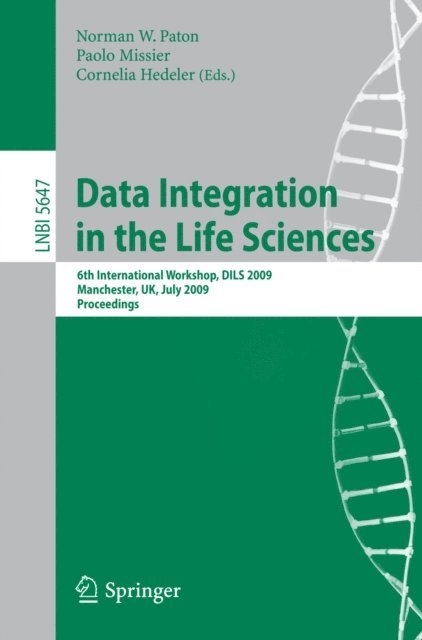
Data integration in the life sciences continues to be important but challe- ing. The ongoing development of new experimental methods gives rise to an increasingly wide range of data sets, which in turn must be combined to allow more integrative views of biological systems. Indeed, the growing prominence of systems biology, where mathematical models characterize behaviors observed in experiments of di?erent types, emphasizes the importance of data integration to the life sciences. In this context, the representation of models of biological behavior as data in turn gives rise to challenges relating to provenance, data quality, annotation, etc., all of which are associated with signi?cant research activities within computer science. The Data Integration in the Life Sciences (DILS) Workshop Series brings together data and knowledge management researchers from the computer s- ence research community with bioinformaticians and computational biologists, to improve the understanding of how emerging data integration techniques can address requirements identi?ed in the life sciences.
E-bok
PDF, Engelska, 2009708 kr
Läs direkt efter köp
Data integration in the life sciences continues to be important but challe- ing. The ongoing development of new experimental methods gives rise to an increasingly wide range of data sets, which in turn must be combined to allow more integrative views of biological systems. Indeed, the growing prominence of systems biology, where mathematical models characterize behaviors observed in experiments of di?erent types, emphasizes the importance of data integration to the life sciences. In this context, the representation of models of biological behavior as data in turn gives rise to challenges relating to provenance, data quality, annotation, etc., all of which are associated with signi?cant research activities within computer science. The Data Integration in the Life Sciences (DILS) Workshop Series brings together data and knowledge management researchers from the computer s- ence research community with bioinformaticians and computational biologists, to improve the understanding of how emerging data integration techniques can address requirements identi?ed in the life sciences.