
Nurul Huda Md. – författare
5 636 kr
Läs direkt efter köp
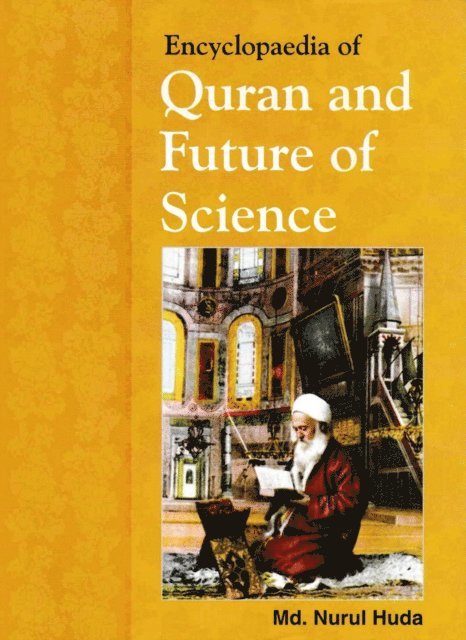
The Quran contains many verses describing creation of the universe; Allah created heavens and earth in six periods , the earth was created in two periods , and in two other periods (into a total of four) AIlah furnished the creation of the earth with mountains, rivers and fruit-gardens . Heavens and earth formed from an integrated disk-shaped mass which had to be split , the seven heavens were created from smoke , forming layers, one above the other . The angels inhabit the seventh heavens. The lowest heaven is adorned with lights , the sun and the moon (which follow a regular path) , the stars and the constellations of the Zodiac. it is not universally accepted that the Quran accurately describes the natural world. Tanner Edis, author of An illusion of Harmony: Science and Religion in lslam, describes this point. He argues that Muslims are more likely to view the Quran as the direct word of God, and so it must be reconciled with their growing respect for science and technology. Edis suggests that Muslims, even more than Christians, thus often have a vested interest in finding passages whose interpretation can be stretched to describe modern understanding. He warns that reading into books like this can be misleading, since the method can be used to support any number of contradictory facts. The book highlights The Quran and Modern Knowledge is a highly successful attempt in this direction. Content: Pre-lslamic Culture of Arab; Aspects of Pre-lslamic Arabian Society; Quran and Science; Creation of Universe; The Creation and the Purpose; The Miracle of the immune System; The Quran Leads the Way to Science; The Quran and Modern Science.
4 450 kr
Läs direkt efter köp
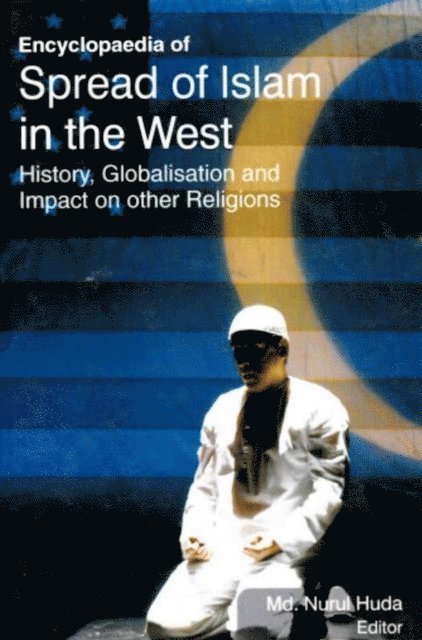
The history of Arab and Islamic rule in the Iberian peninsula is probably one ot the most studied periods ot European history, but the variety and quantity of writing has not escaped the prejudices of the authors. For centuries after the Arab conquest, European accounts of Arab rule in Iberia were negative. European points of view started changing with the Protestant Reformation, which resulted in new descriptions of the period of Islamic rule in Spain as a “golden age” (mostly as a reaction against Spain's militant Roman Catholicism after 1500). The tide of Arab expansion after 630 rolled through North Africa up to Ceuta in present-day Morocco. Their arrival coincided with a period of political weakness in the three centuries old kingdom established in the Iberian peninsula by the Germanic Visigoths, who had taken over the region after seven centuries of Roman rule. Seizing the opportunity, an Arab-led (but mostly Berber) army invaded in 711, and by 720 had conquered almost all of the peninsula. The Arab expansion pushed over the mountains into southern France, and for a short period Arabs controlled the old Visigothic province of Septirnania (centered on present-day Narbonne). The Arab Caliphate was pushed back by Charles Martel (King of the Franks or French) at Poitiers, and Christian armies started pushing southwards over the mountains, until Charlemagne established in 801 the Spanish March (which stretched from Barcelona to present-day Navarre). A major development in the history of Muslim Spain was the dynastic change in 750 in the Arab Caliphate, when an Ummayad Prince escaped the slaughter of his family in Damascus, fled to Cordoba in Spain, and created a new Islamic state in the area. This encyclopaedia is offered with the hope that it will be a useful reference companion for readers of this subject.

4 450 kr
Läs direkt efter köp
The history of Arab and Islamic rule in the Iberian peninsula is probably one ot the most studied periods ot European history, but the variety and quantity of writing has not escaped the prejudices of the authors. For centuries after the Arab conquest, European accounts of Arab rule in Iberia were negative. European points of view started changing with the Protestant Reformation, which resulted in new descriptions of the period of Islamic rule in Spain as a “golden age” (mostly as a reaction against Spain's militant Roman Catholicism after 1500). The tide of Arab expansion after 630 rolled through North Africa up to Ceuta in present-day Morocco. Their arrival coincided with a period of political weakness in the three centuries old kingdom established in the Iberian peninsula by the Germanic Visigoths, who had taken over the region after seven centuries of Roman rule. Seizing the opportunity, an Arab-led (but mostly Berber) army invaded in 711, and by 720 had conquered almost all of the peninsula. The Arab expansion pushed over the mountains into southern France, and for a short period Arabs controlled the old Visigothic province of Septirnania (centered on present-day Narbonne). The Arab Caliphate was pushed back by Charles Martel (King of the Franks or French) at Poitiers, and Christian armies started pushing southwards over the mountains, until Charlemagne established in 801 the Spanish March (which stretched from Barcelona to present-day Navarre). A major development in the history of Muslim Spain was the dynastic change in 750 in the Arab Caliphate, when an Ummayad Prince escaped the slaughter of his family in Damascus, fled to Cordoba in Spain, and created a new Islamic state in the area. This encyclopaedia is offered with the hope that it will be a useful reference companion for readers of this subject.

4 294 kr
Läs direkt efter köp
The history of Arab and Islamic rule in the Iberian peninsula is probably one ot the most studied periods ot European history, but the variety and quantity of writing has not escaped the prejudices of the authors. For centuries after the Arab conquest, European accounts of Arab rule in Iberia were negative. European points of view started changing with the Protestant Reformation, which resulted in new descriptions of the period of Islamic rule in Spain as a “golden age” (mostly as a reaction against Spain's militant Roman Catholicism after 1500). The tide of Arab expansion after 630 rolled through North Africa up to Ceuta in present-day Morocco. Their arrival coincided with a period of political weakness in the three centuries old kingdom established in the Iberian peninsula by the Germanic Visigoths, who had taken over the region after seven centuries of Roman rule. Seizing the opportunity, an Arab-led (but mostly Berber) army invaded in 711, and by 720 had conquered almost all of the peninsula. The Arab expansion pushed over the mountains into southern France, and for a short period Arabs controlled the old Visigothic province of Septirnania (centered on present-day Narbonne). The Arab Caliphate was pushed back by Charles Martel (King of the Franks or French) at Poitiers, and Christian armies started pushing southwards over the mountains, until Charlemagne established in 801 the Spanish March (which stretched from Barcelona to present-day Navarre). A major development in the history of Muslim Spain was the dynastic change in 750 in the Arab Caliphate, when an Ummayad Prince escaped the slaughter of his family in Damascus, fled to Cordoba in Spain, and created a new Islamic state in the area. This encyclopaedia is offered with the hope that it will be a useful reference companion for readers of this subject.