O. Bjerkholt – författare
Visar alla böcker från författaren O. Bjerkholt. Handla med fri frakt och snabb leverans.
7 produkter
7 produkter
Inbunden, Engelska, 1990
2 226 kr
Skickas inom 10-15 vardagar
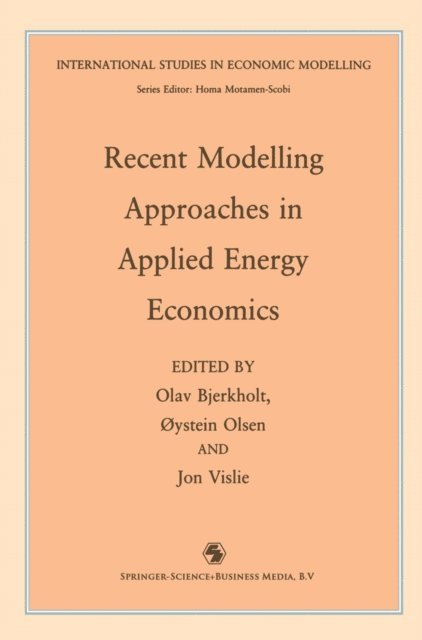
This collection of 13 articles on the European gas market and the management of national petroleum resources uses up-to-date information and advanced analytic techniques to investigate energy issues of considerable policy interest. The lead article is a sophisticated modelling analysis assessing the impact of the forthcoming deregulation of the gas market within the European Community. It is argued that deregulation invalidates earlier long-term forecasts of gas penetration and most likely will lead to an enhanced role of gas as a major energy source for households, industry and power generation. Deregulation will intensify the supply competition between USSR, Norway and Algeria. The potential residential demand for natural gas is estimated in a detailed analysis for four major European countries using advanced techniques of analysis. Other contributions focus on the game structure of the struggle over market shares in the European gas market and the role of negotiations and bargaining in a market with strong elements of vertical control. The environmental consequences of energy policies have become a matter of increasing concern.An early, perhaps the first, attempt to calculate the environmental effects of a transition from oil and coal to natural gas in Europe is presented. Several articles deal with problems of management of natural petroleum resources, in particular, from a Norwegian viewpoint. The studies reported, for example on how to measure the petroleum wealth as a part of a national wealth, and the methods developed for making energy decisions are of relevance for other countries. The book also touches upon the role of the independent oil exporting countries in the world oil market of the 1990s and the impact of oil price fluctuations on the international economy.
Del 235 - Contributions to Economic Analysis
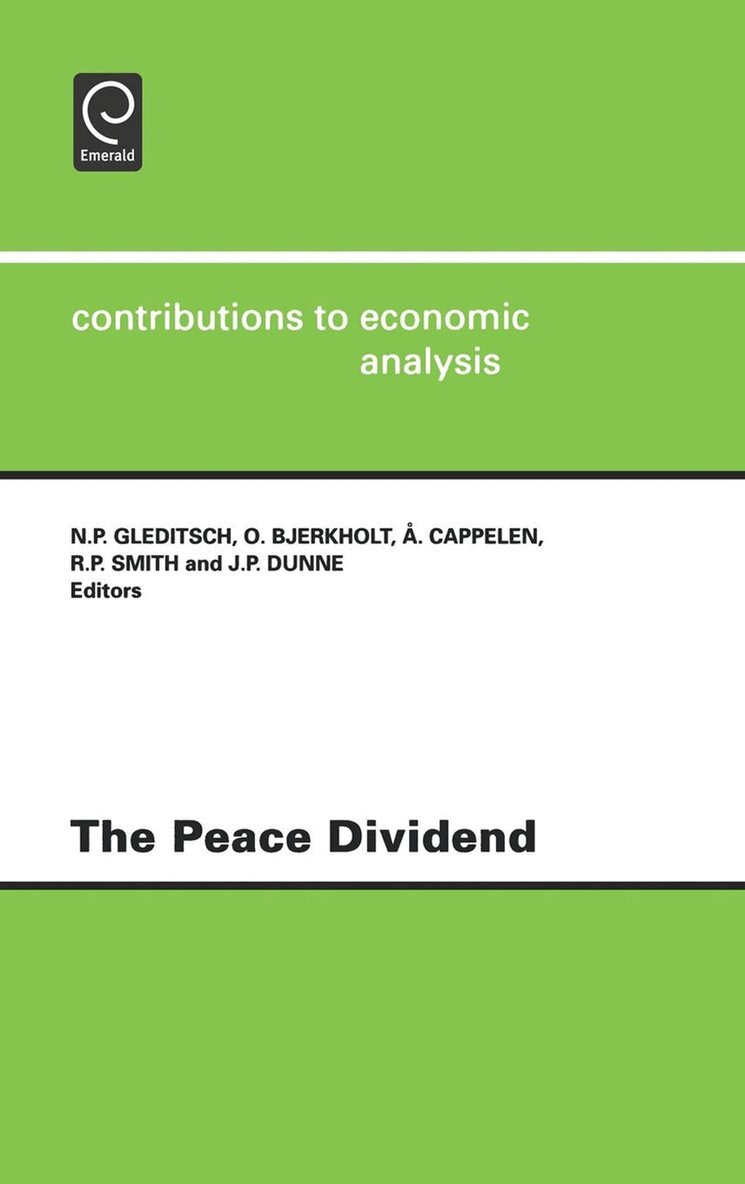
Peace Dividend
Inbunden, Engelska, 1996
2 545 kr
Skickas inom 5-8 vardagar
The papers collected in this volume demonstrate how different kinds of analytical approach can be used to anticipate the economic repercussions of systematic reduction of military spending. This volume will be of interest to economists; scholars in peace studies, international relations and such like; and officials of national governments and international bodies dealing with disarmament issues and with economic restructuring.
E-bok
PDF, Engelska, 2017807 kr
Läs direkt efter köp
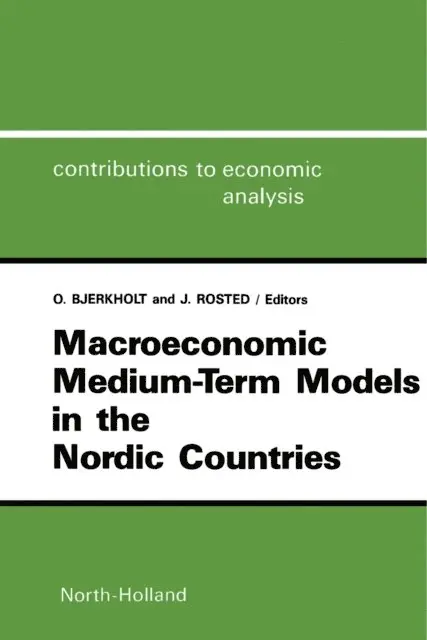
This is the first major joint presentation of macroeconomic models of Denmark, Finland, Norway and Sweden. Its origin is a selection of the presentations at a seminar on macroeconomic modelling in the Nordic countries held in Lyngby, Denmark, 8-9 October 1984, sponsored by the Nordic Ministries of Finance.The book is concentrated around a thorough presentation of the main macroeconomic medium-term models used in government planning and policy-making in each of the four countries. These models are: in Denmark, ADAM, developed by the Central Statistical Office, in Finland, KESSU, developed within the Ministry of Finance, in Norway, MODAG, developed by the Central Bureau of Statistics, and in Sweden, EMMA, developed within the Ministry of Finance.An introduction to Nordic macroeconomic models is provided, as well as significant features of the institutional use of models within governments in these countries. On the basis of the data presented in the book, the effects of devaluation, wage increases and fiscal policy in the Nordic economies can be compared with each other as well as with other small open economies.
E-bok
PDF, Engelska, 2012734 kr
Läs direkt efter köp
Häftad, Engelska, 2012
2 226 kr
Skickas inom 10-15 vardagar
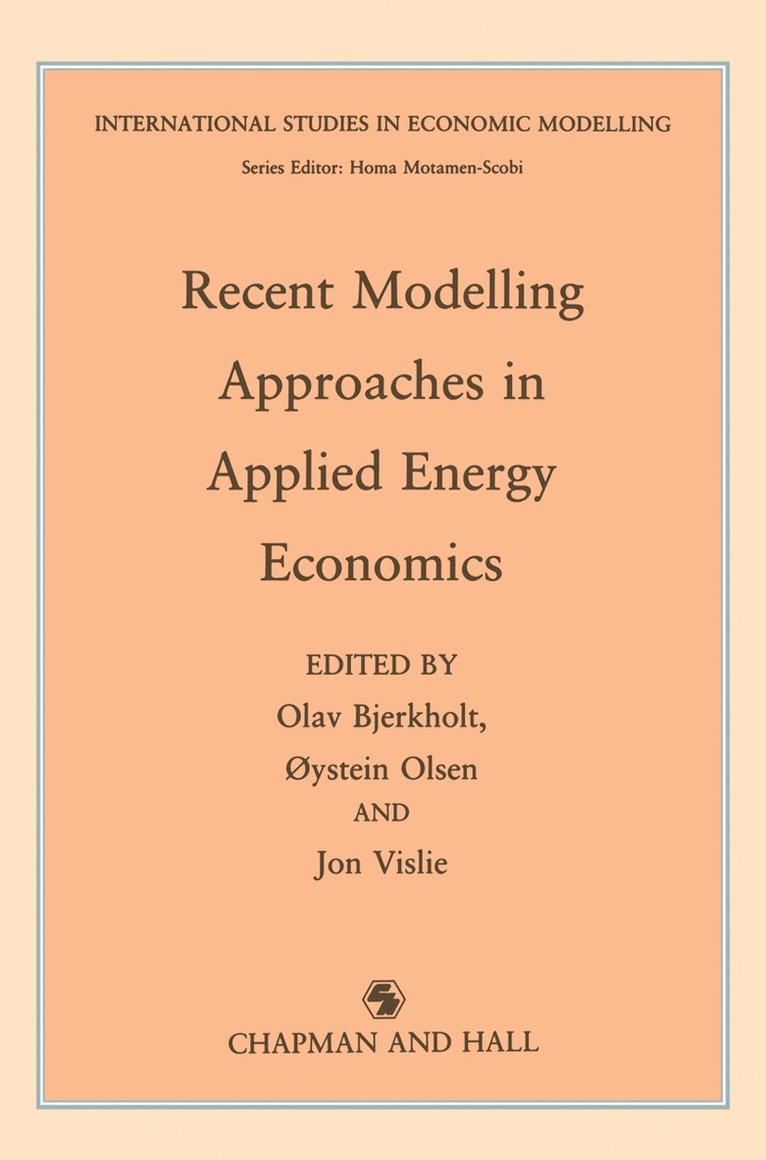
construction. Naturally, we are open to suggestions from all readers of, and contributors to, the series regarding its approach and content. Finally, I would like to thank all those who have helped the launch of this series. The encouraging response received from authors who have contributed the forthcoming volumes and from the subscribers to the series has indicated the need for such a publication. Homa Motamen-Scobi London December 1987 Preface In 1990 both OPEC and the OECD will celebrate their thirtieth anntvers aries. OPEC was founded - rather unnoticed - by oil-producing countries still struggling to gain control over national petroleum resources. Future members were still under colonial rule. The foremost aim of the new organization - years before it was able to make metropolitan newspaper headlines - was stabilizing oil prices. Stability in those days meant prevent ing oil prices from falling in real terms. The OECD was formed by mostly mature industrial economies marking the normalization of the postwar international economy after years of reconstruction, strict trade regulations, etc. The aim of the new organization was to promote 'the highest sustainable growth and employment' in member countries. Incidentally, 1960 was also the year which gave birth to a more loosely defined block in the world community, namely the underdeveloped countries, qS the African colonial empires finally broke up. The two organizations became adversaries in the 1970s in the power struggle over the energy flows of the world.
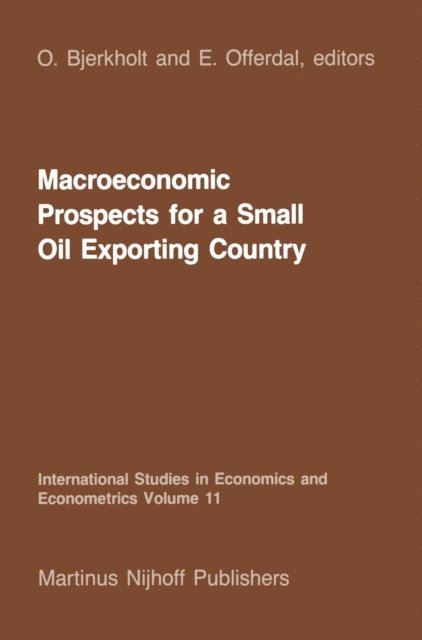
Del 11 - International Studies in Economics and Econometrics
Macroeconomic Prospects for a Small Oil Exporting Country
Häftad, Engelska, 2011
562 kr
Skickas inom 10-15 vardagar
E-bok
PDF, Engelska, 20122 925 kr
Läs direkt efter köp
construction. Naturally, we are open to suggestions from all readers of, and contributors to, the series regarding its approach and content. Finally, I would like to thank all those who have helped the launch of this series. The encouraging response received from authors who have contributed the forthcoming volumes and from the subscribers to the series has indicated the need for such a publication. Homa Motamen-Scobi London December 1987 Preface In 1990 both OPEC and the OECD will celebrate their thirtieth anntvers aries. OPEC was founded - rather unnoticed - by oil-producing countries still struggling to gain control over national petroleum resources. Future members were still under colonial rule. The foremost aim of the new organization - years before it was able to make metropolitan newspaper headlines - was stabilizing oil prices. Stability in those days meant prevent ing oil prices from falling in real terms. The OECD was formed by mostly mature industrial economies marking the normalization of the postwar international economy after years of reconstruction, strict trade regulations, etc. The aim of the new organization was to promote ''the highest sustainable growth and employment'' in member countries. Incidentally, 1960 was also the year which gave birth to a more loosely defined block in the world community, namely the underdeveloped countries, qS the African colonial empires finally broke up. The two organizations became adversaries in the 1970s in the power struggle over the energy flows of the world.