O. Svenson – författare
Visar alla böcker från författaren O. Svenson. Handla med fri frakt och snabb leverans.
4 produkter
4 produkter
E-bok
PDF, Engelska, 20001 202 kr
Läs direkt efter köp
This book contains an edited selection of papers presented at the Eighth Research Conference on Subjective Probability, Utility and Decision Making, held in Budapest. Together they span a wide range of new developments in studies of decision making, the practice of decision analysis and the development of decision-aiding technology.The volume is arranged in sections: Societal Decision Making; Organizational Decision Making; Aiding the Structuring of Small Scale Decision Problems, and Tracing Decision Processes.The emphasis is on decision processes and structures and their applications, rather than formal modelling in isolation, thus reflecting current developments in research and practice which follow from the understanding of the nature and operation of decision theoretical models gained during the 1970''s.The fifth section, A Symposium on the Validity of Studies on Heuristics and Biases, is of a different nature. The papers take stock of the considerable volume of work investigation ``heuristics and biases'''' in decision making over the past decade, and their implication for theory and practice.
Inbunden, Engelska, 1993
1 042 kr
Skickas inom 10-15 vardagar
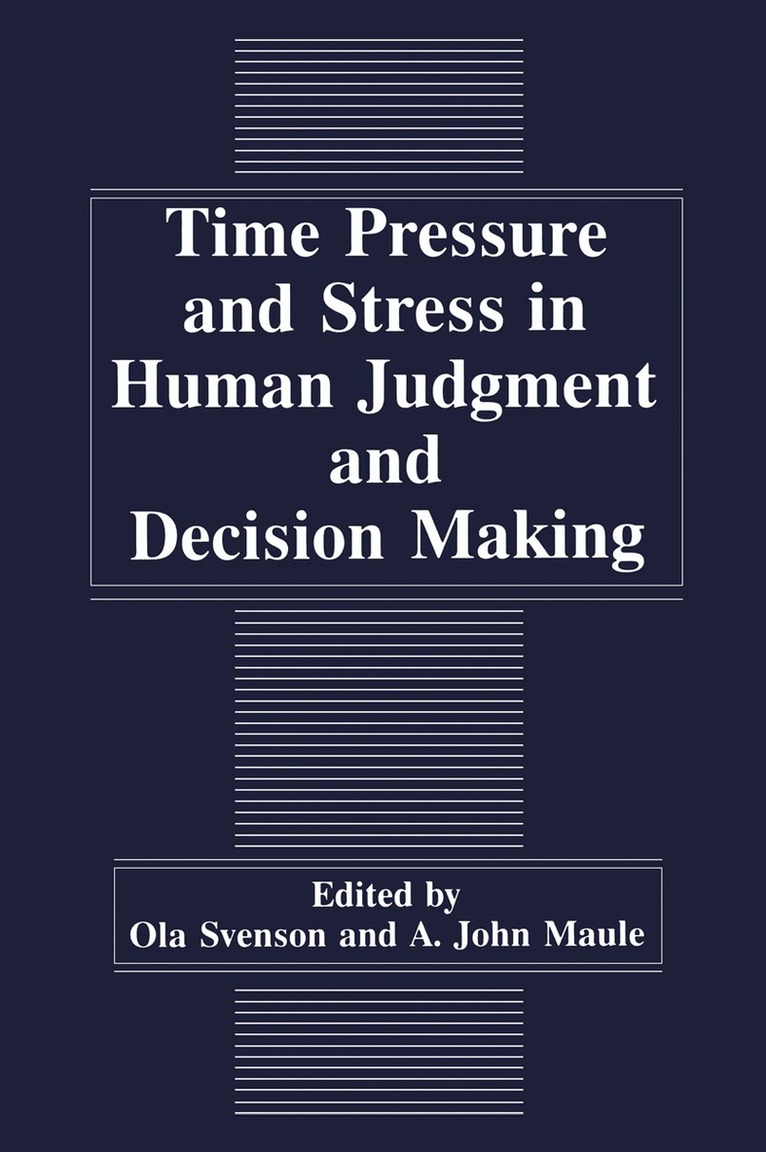
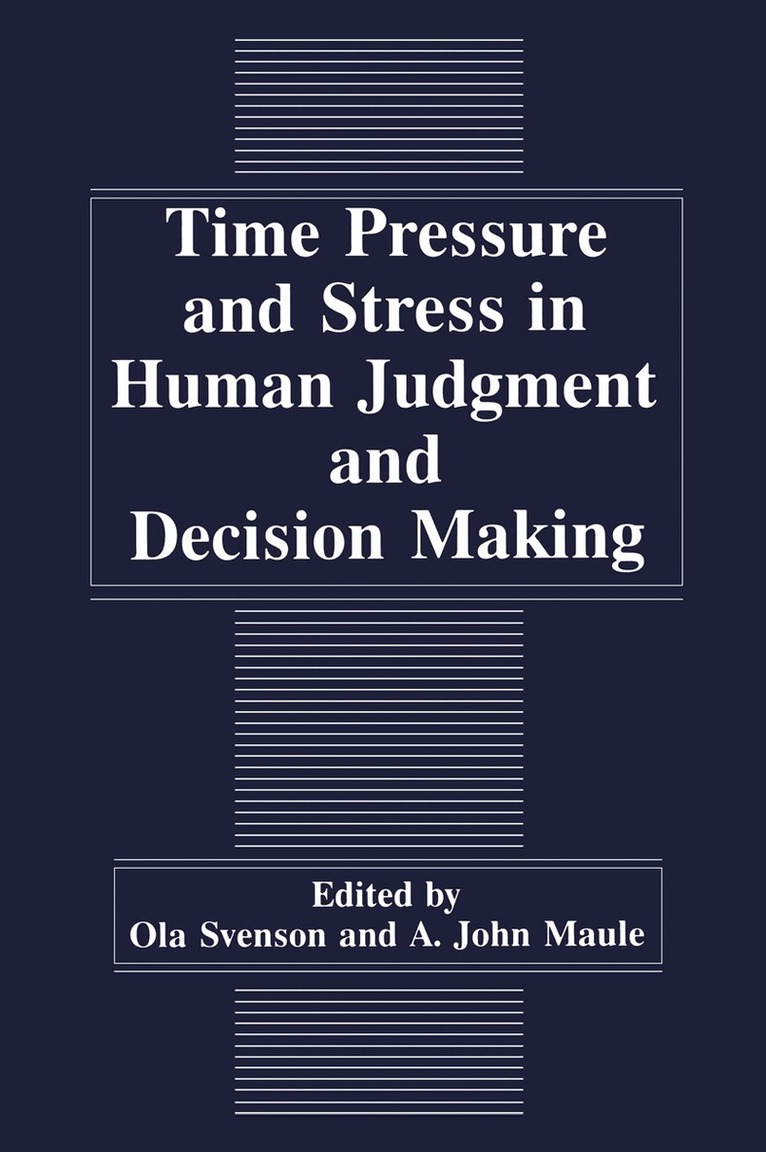
Some years ago we, the editors of this volume, found out about each other's deeply rooted interest in the concept of time, the usage of time, and the effects of shortage of time on human thought and behavior. Since then we have fostered the idea of bringing together different perspectives in this area. We are now, there fore, very content that our idea has materialized in the present volume. There is both anecdotal and empirical evidence to suggest that time con straints may affect behavior. Managers and other professional decision makers frequently identify time pressure as a major constraint on their behavior (Isen berg, 1984). Chamberlain and Zika (1990) provide empirical support for this view, showing that complaints of insufficient time are the most frequently report ed everyday minor stressors or hassles for all groups of people except the elderly. Similarly, studies in occupational settings have identified time pressure as one of the central components of workload (Derrich, 1988; O'Donnel & Eggemeier, 1986).
Häftad, Engelska, 2012
1 051 kr
Skickas inom 10-15 vardagar
Some years ago we, the editors of this volume, found out about each other's deeply rooted interest in the concept of time, the usage of time, and the effects of shortage of time on human thought and behavior. Since then we have fostered the idea of bringing together different perspectives in this area. We are now, there fore, very content that our idea has materialized in the present volume. There is both anecdotal and empirical evidence to suggest that time con straints may affect behavior. Managers and other professional decision makers frequently identify time pressure as a major constraint on their behavior (Isen berg, 1984). Chamberlain and Zika (1990) provide empirical support for this view, showing that complaints of insufficient time are the most frequently report ed everyday minor stressors or hassles for all groups of people except the elderly. Similarly, studies in occupational settings have identified time pressure as one of the central components of workload (Derrich, 1988; O'Donnel & Eggemeier, 1986).
E-bok
PDF, Engelska, 20131 328 kr
Läs direkt efter köp
Some years ago we, the editors of this volume, found out about each other''s deeply rooted interest in the concept of time, the usage of time, and the effects of shortage of time on human thought and behavior. Since then we have fostered the idea of bringing together different perspectives in this area. We are now, there fore, very content that our idea has materialized in the present volume. There is both anecdotal and empirical evidence to suggest that time con straints may affect behavior. Managers and other professional decision makers frequently identify time pressure as a major constraint on their behavior (Isen berg, 1984). Chamberlain and Zika (1990) provide empirical support for this view, showing that complaints of insufficient time are the most frequently report ed everyday minor stressors or hassles for all groups of people except the elderly. Similarly, studies in occupational settings have identified time pressure as one of the central components of workload (Derrich, 1988; O''Donnel & Eggemeier, 1986).