Okeoghene Odudu – författare
Visar alla böcker från författaren Okeoghene Odudu. Handla med fri frakt och snabb leverans.
8 produkter
8 produkter
Inbunden, Engelska, 2006
1 050 kr
Skickas inom 5-8 vardagar
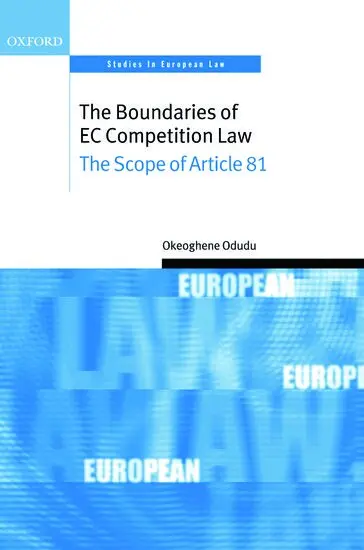
This monograph addresses two problems surrounding the interpretation and application of Article 81 of the EC Treaty - what is competition and how does Article 81 ensure that competition is protected. After over 40 years of application and a period of modernisation, decentralisation, and reflection, it is possible to understand Article 81 and what it seeks to achieve. The monograph's aim is to reveal the intellectual order and rational structure underlying the law so as to enable the reader to understand Article 81 in a clear and rigorous manner. This is done by breaking Article 81 down into its constituent elements and examining the function that each element serves. Arguing that jurisdiction rests on a public/private distinction, both the substantive and the justificatory rules are cast to generate obligations appropriate for private actors to perform. Actors and activities falling within the scope of Article 81 are subject to the substantive element prohibiting contrived reductions in output. Since output reduction can co-exist with cost reduction/innovation, and that these latter features are desirable, cost reduction and innovation operate to justify infringement of the substantive obligation. Thus this monograph argues that output, cost and innovation are the only legitimate issues in an Article 81 analysis. It is in this sense that the monograph is concerned with the boundaries of Article 81 EC.
Inbunden, Engelska, 2009
1 283 kr
Skickas inom 10-15 vardagar
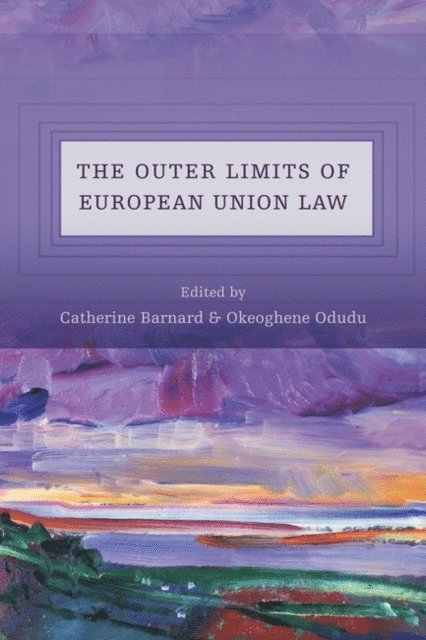
A commonly expressed view is that the citizens and the Member States are destined to be overcome by the European Union. There is a sense that the Union of today is not what was intended to be created or acceded to by the Member States or its citizens. The Outer Limits of European Union Law brings together a diverse group of legal scholars to consider aspects of EU substantive, constitutional and procedural law in a manner highlighting the many senses in which the European Union is or can be limited and so demonstrating that the fear of being overcome is largely a false fear. By exploring the mechanisms and devices used to limit the European Union, the contributors also reveal not only the strengths of the various limits, but also and more crucially the weakness of the limits , thereby demonstrating that the prospect of being overcome may be a genuine risk to be guarded against.By considering general themes (eg legitimacy) and core subject areas (eg policing, free movement of goods, remedies) the book reveals the various techniques used by the Court of Justice, Community institutions and Member States to define and modify the outer limits of the European Union and European Union Law.
E-bok
PDF, Engelska, 20091 343 kr
Läs direkt efter köp
A commonly expressed view is that the citizens and the Member States are destined to be overcome by the European Union. There is a sense that the Union of today is not what was intended to be created or acceded to by the Member States or its citizens. The Outer Limits of European Union Law brings together a diverse group of legal scholars to consider aspects of EU substantive, constitutional and procedural law in a manner highlighting the many senses in which the European Union is or can be limited and so demonstrating that the fear of being overcome is largely a false fear. By exploring the mechanisms and devices used to limit the European Union, the contributors also reveal not only the strengths of the various limits, but also and more crucially the weakness of the limits , thereby demonstrating that the prospect of being overcome may be a genuine risk to be guarded against. By considering general themes (eg legitimacy) and core subject areas (eg policing, free movement of goods, remedies) the book reveals the various techniques used by the Court of Justice, Community institutions and Member States to define and modify the outer limits of the European Union and European Union Law.
E-bok
PDF, Engelska, 20092 645 kr
Läs direkt efter köp
The Cambridge Yearbook of European Legal Studies provides a forum for the scrutiny of significant issues in EU Law, the law of the European Convention on Human Rights, and Comparative Law with a ''European'' dimension, and particularly those issues which have come to the fore during the year preceding publication. The contributions appearing in the collection are commissioned by the Centre for European Legal Studies (CELS) Cambridge, a research centre in the Law Faculty of the University of Cambridge specialising in European legal issues.The papers presented are at the cutting edge of the fields which they address, and reflect the views of recognised experts drawn from the University world, legal practice, and the institutions of both the EU and its Member States. Inclusion of the comparative dimension brings a fresh perspective to the study of European law, and highlights the effects of globalisation of the law more generally, and the resulting cross fertilisation of norms and ideas that has occurred among previously sovereign and separate legal orders. The Cambridge Yearbook of European Legal Studies is an invaluable resource for those wishing to keep pace with legal developments in the fast moving world of European integration. INDIVIDUAL CHAPTERSPlease click on the link below to purchase individual chapters from Volume 11 through Ingenta Connect:www.ingentaconnect.comSUBSCRIPTION TO SERIESTo place an annual online subscription or a print standing order through Hart Publishing please click on the link below. Please note that any customers who have a standing order for the printed volumes will now be entitled to free online access.www.hartjournals.co.uk/cyels/subsEditorial Advisory Board: Albertina Albors-Llorens, John Bell, Alan Dashwood, Simon Deakin, David Feldman, Richard Fentiman, Angus Johnston, John SpencerFounding Editors: Alan Dashwood and Angela Ward
E-bok
PDF, Engelska, 20102 645 kr
Läs direkt efter köp
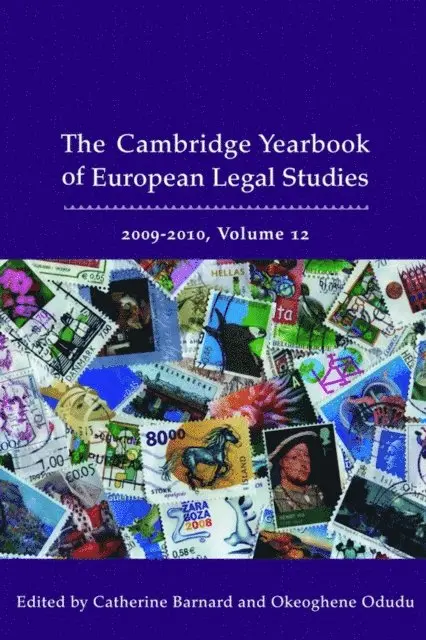
The Cambridge Yearbook of European Legal Studies provides a forum for the scrutiny of significant issues in EU Law, the law of the European Convention on Human Rights, and Comparative Law with a ''European'' dimension, and particularly those issues which have come to the fore during the year preceding publication. The contributions appearing in the collection are commissioned by the Centre for European Legal Studies (CELS) Cambridge, a research centre in the Law Faculty of the University of Cambridge specialising in European legal issues.The papers presented are at the cutting edge of the fields which they address, and reflect the views of recognised experts drawn from the University world, legal practice, and the institutions of both the EU and its Member States. Inclusion of the comparative dimension brings a fresh perspective to the study of European law, and highlights the effects of globalisation of the law more generally, and the resulting cross fertilisation of norms and ideas that has occurred among previously sovereign and separate legal orders. The Cambridge Yearbook of European Legal Studies is an invaluable resource for those wishing to keep pace with legal developments in the fast moving world of European integration. INDIVIDUAL CHAPTERSPlease click on the link below to purchase individual chapters from Volume 12 through Ingenta Connect:www.ingentaconnect.comSUBSCRIPTION TO SERIESTo place an annual online subscription or a print standing order through Hart Publishing please click on the link below. Please note that any customers who have a standing order for the printed volumes will now be entitled to free online access.www.hartjournals.co.uk/cyels/subsEditorial Advisory Board: Albertina Albors-Llorens, John Bell, Alan Dashwood, Simon Deakin, David Feldman, Richard Fentiman, Angus Johnston, John SpencerFounding Editors: Alan Dashwood and Angela Ward
E-bok
Engelska, 20091 392 kr
Läs direkt efter köp
A commonly expressed view is that the citizens and the Member States are destined to be overcome by the European Union. There is a sense that the Union of today is not what was intended to be created or acceded to by the Member States or its citizens. The Outer Limits of European Union Law brings together a diverse group of legal scholars to consider aspects of EU substantive, constitutional and procedural law in a manner highlighting the many senses in which the European Union is or can be limited and so demonstrating that the fear of being overcome is largely a false fear. By exploring the mechanisms and devices used to limit the European Union, the contributors also reveal not only the strengths of the various limits, but also and more crucially the weakness of the limits , thereby demonstrating that the prospect of being overcome may be a genuine risk to be guarded against. By considering general themes (eg legitimacy) and core subject areas (eg policing, free movement of goods, remedies) the book reveals the various techniques used by the Court of Justice, Community institutions and Member States to define and modify the outer limits of the European Union and European Union Law.
E-bok
PDF, Engelska, 20112 304 kr
Läs direkt efter köp
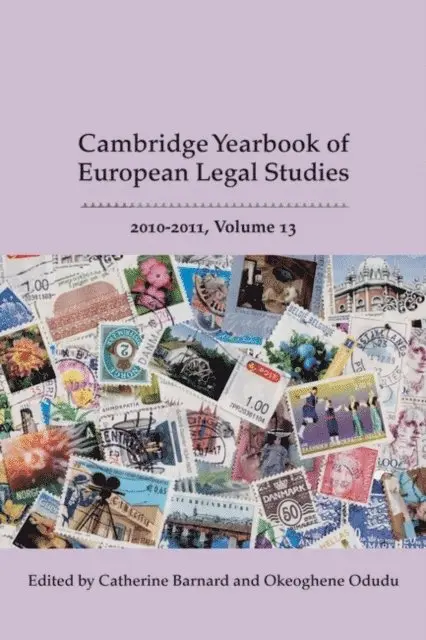
The Cambridge Yearbook of European Legal Studies provides a forum for the scrutiny of significant issues in EU Law, the law of the European Convention on Human Rights, and Comparative Law with a ''European'' dimension, and particularly those issues which have come to the fore during the year preceding publication. The contributions appearing in the collection are commissioned by the Centre for European Legal Studies (CELS) Cambridge, a research centre in the Law Faculty of the University of Cambridge specialising in European legal issues.The papers presented are at the cutting edge of the fields which they address, and reflect the views of recognised experts drawn from the University world, legal practice, and the institutions of both the EU and its Member States. Inclusion of the comparative dimension brings a fresh perspective to the study of European law, and highlights the effects of globalisation of the law more generally, and the resulting cross fertilisation of norms and ideas that has occurred among previously sovereign and separate legal orders. The Cambridge Yearbook of European Legal Studies is an invaluable resource for those wishing to keep pace with legal developments in the fast moving world of European integration. INDIVIDUAL CHAPTERSPlease click on the link below to purchase individual chapters from Volume 13 through Ingenta Connect:www.ingentaconnect.comSUBSCRIPTION TO SERIESTo place an annual online subscription or a print standing order through Hart Publishing please click on the link below. Please note that any customers who have a standing order for the printed volumes will now be entitled to free online access.www.hartjournals.co.uk/cyels/subsEditorial Advisory Board: Albertina Albors-Llorens, John Bell, Alan Dashwood, Simon Deakin, David Feldman, Richard Fentiman, Angus Johnston, John SpencerFounding Editors: Alan Dashwood and Angela WardIus Commune Prize 2012Alexandre Saydé wrote Chapter 15 in this volume entitled: ''One Law, Two Competitions: An Enquiry into the Contradictions of Free Movement Law'' and we are delighted to announce that he has been awarded the Ius Commune Prize 2012.
E-bok
Engelska, 20112 367 kr
Läs direkt efter köp
The Cambridge Yearbook of European Legal Studies provides a forum for the scrutiny of significant issues in EU Law, the law of the European Convention on Human Rights, and Comparative Law with a ''European'' dimension, and particularly those issues which have come to the fore during the year preceding publication. The contributions appearing in the collection are commissioned by the Centre for European Legal Studies (CELS) Cambridge, a research centre in the Law Faculty of the University of Cambridge specialising in European legal issues.The papers presented are at the cutting edge of the fields which they address, and reflect the views of recognised experts drawn from the University world, legal practice, and the institutions of both the EU and its Member States. Inclusion of the comparative dimension brings a fresh perspective to the study of European law, and highlights the effects of globalisation of the law more generally, and the resulting cross fertilisation of norms and ideas that has occurred among previously sovereign and separate legal orders. The Cambridge Yearbook of European Legal Studies is an invaluable resource for those wishing to keep pace with legal developments in the fast moving world of European integration. INDIVIDUAL CHAPTERSPlease click on the link below to purchase individual chapters from Volume 13 through Ingenta Connect:www.ingentaconnect.comSUBSCRIPTION TO SERIESTo place an annual online subscription or a print standing order through Hart Publishing please click on the link below. Please note that any customers who have a standing order for the printed volumes will now be entitled to free online access.www.hartjournals.co.uk/cyels/subsEditorial Advisory Board: Albertina Albors-Llorens, John Bell, Alan Dashwood, Simon Deakin, David Feldman, Richard Fentiman, Angus Johnston, John SpencerFounding Editors: Alan Dashwood and Angela WardIus Commune Prize 2012Alexandre Saydé wrote Chapter 15 in this volume entitled: ''One Law, Two Competitions: An Enquiry into the Contradictions of Free Movement Law'' and we are delighted to announce that he has been awarded the Ius Commune Prize 2012.