
Olle Elgerd – författare
Visar alla böcker från författaren . Handla med fri frakt och snabb leverans.
3 produkter
3 produkter
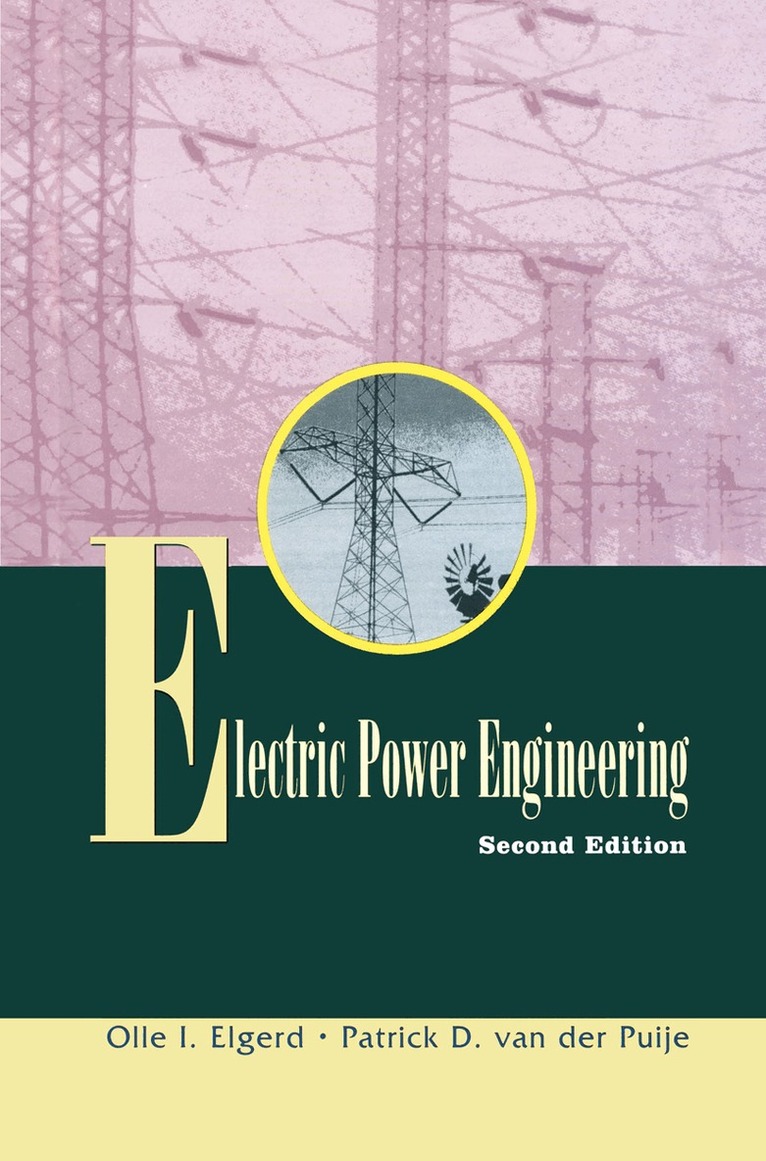
Inbunden, Engelska, 1997
1 611 kr
Skickas inom 10-15 vardagar
This book is about electric energy: its generation, its transmission from the point of generation to where it is required, and its transformation into required forms. To achieve this end, a number of devices are essential-such as generators, trans mission lines, transformers, and electric motors. We discuss the design, construc tion, and operating characteristics of the electric devices used in the transformation to and from electric energy. This text is designed to be used in a one-semester course in electric energy con version at the second-year level of the Bachelor of Engineering course. It is assumed that the student is familiar with the laws of thermodynamics and has taken a course in basic circuit analysis, including the application of phasors. We begin with a discussion of how humankind has successfully harnessed the energy of wind, water, the sun, biomass, animals, geothermal sources, fossils, and nuclear fission to make its life comfortable. Some of the consequences of this activity on the environment are examined. In Chapter 2, we review the basic physics of energy and its conversion. This may be, to some extent, a repetition of knowledge gained in high-school and first year university courses. However, we believe that such review is necessary to establish a suitable base from which to launch the subject of electric energy con version.
Häftad, Engelska, 2012
1 612 kr
Skickas inom 10-15 vardagar
This book is about electric energy: its generation, its transmission from the point of generation to where it is required, and its transformation into required forms. To achieve this end, a number of devices are essential-such as generators, trans mission lines, transformers, and electric motors. We discuss the design, construc tion, and operating characteristics of the electric devices used in the transformation to and from electric energy. This text is designed to be used in a one-semester course in electric energy con version at the second-year level of the Bachelor of Engineering course. It is assumed that the student is familiar with the laws of thermodynamics and has taken a course in basic circuit analysis, including the application of phasors. We begin with a discussion of how humankind has successfully harnessed the energy of wind, water, the sun, biomass, animals, geothermal sources, fossils, and nuclear fission to make its life comfortable. Some of the consequences of this activity on the environment are examined. In Chapter 2, we review the basic physics of energy and its conversion. This may be, to some extent, a repetition of knowledge gained in high-school and first year university courses. However, we believe that such review is necessary to establish a suitable base from which to launch the subject of electric energy con version.
E-bok
PDF, Engelska, 20122 049 kr
Läs direkt efter köp
This book is about electric energy: its generation, its transmission from the point of generation to where it is required, and its transformation into required forms. To achieve this end, a number of devices are essential-such as generators, trans mission lines, transformers, and electric motors. We discuss the design, construc tion, and operating characteristics of the electric devices used in the transformation to and from electric energy. This text is designed to be used in a one-semester course in electric energy con version at the second-year level of the Bachelor of Engineering course. It is assumed that the student is familiar with the laws of thermodynamics and has taken a course in basic circuit analysis, including the application of phasors. We begin with a discussion of how humankind has successfully harnessed the energy of wind, water, the sun, biomass, animals, geothermal sources, fossils, and nuclear fission to make its life comfortable. Some of the consequences of this activity on the environment are examined. In Chapter 2, we review the basic physics of energy and its conversion. This may be, to some extent, a repetition of knowledge gained in high-school and first year university courses. However, we believe that such review is necessary to establish a suitable base from which to launch the subject of electric energy con version.