Oscar Núñez – författare
Visar alla böcker från författaren Oscar Núñez. Handla med fri frakt och snabb leverans.
6 produkter
6 produkter
Inbunden, Engelska, 2025
1 662 kr
Skickas inom 5-8 vardagar
E-bok
PDF, Engelska, 20193 639 kr
Läs direkt efter köp
Capillary electrophoresis (CE) comprises a family of related separation techniques in which an electric field is used to achieve the separation of components in a mixture. One of the key features of CE is the simplicity of the instrumentation required, and today, these techniques have become powerful analytical tools for high efficiency separation, and the identification of a variety of ionic and neutral compounds. Moreover, the versatility of CE operational modes (capillary zone electrophoresis, micellar electrokinetic capillary chromatography, capillary electrochromatography, capillary isoelectric focusing, isotachophoresis, non-aqueous capillary electrophoresis, etc.) and detection systems (ultraviolet, fluorescence, amperometric, mass spectrometry…) make CE useful for applications in many fields such as environmental, food, pharmaceutical, and forensic analysis. The typcial drawback of CE techniques, based on their low sensitivity when dealing with conventional UV-detection, due to their short detection pathways and the short sample volume introduced into the capillary, has been largely resolved not only by using more sensitive detectors like fluorescence, amperometric, or mass spectrometry, but by the employment of both off-line and on-line enrichment procedures. The aim of this present book is to address the state-of-the art of capillary electrophoresis techniques within this early twenty-first century, by reviewing new trends and the most relevant applications described in the literature. Uses in fields such as food, environmental, forensic and biological analysis are addressed by means of relevant application. The scope of this book is intentionally broad and is aimed at worldwide analytical laboratories, both public and private, at acadamic institutions, as well as researchers.
Inbunden, Engelska, 2015
2 971 kr
Skickas inom 3-6 vardagar
There is a growing need for high-throughput separations in food and environmental research that are able to cope with the analysis of a large number of compounds in very complex matrices. Whereas the most common approach for solving many analytical problems has often been high-performance liquid chromatography (HPLC), the recent use of fast or ultra-fast chromatographic methods for environmental and food analysis has increased the overall sample throughput and laboratory efficiency without loss (and even with an improvement) in the resolution obtained by conventional HPLC systems.This book brings together researchers at the top of their field from across the world to discuss and analyze recent advances in fast liquid chromatography-mass spectrometry (LC-MS) methods in food and environmental analysis. First, the most novel approaches to achieve fast and ultra-fast methods as well as the use of alternative and complementary stationary phases are described. Then, recent advances in fast LC-MS methods are addressed, focusing on novel treatment procedures coupled with LC-MS, new ionization sources, high-resolution mass spectrometry, and the problematic confirmation and quantification aspects in mass spectrometry. Finally, relevant LC-MS applications in food and environmental analysis such as the analysis of pesticides, mycotoxins, food packaging contaminants, perfluorinated compounds and polyphenolic compounds are described.The scope of the book is intentionally broad and is aimed at worldwide analytical laboratories working in food and environmental applications as well as researchers in universities worldwide.
Inbunden, Engelska, 2021
5 647 kr
Skickas inom 5-8 vardagar
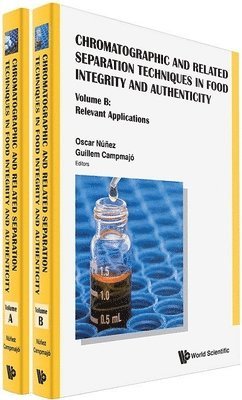
Food manufacturers, researchers and society in general are increasingly highly interested in the quality and origin of food products. Considering the complexity of the food chain in a globalized world — where many players are involved between production and consumption — fraudulent food manipulation and adulteration practices are increasingly easier to conduct without being detected. Generally, food adulteration is carried out to increase volume, to mask the presence of inferior quality components, and to replace authentic substances for the seller's economic gain. Analytical methodologies to guarantee food integrity and authenticity are therefore required.Chromatographic and Related Separation Techniques in Food Integrity and Authenticity — Volume A: Advances in Chromatographic Techniques addresses fraud prevention and the latest chromatographic and related separation analytical techniques to guarantee food integrity and authenticity by giving special attention to relevant authenticity issues in food production.Chromatographic and Related Separation Techniques in Food Integrity and Authenticity — Volume B: Relevant Applications addresses the relevant application of techniques to assess different food products' integrity and authenticity.
Inbunden, Engelska, 2025
1 938 kr
Skickas inom 3-6 vardagar
Food manufacturers, researchers and society in general are becoming very interested in the quality, integrity and safety of food products. Within this context, and considering the complexity of the food chain in a globalized world where many players are involved between the production and consumption of a food product, together with the possible ways of food contamination such as environmental, agrochemical and food manipulation (packaging) sources, fast and reliable analytical methodologies to guarantee food quality, integrity and safety are required.Mass spectrometry therefore plays a relevant role in this field to satisfy the demands of sensitivity and selectivity for the analysis of complex food samples. In this book, new advances in mass spectrometry techniques in food analysis, involving their hyphenation with chromatographic and related separation techniques, as well as relevant applications reporting the determination of polyphenols, pesticides, mycotoxins, lipids, and peptides among other compounds, will be addressed.
E-bok
PDF, Engelska, 20232 460 kr
Läs direkt efter köp
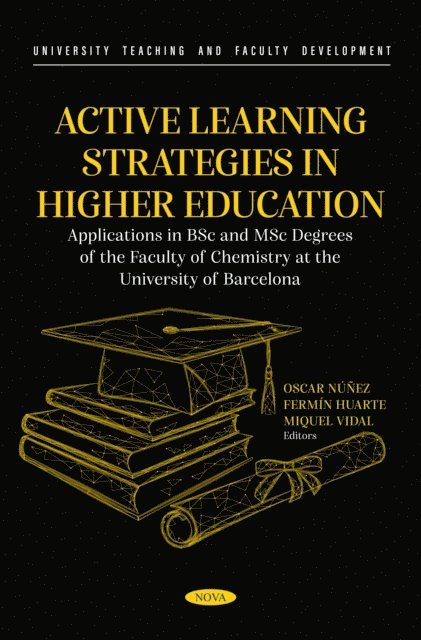
The profound change that higher education is undergoing is having a special impact on the processes of teaching and training of university teaching staff. The emergence of a new curricular structure based on learning outcomes and the proposal of new teaching methods focused on student learning generate pedagogical-didactic demands that require a teaching profile capable of fostering meaningful learning and the ability to develop reflective thinking in our students. This requires the implementation of teaching methodologies focused not only on the transmission of knowledge of the discipline, but also on the acquisition of soft skills such as analytical skills, critical thinking, teamwork, data interpretation, effective time management, decision making and approaching new and open problems. In recent years, the University of Barcelona (UB) has designed and implemented programs aimed at teaching improvement and innovation. In this context, and as a result of previous actions and experiences, the program "Research, Innovation and Improvement of Teaching and Learning (RIMDA, Recerca, Innovació i Millora de la Docència i l''Aprenentatge), was designed in 2017 to promote teaching quality at the UB. Within this framework, the creation of teaching projects at the faculty level has guided the UB''s teaching and learning quality. The present book “Active Learning Strategies in Higher Education. Application in BSc and MSc Degrees of the Faculty of Chemistry at the University of Barcelona” summarizes the results of the institutional project aiming at promoting teaching quality at the Faculty of Chemistry of the University of Barcelona, the so-called RIMDA-Chemistry Project. The project and methodological approach followed is fully described in Chapter 1 (Institutional project to promote teaching quality at the University of Barcelona’s Faculty of Chemistry). As described in the chapter, the RIMDA-Chemistry Project aims to consolidate and promote teaching quality in the Faculty of Chemistry, with the objective of integrating teacher training and teaching innovation in the context of subjects in the area of Chemistry. The teaching innovation lines employed within the RIMDA-Chemistry Project were: flipped-classroom (just-in-time teaching mode); flipped-classroom (team-based learning mode); case-based learning; problem-based learning; and service-learning. The selected lines of active learning teaching were applied to theoretical and experimental subjects of BSc and MSc degrees offered at the Faculty of Chemistry, with collaborative teaching teams working through lesson study-clinical supervision approach in a planning-action-reflection process, guided by an expert advisor who was also teaching staff of the Faculty of Chemistry. The subsequent chapters of the book describe in detail the implementations of the active learning lines. These chapters illustrate how active learning strategies were applied to undergraduate and master''s degree compulsory and elective subjects. New collaborative teaching groups were created based on the methodological learning approach instead of those based on the subject knowledge area. According to faculty perceptions and/or responses to specific questionnaires by students, active learning strategies systematically improved students'' acquisition of competencies, especially decision-making, oral communication, information search and critical interpretation of information, in addition to improving subject grades. Moreover, especially in the context of case and problem solving, students developed their mental abilities better by evaluating real situations and applying concepts than by learning those same (often abstract) concepts simply from theoretical examples. In addition, teamwork and interaction with other students constituted effective training in the human aspects of management. After the implementation of the actions related to the different strategies, the feedback provided by the students showed a high level of satisfaction with the learning experience. However, the implementation of the activity implied more work on the part of teachers and students, which led to the reflection that, despite these remarkable benefits, the learning advantages and the investment of additional effort required by these student-centered active methodologies must be weighed against each other. The application of learner-centered methodologies remains a challenge, as most teachers and students are accustomed to traditional teaching. For teachers to adopt these new methodologies they must learn from the experience and examples of others, gain confidence in their use and see the value of their application. As a final main message, active learning strategies must transcend the limited scope of the activities of a teaching innovation group and be incorporated as a consolidated teaching methodology in undergraduate and master''s degree curricula.