Oswald Hanfling - Böcker
Visar alla böcker från författaren Oswald Hanfling. Handla med fri frakt och snabb leverans.
8 produkter
8 produkter
495 kr
Skickas inom 10-15 vardagar
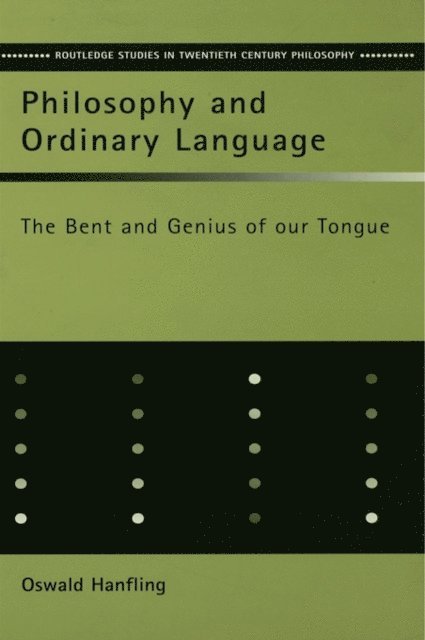
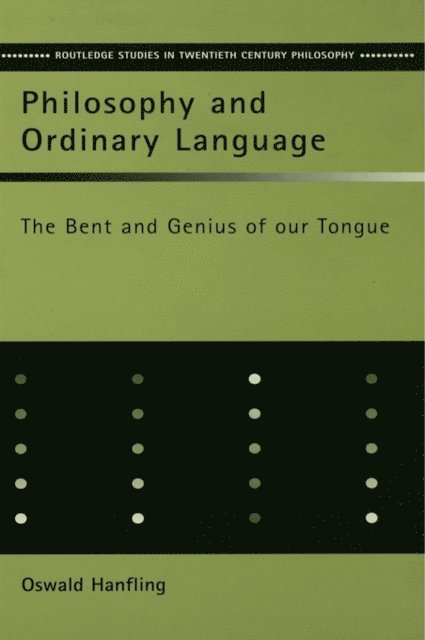
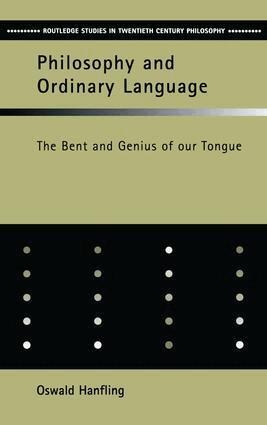
What is philosophy about and what are its methods? Philosophy and Ordinary Language is a defence of the view that philosophy is largely about questions of language, which to a large extent means ordinary language. Some people argue that if philosophy is about ordinary language, then it is necessarily less deep and difficult than it is usually taken to be but Oswald Hanfling shows us that this isn't true.Hanfling, a leading expert in the development of analytic philosophy, covers a wide range of topics, including scepticism and the definition of knowledge, free will, empiricism, folk psychology, ordinary versus artificial logic, and philosophy versus science. Drawing on philosophers such as Austin, Wittgenstein, and Quine, this book explores the nature of ordinary language in philosophy.

2 088 kr
Skickas inom 10-15 vardagar
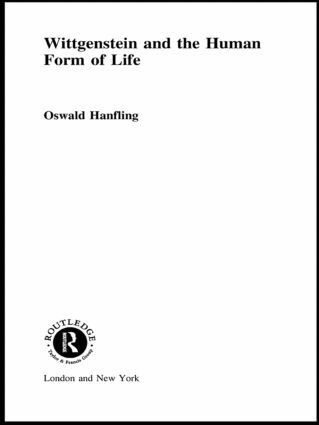
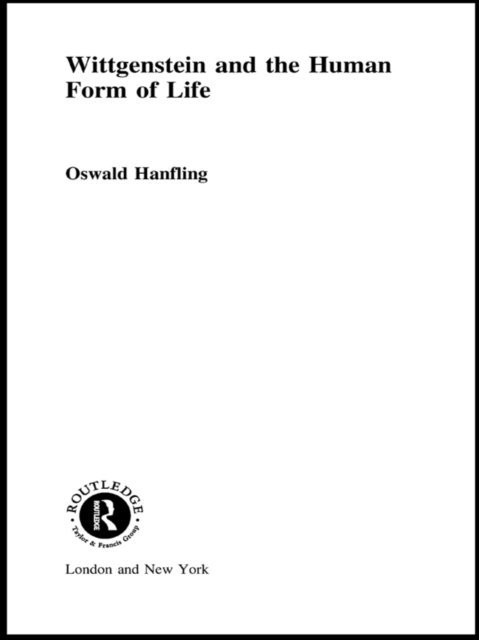
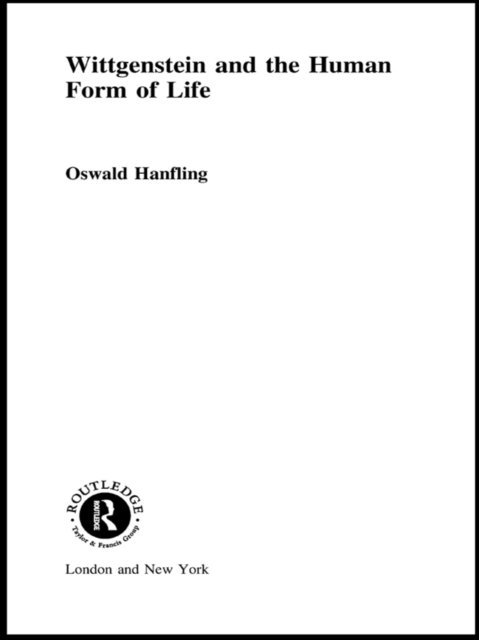
Wittgenstein's later writings generate a great deal of controversy and debate, as do the implications of his ideas for such topics as consciousness, knowledge, language and the arts.Oswald Hanfling addresses a widespeard tendency to ascribe to Wittgenstein views that go beyond those he actually held. Separate chapters deal with important topics such as the private language argument, rule-following, the problem of other minds, and the ascription of scepticism to Wittgenstein. Describing Wittgenstein as a 'humanist' thinker, he contrasts his views on language, art humanity and philosophy itself with those of scientifically minded philosophers. He argues that 'the human form of life' calls for a kind of understanding that cfannot be achieved by the methods of emirical science; that consiousness, for example, cannot properly be regarded as a property of the bran; and that the resulting 'problem of consoiusness is an illusion.Wittgenstein and the Human Form of Life is essential reading for anyone interested in Wittgenstein's approach to what it means to be human. It will be invaluable to all Wittgenstein scholars, and all who are interested in the philosophy of mind, language and aesthetics.
766 kr
Skickas inom 10-15 vardagar
What is philosophy about and what are its methods? Philosophy and Ordinary Language is a defence of the view that philosophy is largely about questions of language, which to a large extent means ordinary language. Some people argue that if philosophy is about ordinary language, then it is necessarily less deep and difficult than it is usually taken to be but Oswald Hanfling shows us that this isn't true.Hanfling, a leading expert in the development of analytic philosophy, covers a wide range of topics, including scepticism and the definition of knowledge, free will, empiricism, folk psychology, ordinary versus artificial logic, and philosophy versus science. Drawing on philosophers such as Austin, Wittgenstein, and Quine, this book explores the nature of ordinary language in philosophy.
820 kr
Skickas inom 10-15 vardagar
Wittgenstein's later writings generate a great deal of controversy and debate, as do the implications of his ideas for such topics as consciousness, knowledge, language and the arts.Oswald Hanfling addresses a widespeard tendency to ascribe to Wittgenstein views that go beyond those he actually held. Separate chapters deal with important topics such as the private language argument, rule-following, the problem of other minds, and the ascription of scepticism to Wittgenstein. Describing Wittgenstein as a 'humanist' thinker, he contrasts his views on language, art humanity and philosophy itself with those of scientifically minded philosophers. He argues that 'the human form of life' calls for a kind of understanding that cfannot be achieved by the methods of emirical science; that consiousness, for example, cannot properly be regarded as a property of the bran; and that the resulting 'problem of consoiusness is an illusion.Wittgenstein and the Human Form of Life is essential reading for anyone interested in Wittgenstein's approach to what it means to be human. It will be invaluable to all Wittgenstein scholars, and all who are interested in the philosophy of mind, language and aesthetics.
493 kr
Skickas inom 7-10 vardagar
Most discussions of medical and practical ethics have avoided direct confrontation with the query: what is the value and meaning of human life? The book addresses these issues directly, examining the variety of philosophical questions in the area, their meaningfulness and the paradoxes suggested by answers to those questions. Each chapter is an attempt to identify and correct the biases and confusions in such discussions. Specific areas considered are: relations to animals; the status of the human species; utilitarian and non-utilitarian arguments; religious answers to the question "why is life sacred and worthwhile?"; the meaning of death; the influence of science.
556 kr
Skickas inom 7-10 vardagar
Life and Meaning surveys a variety of Philosophical answers to the question, ‘What makes life worth living?' By collecting readings from a wide range of philosophical history it gives the various perspectives on the value and meaning of life. Aspects of life which appear to make it meaningless 9death, suffering, randomness) are seen in the light of their long and varied history in philosophical literature and are subjected to careful scrutiny. The texts chosen here pose these and related issues and offer various responses.By careful selection and helpful editorial introduction Life and Meaning gives essential texts which provide the background to contemporary enquiries. Is self-realization a coherent ideal? Does it mean being true to our original nature (Rousseau) or to our potential as ‘rational animals' (Aristotle)? Should we live according to our desires and in pursuit of happiness (Mill)? Should we appeal to a nature or ‘essence' be rejected as bad faith?
474 kr
Skickas inom 7-10 vardagar
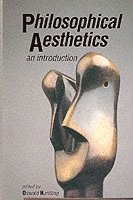
This volume contains surveys of the main issues in philosophical aesthetics, as discussed by thinkers from ancient Greece to modern times. It is written by members of the Open University and the intention throughout is to make the issues intelligible and interesting to as wide an audience as possible, including those readers with a general interest in the arts as well as more advanced students. The volume begins with questions about the nature of art and beauty. Are there any limitations to what may count as a work of art? Are imitations and forgeries really less valuable than original works? This is followed by discussions of aesthetic experience, truth and the 'imitation of nature' in works of art. In later chapters the emphasis is on the value and evaluation of art. Should art exist for the good of society? What justification is there for censorship in the case of pornography? The final chapters deal with Marxist theories of art, and with structuralist and post-structuralist views in recent continental writings.
2 088 kr
Skickas inom 10-15 vardagar
What is philosophy about and what are its methods? Philosophy and Ordinary Language is a defence of the view that philosophy is largely about questions of language, which to a large extent means ordinary language. Some people argue that if philosophy is about ordinary language, then it is necessarily less deep and difficult than it is usually taken to be but Oswald Hanfling shows us that this isn't true.Hanfling, a leading expert in the development of analytic philosophy, covers a wide range of topics, including scepticism and the definition of knowledge, free will, empiricism, folk psychology, ordinary versus artificial logic, and philosophy versus science. Drawing on philosophers such as Austin, Wittgenstein, and Quine, this book explores the nature of ordinary language in philosophy.