Otto Hospes - Böcker
Visar alla böcker från författaren Otto Hospes. Handla med fri frakt och snabb leverans.
5 produkter
5 produkter
European Union Green Deal in Southeast Asia
Critical Approaches to Policy Discourse and Implementation
Inbunden, Engelska, 2026
2 258 kr
Kommande
One of the first book-length works that critically examines the discourses and implementation of the European Union Green Deal (EGD) in Southeast Asia, this volume charts the complex mix of controversies, ambiguities, and opportunities that EGD policies present for Southeast Asian countries.Tasked with making the European Union climate-neutral by 2050 through green transformation, the EGD has generated controversy through a lack of clarity over implementation details, and caused considerable uncertainty for countries concerned about its economic and social impact. Controversies stem from its unilateral nature, rooted in power imbalances between the EU and Southeast Asia, that give rise to perceptions of inequity and create political-economic strains. Drawing on different theoretical approaches and detailed empirical analyses of key aspects of the EGD, chapters present critical contributions from a diverse group of established and emerging Southeast Asian and European scholars investigating the tension and complexity of EGD policy implementation and discourse.Demonstrating how foreign policy implementation can lead not only to contestation but also convergence and collaboration, this book will be of interest to researchers, postgraduates, and scholars in the fields of environmental policy, European Union policy, and South East Asian politics and policy specifically.
Rightless Resistance
Postcolonial Citizenship, Palm Oil, and Land Grabs in Indonesia
Inbunden, Engelska, 2026
2 201 kr
Skickas inom 3-6 vardagar
Rightless Resistance investigates why resistance to land grabbing so often fails. The rapid expansion of oil palm plantations has triggered widespread conflict across rural Indonesia as communities lose their land with little compensation. Based on an unprecedented study of 150 such conflicts, this book uncovers how villagers fight back against palm oil companies, and what their struggles reveal about power, law, and citizenship in postcolonial Indonesia.Enduring colonial legacies and collusive politics have left rural Indonesians virtually rightless, so villagers turn to customary traditions and social norms instead of formal law – a strategy that rarely gets results. By analyzing this resistance to corporate land grabbing, Ward Berenschot, Ahmad Dhiaulhaq, Afrizal, and Otto Hospes offer a new perspective on why land rights movements often fall short. When the legal system is unreliable, people aim lower – and the deeper power imbalances facilitating their dispossession go unchallenged.
Rightless Resistance
Postcolonial Citizenship, Palm Oil, and Land Grabs in Indonesia
Häftad, Engelska, 2026
489 kr
Skickas inom 3-6 vardagar
Rightless Resistance investigates why resistance to land grabbing so often fails. The rapid expansion of oil palm plantations has triggered widespread conflict across rural Indonesia as communities lose their land with little compensation. Based on an unprecedented study of 150 such conflicts, this book uncovers how villagers fight back against palm oil companies, and what their struggles reveal about power, law, and citizenship in postcolonial Indonesia.Enduring colonial legacies and collusive politics have left rural Indonesians virtually rightless, so villagers turn to customary traditions and social norms instead of formal law – a strategy that rarely gets results. By analyzing this resistance to corporate land grabbing, Ward Berenschot, Ahmad Dhiaulhaq, Afrizal, and Otto Hospes offer a new perspective on why land rights movements often fall short. When the legal system is unreliable, people aim lower—and the deeper power imbalances facilitating their dispossession go unchallenged.
Del 3 - European Institute for Food Law series
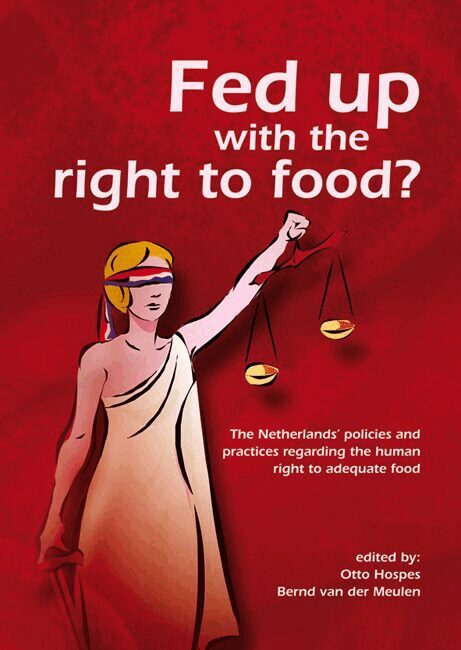
Fed up with the right to food?
The Netherlands' policies and practices regarding the human right to adequate food
Häftad, Engelska, 2009
1 165 kr
Skickas inom 5-8 vardagar
There is no one in this world who would deny the importance of access to adequate food for every human being. In fact, access to food has been declared a human right in 1948 with the Universal Declaration of Human Rights. In spite of the right to food to be more than half a century old, many are not aware, misunderstand or even marginalize this human right. This book serves two purposes and many audiences. First, it is meant for those who want to get a better understanding of the right to food and how this right has been developed in international law. Second, it also explains why this human right has been marginalized by one of the richest countries in the world: the Netherlands. As such this unique collection of articles provides an exciting view on the making of law and policy, with contributions from lawyers, sociologists and human rights defenders.
Del 5 - European Institute for Food Law series
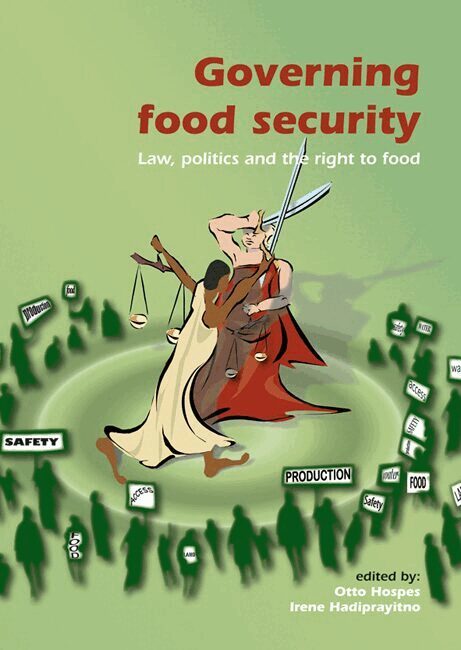
Governing food security
Law, politics and the right to food
Häftad, Engelska, 2010
1 688 kr
Skickas inom 5-8 vardagar
With only five years left until the 2015 deadline to achieve the Millennium Development Goals, food security still is a dream rather than reality: 'a situation that exists when all people, at all times, have physical and economic access to sufficient, safe and nutritious food to meet their dietary needs and food preferences for an active and healthy life'. Political commitments at world summits on food security, market-based agricultural policies, science-based food safety regulation and voluntary guidelines on the right to food have not ended hunger, malnourishment or food safety crises in our world. The question arises whether food insecurity is a situation that exists in spite of these commitments and legal measures, or rather due to them?This book has three purposes. Firstly, it offers insights in how law, politics and the right to food contribute to food security in both positive and negative ways. For this purpose, different theories, concepts and methodologies from legal, political, anthropological and sociological sciences are used and developed. Secondly, the book explains that food security and food policies cannot be treated as given, at one level or in one domain only. This is done in different ways: by pointing out the emergence of new paradigms on food security, human rights and science that shape food policies; by showing how law and policies at one level affect food security at another level; and by treating food security and food policies as linked to governance regimes of agriculture, food, feed, water or property. Finally, the book offers scholarly analysis of paradigms and practices but also presents social science-based ways to indirectly contribute to food security, varying from improving justiciability to building trust, from seeking ways to address non-scientific concerns to creating room for plurality of lifestyles and norms, from unmasking dominant discourse to understanding or strengthening abilities or arrangements to cope with vulnerability.