P. Eric Louw – författare
Visar alla böcker från författaren P. Eric Louw. Handla med fri frakt och snabb leverans.
5 produkter
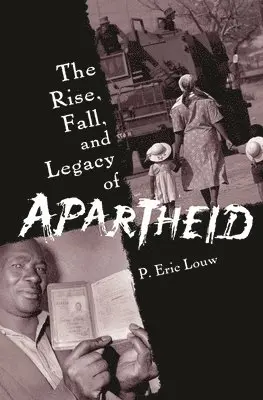
Rise, Fall, and Legacy of Apartheid
Av P. Eric Louw
Inbunden, 2004
856 kr
Lägg i varukorg
In this accessible narrative, Louw effectively tells the story of 20th-century South Africa by examining three political periods: British Hegemony (1900-1948), the Afrikaner Nationalist Period (1948-1993), and the post-1994 Black Nationalist Period. He argues that apartheid was premised upon the …
New Voices Over the Air
The Transformation of the South African Broadcasting Corporation in a Changing South Africa
Av P. Eric Louw, Viola C. Milton
Inbunden, 2012
854 kr
Lägg i varukorg
This book grapples with the first few years of South Africa’s journey out of apartheid. The book’s focus is on the South African Broadcasting Corporation (SABC) because the SABC was the first organisation transformed in post-apartheid South Africa. Because the SABC’s highly visible …
New Voices Over the Air
The Transformation of the South African Broadcasting Corporation in a Changing South Africa
Av P. Eric Louw
Häftad, 2012
374 kr
Lägg i varukorg
This book grapples with the first few years of South Africa’s journey out of apartheid. The book’s focus is on the South African Broadcasting Corporation (SABC) because the SABC was the first organisation transformed in post-apartheid South Africa. Because the SABC’s highly visible …
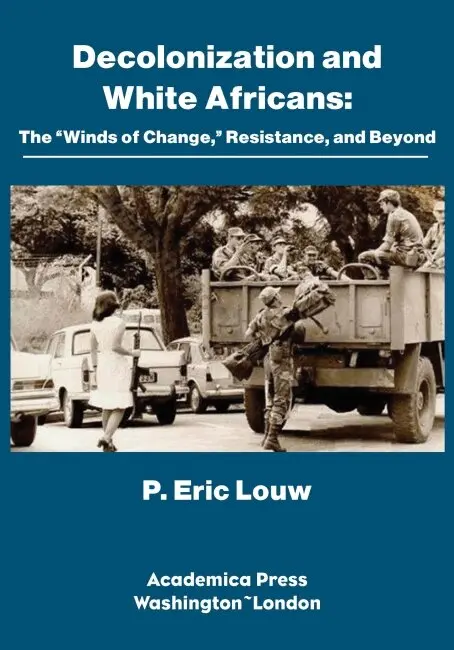
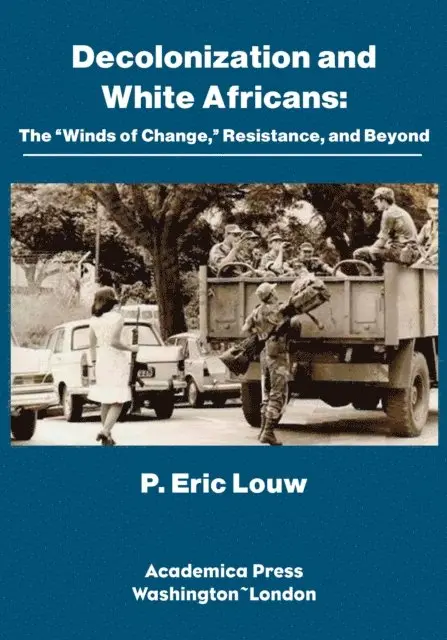
Decolonization and White Africans
The "Winds of Change," Resistance, and Beyond
Av P. Eric Louw
Inbunden, 2022
1766 kr
Lägg i varukorg
Decolonization and White Africans examines how African decolonization affected white Africans in eight countries – Algeria, Kenya, Northern Rhodesia (Zambia), Southern Rhodesia (Zimbabwe), Angola, Mozambique, South West Africa (Namibia), and South Africa – and discusses their varied responses to …
Decolonization and White Africans
The “Winds of Change,” Resistance, and Beyond
Av P. Eric Louw
E-bok, 2022
1361 kr
Lägg i varukorg
Decolonization and White Africans examines how African decolonization affected white Africans in eight countries – Algeria, Kenya, Northern Rhodesia (Zambia), Southern Rhodesia (Zimbabwe), Angola, Mozambique, South West Africa (Namibia), and South Africa – and discusses their varied responses to …