P. G. Aaron – författare
Visar alla böcker från författaren P. G. Aaron. Handla med fri frakt och snabb leverans.
7 produkter
7 produkter
Inbunden, Engelska, 1989
2 099 kr
Skickas inom 10-15 vardagar
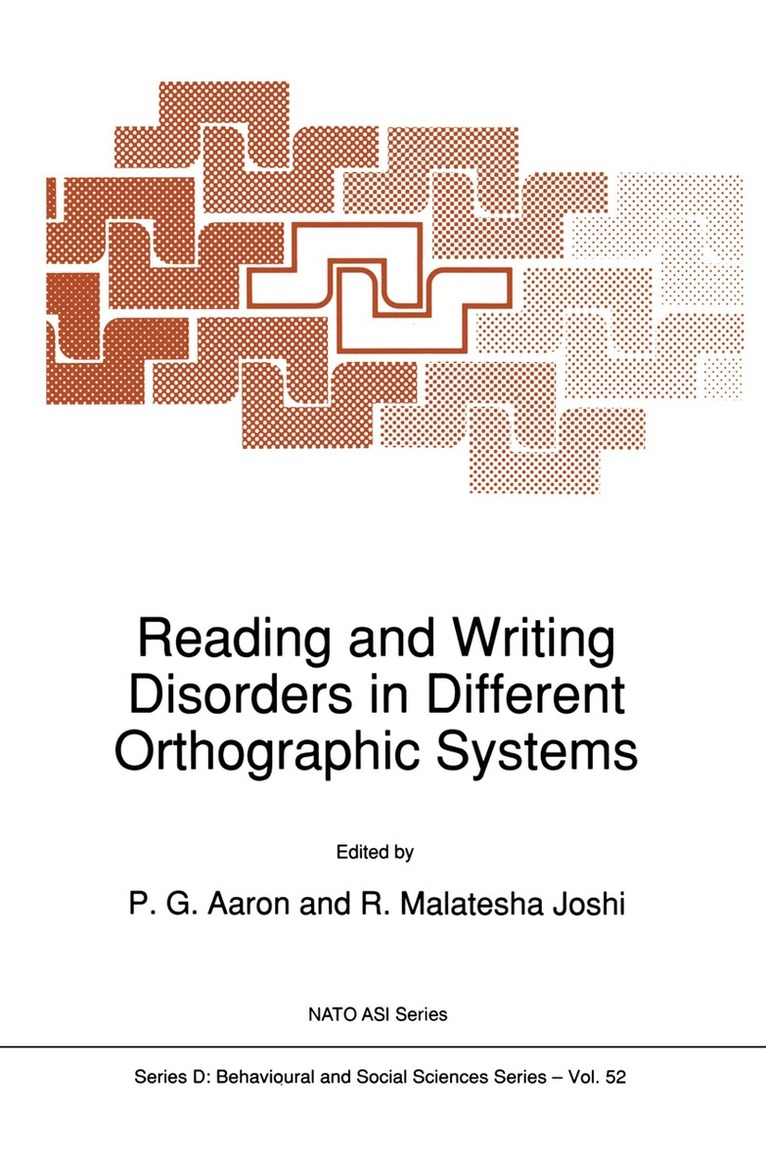
Even though Specific Reading Disability (Dyslexia) has been clinically recognized as a developmental learning disorder for nearly a hundred years. only within the past two decades it has become the subject of major experimental investigation. Because. by definition. dyslexic children are of average or superior intelligence. it is often suspected that some arcane feature of the written language is responsible for the inordinate difficulty experienced by these children in learning to read. The occasional claim that developmental dyslexia is virtually nonexistent in some languages coupled with the fact that languages differ in their writing systems has further rendered orthography a subject of serious investigation. The present Volume represents a collection of preliminary reports of investigations that explored the relationship between orthography and reading disabilities in different languages. Even though not explicitly stated. these reports are concerned with the question whether or not some orthographies are easier to learn to read and write than others. One dimension on which orthographies differ from each other is the kind of relationship they bear to pronunciation. The orthographies examined in this book range from the ones that have a simple one-to one grapheme-phoneme relationship to those which have a more complex relationship.
Häftad, Engelska, 1994
2 099 kr
Skickas inom 10-15 vardagar
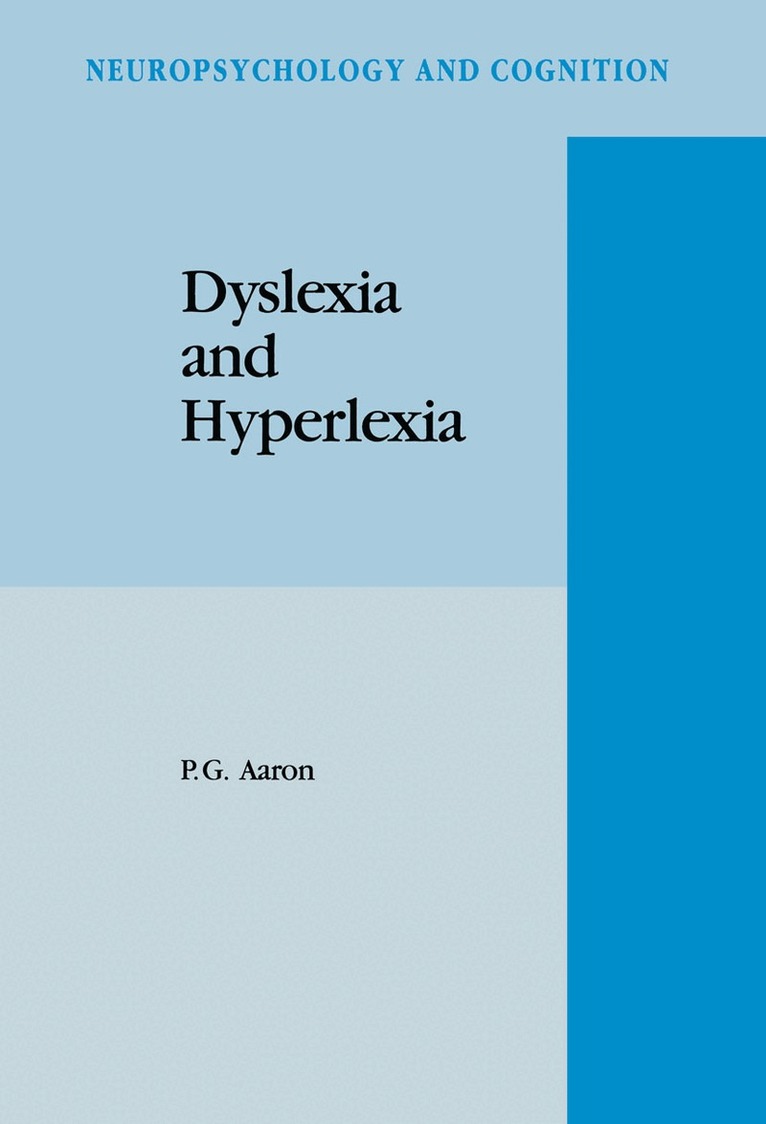
Even though I had been studying reading problems in children for a number of years as a means of understanding cognitive processes, I became deeply committed to the study of developmental dyslexia after my encounter with S. H. , a dyslexic college student. Until then, dyslexia to me remained an interesting phenomenon but somewhat removed from the mainstream of my research interests. The facts that, in spite of his superior IQ, S. H. could read no better than a child in the fifth grade and misspelled even common words such as was and here, however, took me by surprise and made me appreciate the intriguing and challenging nature of developmental dyslexia. This led to a series of studies of college students with reading disability, a group that is relatively unexplored. The general plan of these investigations was to study a small number of disabled readers at any given time, rather intensively. Even though this approach limits the generalizability of the research findings, it lays bare some of the most interesting facts about dyslexia which are obscured in large-scale statistical studies. These studies have now extended well over a decade and are still continuing. As soon as these studies were started, it became obvious that not all reading-disabled college students are alike and that disabled readers could be classified into three broad categories: those with poor decod ing skill, those with poor comprehension ability, and those with a combination of these two deficits.
E-bok
Engelska, 20051 879 kr
Läs direkt efter köp
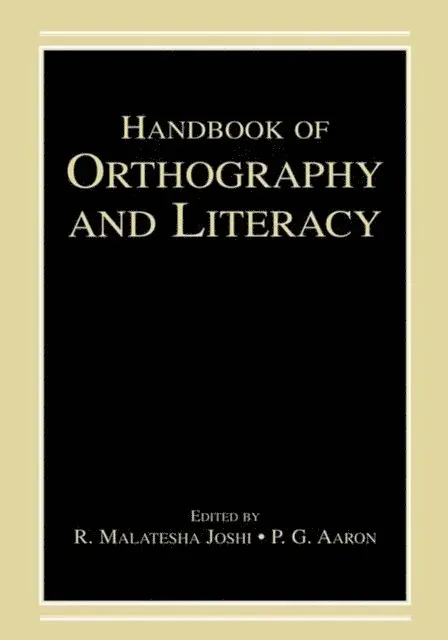
Until about two decades ago, the study of writing systems and their relationship to literacy acquisition was sparse and generally modeled after studies of English language learners. This situation is now changing. As the worldwide demand for literacy continues to grow, researchers from different countries with different language backgrounds have begun examining the connection between their writing systems and literacy acquisition. This text, which derives from a NATO sponsored conference on orthography and literacy, brings together the research of seventy scholars from across the world--the largest assemblage of such experts to date. Their findings are grouped into three parts, as follows:Part I, Literacy Acquisition in Different Writing Systems, describes the relationship between orthography and literacy in twenty-five orthographic systems. This section serves as a handy reference source for understanding the orthographies of languages as diverse as Arabic, Chinese, English, Icelandic, Kannada, and Kishwahili.Part II, Literacy Acquisition From a Cross-Linguistic Perspective, makes direct comparisons of literacy acquisition in English and other orthographic systems. The overall conclusion that emerges from these eight chapters is that the depth of an orthographic system does influence literacy acquisition primarily by slowing down the acquisition of reading skills. Even so, studies show that dyslexic readers can be found across all orthographic systems whether shallow or deep, which shows that dyslexia also has internal cognitive and biological components.Part III, Literacy Acquisition: Instructional Perspectives, explores literacy acquisition from developmental and instructional perspectives and ends with a look into the future of literacy research.This Handbook is appropriate for scholars, researchers, and graduate students in such diverse fields as cognitive psychology, psycholinguistics, literacy education, English as a second language, and communication disorders.
E-bok
PDF, Engelska, 20051 879 kr
Läs direkt efter köp
Until about two decades ago, the study of writing systems and their relationship to literacy acquisition was sparse and generally modeled after studies of English language learners. This situation is now changing. As the worldwide demand for literacy continues to grow, researchers from different countries with different language backgrounds have begun examining the connection between their writing systems and literacy acquisition. This text, which derives from a NATO sponsored conference on orthography and literacy, brings together the research of seventy scholars from across the world--the largest assemblage of such experts to date. Their findings are grouped into three parts, as follows:Part I, Literacy Acquisition in Different Writing Systems, describes the relationship between orthography and literacy in twenty-five orthographic systems. This section serves as a handy reference source for understanding the orthographies of languages as diverse as Arabic, Chinese, English, Icelandic, Kannada, and Kishwahili.Part II, Literacy Acquisition From a Cross-Linguistic Perspective, makes direct comparisons of literacy acquisition in English and other orthographic systems. The overall conclusion that emerges from these eight chapters is that the depth of an orthographic system does influence literacy acquisition primarily by slowing down the acquisition of reading skills. Even so, studies show that dyslexic readers can be found across all orthographic systems whether shallow or deep, which shows that dyslexia also has internal cognitive and biological components.Part III, Literacy Acquisition: Instructional Perspectives, explores literacy acquisition from developmental and instructional perspectives and ends with a look into the future of literacy research.This Handbook is appropriate for scholars, researchers, and graduate students in such diverse fields as cognitive psychology, psycholinguistics, literacy education, English as a second language, and communication disorders.
E-bok
PDF, Engelska, 20122 760 kr
Läs direkt efter köp
Even though Specific Reading Disability (Dyslexia) has been clinically recognized as a developmental learning disorder for nearly a hundred years. only within the past two decades it has become the subject of major experimental investigation. Because. by definition. dyslexic children are of average or superior intelligence. it is often suspected that some arcane feature of the written language is responsible for the inordinate difficulty experienced by these children in learning to read. The occasional claim that developmental dyslexia is virtually nonexistent in some languages coupled with the fact that languages differ in their writing systems has further rendered orthography a subject of serious investigation. The present Volume represents a collection of preliminary reports of investigations that explored the relationship between orthography and reading disabilities in different languages. Even though not explicitly stated. these reports are concerned with the question whether or not some orthographies are easier to learn to read and write than others. One dimension on which orthographies differ from each other is the kind of relationship they bear to pronunciation. The orthographies examined in this book range from the ones that have a simple one-to one grapheme-phoneme relationship to those which have a more complex relationship.
E-bok
PDF, Engelska, 20122 760 kr
Läs direkt efter köp
Even though I had been studying reading problems in children for a number of years as a means of understanding cognitive processes, I became deeply committed to the study of developmental dyslexia after my encounter with S. H. , a dyslexic college student. Until then, dyslexia to me remained an interesting phenomenon but somewhat removed from the mainstream of my research interests. The facts that, in spite of his superior IQ, S. H. could read no better than a child in the fifth grade and misspelled even common words such as was and here, however, took me by surprise and made me appreciate the intriguing and challenging nature of developmental dyslexia. This led to a series of studies of college students with reading disability, a group that is relatively unexplored. The general plan of these investigations was to study a small number of disabled readers at any given time, rather intensively. Even though this approach limits the generalizability of the research findings, it lays bare some of the most interesting facts about dyslexia which are obscured in large-scale statistical studies. These studies have now extended well over a decade and are still continuing. As soon as these studies were started, it became obvious that not all reading-disabled college students are alike and that disabled readers could be classified into three broad categories: those with poor decod ing skill, those with poor comprehension ability, and those with a combination of these two deficits.
Häftad, Engelska, 2011
2 099 kr
Skickas inom 10-15 vardagar
Even though Specific Reading Disability (Dyslexia) has been clinically recognized as a developmental learning disorder for nearly a hundred years. only within the past two decades it has become the subject of major experimental investigation. Because. by definition. dyslexic children are of average or superior intelligence. it is often suspected that some arcane feature of the written language is responsible for the inordinate difficulty experienced by these children in learning to read. The occasional claim that developmental dyslexia is virtually nonexistent in some languages coupled with the fact that languages differ in their writing systems has further rendered orthography a subject of serious investigation. The present Volume represents a collection of preliminary reports of investigations that explored the relationship between orthography and reading disabilities in different languages. Even though not explicitly stated. these reports are concerned with the question whether or not some orthographies are easier to learn to read and write than others. One dimension on which orthographies differ from each other is the kind of relationship they bear to pronunciation. The orthographies examined in this book range from the ones that have a simple one-to one grapheme-phoneme relationship to those which have a more complex relationship.