P. Gilbert - Böcker
Visar alla böcker från författaren P. Gilbert. Handla med fri frakt och snabb leverans.
3 produkter
3 produkter
Del 59 - Society for General Microbiology Symposia
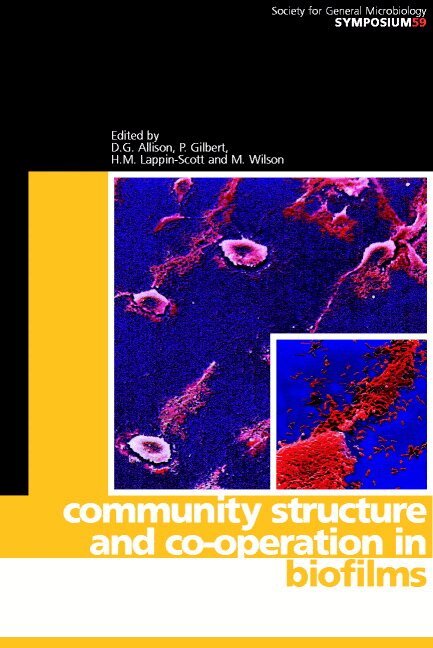
Community Structure and Co-operation in Biofilms
Inbunden, Engelska, 2000
1 139 kr
Skickas inom 7-10 vardagar
The study of biofilm considers the close association of micro-organisms with each other at interfaces and the consequent physiological adaptation to the proximity of other cells and surfaces. As such it is relevant to a variety of disciplines, including medicine, dentistry, bioremediation, biofouling, water technology, engineering and food science. Although the habitats studied, and their associated cellular communities, differ widely, some common elements exist such as method of attachment, coadhesion, regulation of biofilm phenotype and biofilm architecture. This book aims to distil the common principles of biofilm physiology and growth for all interested disciplines. It will appeal to the specialist biofilm researcher as well as to students wishing to introduce themselves to the topic.
560 kr
Tillfälligt slut
This volume presents a series of coordinated chapters examining the surface properties and interactions of planktonic and biofilm microbial cells. The cell envelope determines the interactions between cells and their environment and is vitally important for survival. Phenomena related to it play a crucial role in the impact of microbes on a variety of disciplines including medicine, immunology, biotechnology, materials technology and process engineering. This book has also been published as a supplement to the Journal of Applied Bacteriology.
1 883 kr
Skickas inom 10-15 vardagar
First published in 1992. This book aims to bring the reader up to date on current research, theory and conceptualisations of the depressive disorders. It offers a new perspective derived from evolution theory and argues for the adoption of the biopsycho social model. Part I explores the major distinctions between all types of depression, including discussion of seasonal affective disorder, postnatal depression and depression in children. The chapter on epidemiology covers issues of prevalence, relapse, long term outcome and chronic depression. The relationship between depression and various approaches to personality and personality disorder are also covered in detail. Part II offers an overview of evolution theory and its application to depression. Special attention is given to social comparison, submissive behaviour, sense of inferiority, helplessness and weakness, shame, guilt, anger and resentment, and envy in depression. These are seen to relate to two basic, central human concerns, social power and belonging. This approach offers a coherent account of why these various aspects of functioning are often part of depressive experience. Part III covers the major theories of depression, including psychoanalytic, object relations, archetype, mentality, attachment, self psychology, incentive, cognitive, behavioural and social. Theories are compared and contrasted, highlighting controversies, weaknesses and strengths, and where cross fertilisation of ideas may be beneficial. The final chapter outlines why simple theories of aetiology are inadequate and explores the role of culture and social relationships as elicitors of many forms of depression.