P. H. Gulliver - Böcker
Visar alla böcker från författaren P. H. Gulliver. Handla med fri frakt och snabb leverans.
5 produkter
5 produkter
760 kr
Skickas inom 3-6 vardagar
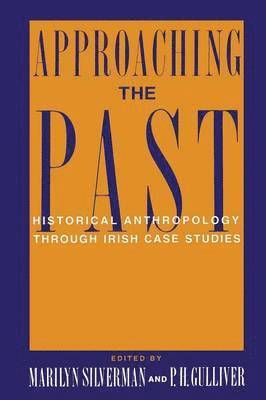
In recent years the study of history has become a central area of inquiry within anthropology. While classical anthropology focused on the present, current approaches seek to "do history" by using a variety of conceptual and methodological approaches. Approaching the Past is a highly provocative and original volume that examines the issues, themes, and difficulties emerging out of the new anthropological concern with history. Anchoring the discussion with a wide range of ethnographic case studies from Ireland, the contributors to this volume establish a sophisticated interdisciplinary dialogue and assess the degree to which anthropological concepts and methodologies can be applied to historical inquiry. With a variety of essays representing sociological, geograhical, and historical perspectives, Approaching the Past is an invaluable contribution to a discipline that is expanding and reconstituting itself anew.
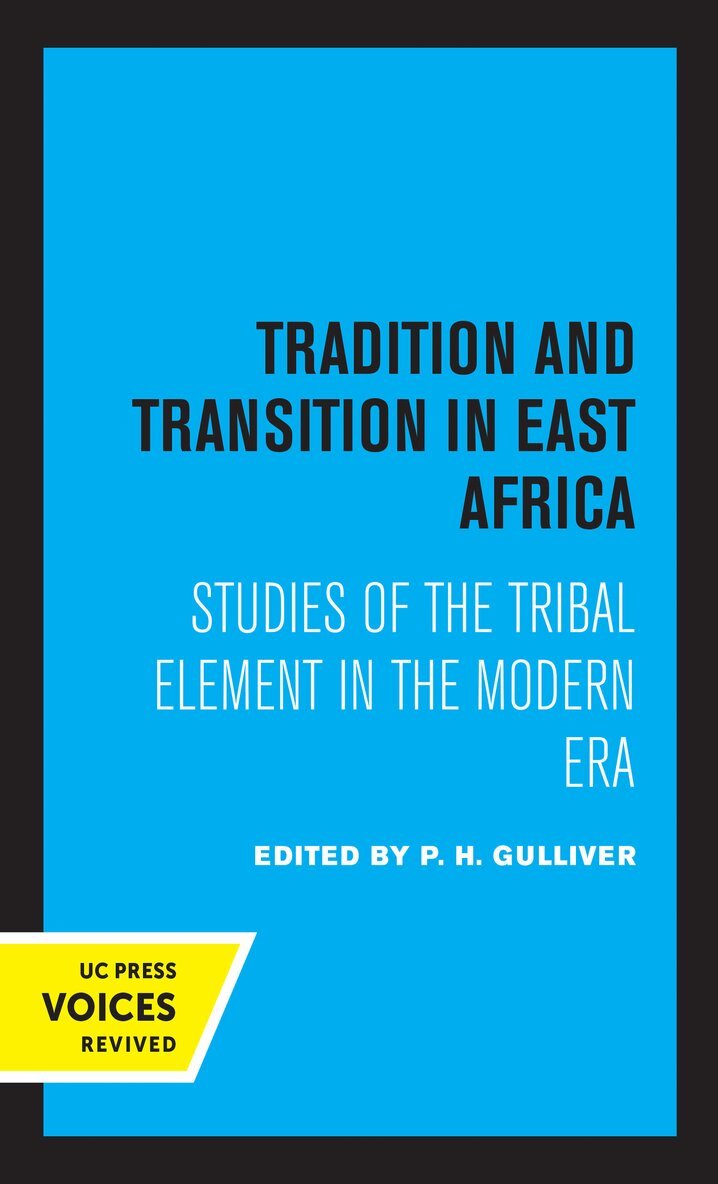
Tradition and Transition in East Africa
Studies of the Tribal Element in the Modern Era
Häftad, Engelska, 2021
811 kr
Skickas inom 3-6 vardagar
Tradition and Transition in East Africa brings together leading anthropologists, historians, linguists, sociologists, and political practitioners to interrogate the role of “the tribal factor” in shaping East Africa’s modern era. Originating in the School of Oriental and African Studies’ African Seminar (1966–67), the essays collectively explore how tradition and modernization intertwine across politics, law, language, education, and economic development. The first part situates the persistence and transformation of “tribe” in broad, comparative contexts, including reflections on nationalism and the legacies of European colonial categories. The second part grounds the discussion in case studies of rural and urban life, special regional contexts such as Somalia and Buganda, and even moments of violent conflict such as the Konzo revolt against the Toro in Uganda. Together, the contributions highlight the complexity of tribal identities—not as static survivals but as dynamic social, political, and cultural forces embedded in processes of nation-building, modernization, and contestation.Editor P. H. Gulliver emphasizes that the symposium does not claim exhaustive coverage of East Africa’s social realities; rather, it offers analytically sharp and empirically grounded insights into one of the region’s most debated features. Rejecting euphemisms, contributors employ the term “tribe” as a necessary tool of analysis, while remaining attentive to its contextual meanings and potential distortions. The essays reveal how tribal identities intersect with modernization in both opportunity and crisis: as resources for social solidarity, as flashpoints of disunity, and as frameworks through which leaders and citizens alike negotiate questions of authority, innovation, and belonging. By juxtaposing disciplinary approaches and lived perspectives, Tradition and Transition in East Africa illuminates how the interplay of tradition and transition continues to shape the search for unity, legitimacy, and development in a rapidly changing region. This volume remains a critical reference for scholars of African studies, political anthropology, and postcolonial nation-building.This title is part of UC Press's Voices Revived program, which commemorates University of California Press’s mission to seek out and cultivate the brightest minds and give them voice, reach, and impact. Drawing on a backlist dating to 1893, Voices Revived makes high-quality, peer-reviewed scholarship accessible once again using print-on-demand technology. This title was originally published in 1969.
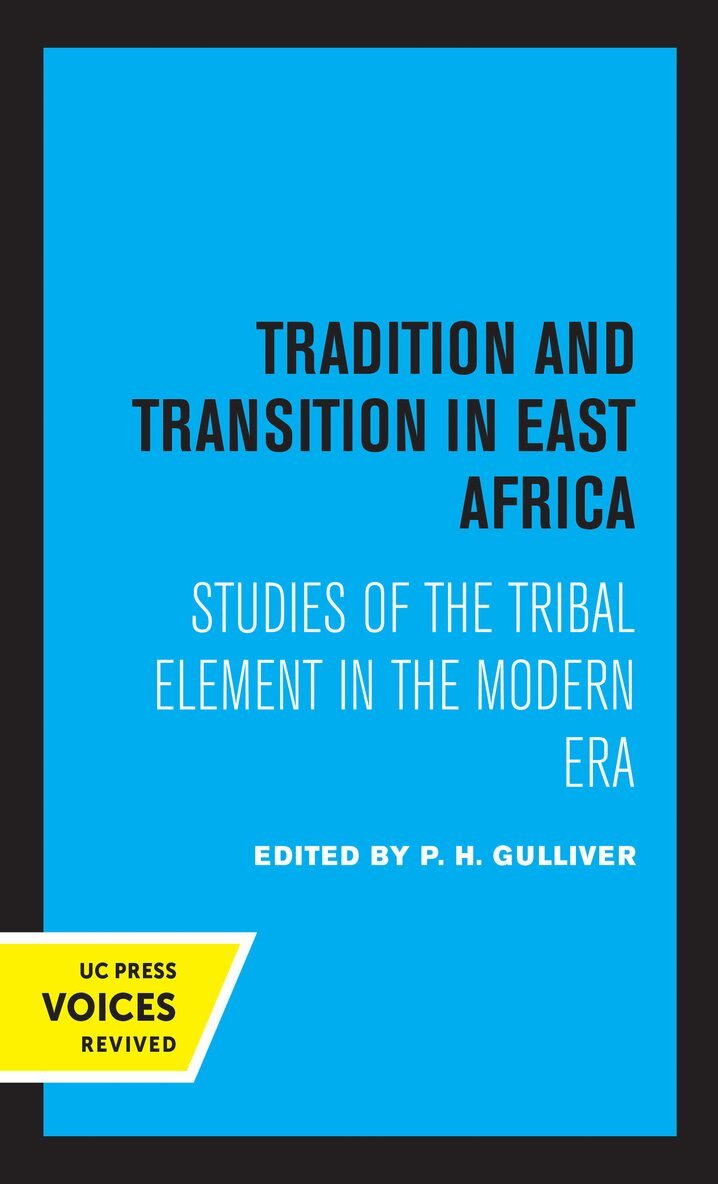
Tradition and Transition in East Africa
Studies of the Tribal Element in the Modern Era
Inbunden, Engelska, 2021
1 469 kr
Skickas inom 3-6 vardagar
Tradition and Transition in East Africa brings together leading anthropologists, historians, linguists, sociologists, and political practitioners to interrogate the role of “the tribal factor” in shaping East Africa’s modern era. Originating in the School of Oriental and African Studies’ African Seminar (1966–67), the essays collectively explore how tradition and modernization intertwine across politics, law, language, education, and economic development. The first part situates the persistence and transformation of “tribe” in broad, comparative contexts, including reflections on nationalism and the legacies of European colonial categories. The second part grounds the discussion in case studies of rural and urban life, special regional contexts such as Somalia and Buganda, and even moments of violent conflict such as the Konzo revolt against the Toro in Uganda. Together, the contributions highlight the complexity of tribal identities—not as static survivals but as dynamic social, political, and cultural forces embedded in processes of nation-building, modernization, and contestation.Editor P. H. Gulliver emphasizes that the symposium does not claim exhaustive coverage of East Africa’s social realities; rather, it offers analytically sharp and empirically grounded insights into one of the region’s most debated features. Rejecting euphemisms, contributors employ the term “tribe” as a necessary tool of analysis, while remaining attentive to its contextual meanings and potential distortions. The essays reveal how tribal identities intersect with modernization in both opportunity and crisis: as resources for social solidarity, as flashpoints of disunity, and as frameworks through which leaders and citizens alike negotiate questions of authority, innovation, and belonging. By juxtaposing disciplinary approaches and lived perspectives, Tradition and Transition in East Africa illuminates how the interplay of tradition and transition continues to shape the search for unity, legitimacy, and development in a rapidly changing region. This volume remains a critical reference for scholars of African studies, political anthropology, and postcolonial nation-building.This title is part of UC Press's Voices Revived program, which commemorates University of California Press’s mission to seek out and cultivate the brightest minds and give them voice, reach, and impact. Drawing on a backlist dating to 1893, Voices Revived makes high-quality, peer-reviewed scholarship accessible once again using print-on-demand technology. This title was originally published in 1969.
1 685 kr
Skickas inom 10-15 vardagar
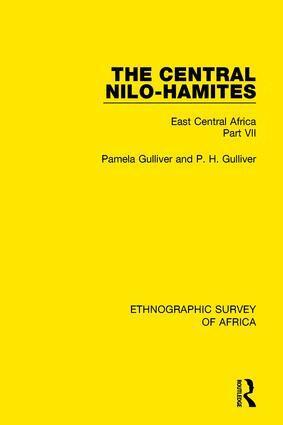
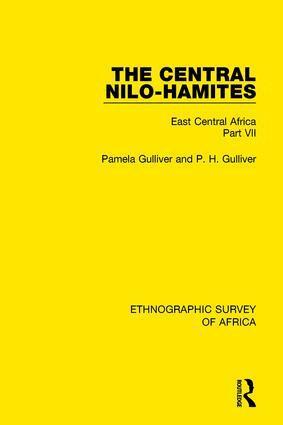
Routledge is proud to be re-issuing this landmark series in association with the International African Institute. The series, originally published between 1950 and 1977, collected ethnographic information on the peoples of Africa, using all available sources: archives, memoirs and reports as well as anthropological research which, in 1945, had only just begun. Concise, critical and (for its time) accurate, the Ethnographic Survey contains sections as follows: Physical Environment Linguistic Data Demography History & Traditions of Origin Nomenclature Grouping Cultural Features: Religion, Witchcraft, Birth, Initiation, Burial Social & Political Organization: Kinship, Marriage, Inheritance, Slavery, Land Tenure, Warfare & Justice Economy & Trade Domestic ArchitectureEach of the 50 volumes will be available to buy individually, and these are organized into regional sub-groups: East Central Africa, North-Eastern Africa, Southern Africa, West Central Africa, Western Africa, and Central Africa Belgian Congo. The volumes are supplemented with maps, available to view on routledge.com or available as a pdf from the publishers.
549 kr
Skickas inom 10-15 vardagar
Routledge is proud to be re-issuing this landmark series in association with the International African Institute. The series, originally published between 1950 and 1977, collected ethnographic information on the peoples of Africa, using all available sources: archives, memoirs and reports as well as anthropological research which, in 1945, had only just begun. Concise, critical and (for its time) accurate, the Ethnographic Survey contains sections as follows: Physical Environment Linguistic Data Demography History & Traditions of Origin Nomenclature Grouping Cultural Features: Religion, Witchcraft, Birth, Initiation, Burial Social & Political Organization: Kinship, Marriage, Inheritance, Slavery, Land Tenure, Warfare & Justice Economy & Trade Domestic ArchitectureEach of the 50 volumes will be available to buy individually, and these are organized into regional sub-groups: East Central Africa, North-Eastern Africa, Southern Africa, West Central Africa, Western Africa, and Central Africa Belgian Congo. The volumes are supplemented with maps, available to view on routledge.com or available as a pdf from the publishers.