Pandit Rajami Tigunait – författare
Visar alla böcker från författaren Pandit Rajami Tigunait. Handla med fri frakt och snabb leverans.
4 produkter
4 produkter
Häftad, Hebreiska, 1999
139 kr
Tillfälligt slut
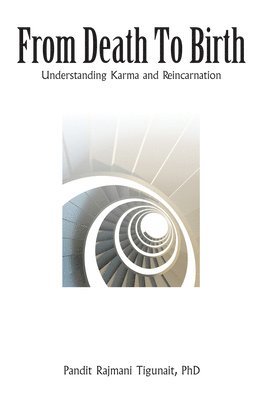
What happens when we die? How does our present life shape our future? What part of us survives death? From Death to Birth takes us on a vivid tour of the soul's journey from one lifetime to another, revealing little known or understood aspects of spiritual life along the way. Through a series of lively stories drawn from the ancient scriptures and his own experience, Pandit Rajmani Tigunait reveals the truth about karma, how we create it, why it becomes our destiny, and how we can use it to shape the future of our dreams.
Häftad, Engelska, 2015
213 kr
Tillfälligt slut
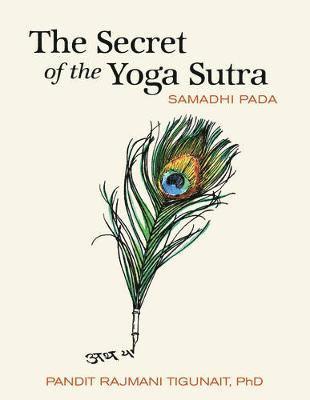
THE SECRET OF THE YOGA SUTRA is the first practitioner-oriented commentary which is fully based on a living tradition. It shares the essence of Pandit Tigunait's rigorous scholarly understanding of the Yoga Sutra, through the filter of experiential knowledge gained through decades of advanced yogic practices and enriched by the gift of living wisdom he received from the masters of the Himalayan Tradition.The Yoga Sutra is the living source wisdom of the yoga tradition. Using it as a guide, we can unlock the hidden power of yoga and experience the promise of yoga in our life. The Yoga Sutra is as fresh today as it was 2200 years ago when it was discovered by the sage Patanjali. By applying its living wisdom in our practice, we can achieve the purpose of life: lasting fulfilment and ultimate freedom.
Häftad, Engelska, 2017
261 kr
Tillfälligt slut
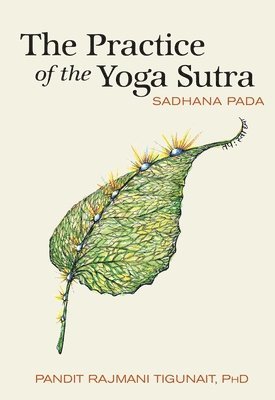
Pain is a harsh reality with which we are all familiar. At times, many of us can feel bogged down by the daily struggles and the stresses of life, unsure if there is anything such as true peace. Pantajali's Yoga Sutras has long been recognised as an infallible guide to discovering the eternal joy and ultimate freedom that the great masters declare to be the birthright of every human being. In THE PRACTICE OF THE YOGA SUTRA, Pandit Tigunait elaborates on Patanjali's succinct and straightforward plan to transcend pain and embrace lasting happiness. He points out the obstacles, both known and unknown, that prevent us from creating and living the life we dream of and assures us that we are destined to discover our pure being and experience lasting joy. In this much anticipated sequel to The Secret of the Yoga Sutra , Pandit Rajmani Tigunait combines his rigorous scholarly understanding of yoga philosophy with the knowledge gained through decades of advanced yoga practice. Through this lens he demonstrates how Patanjali's systematic 8-part plan for mastering the roaming tendencies of the mind opens the door to infinite possibilities, ushering us into a vibrant experience of ourselves as the highest expression of the joy of our creator.
Häftad, Engelska, 2007
124 kr
Tillfälligt slut
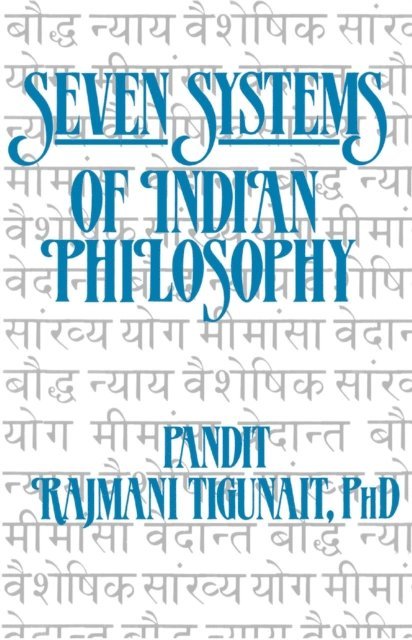
A concise and thorough outline of the major schools of Indian philosophy in a manner both highly accurate and easily understandable. Pandit Tigunait skillfully provides an overview that is in accord with the strict standards of tradition and scholarship. He systematically explains for the novice Western student. The systems reviewed are Buddhism, Nyaya, Vaisheshika, Sankhya, Yoga, Mimamsa, and Vedanta.From the ForwardThe search and love for knowledge are as intrinsic to human nature as the drives for self-preservation and social interaction. From the time we first wonder at the colors and sounds about us to the moment we finally confront eternity with out last breaths, we are occupied with the pursuit of understanding our environment, ourselves, and the nature of whatever reality may exist beyond. People essentially want to know, and the basic question of life-- why, who, whence, whither, and how -- tease even the staunchest materialist in the quiet moments of awe or the times of pressing injustice. To answer these questions, there have evolved two great philosophies, which are usually designated by the geographical division of East and West. The modern Western approach address the problem from an objective, theoretical, and pluralistic standpoint, whereas the ancient Eastern approach is more subjective, experiential, and holistic. The West looks outward to external data, and the Easter turns inward to internal experience; one method is based primarily on dialectics and discursive deductive spectulation while the other is based on introspection and direct intuitive insight.Although many scholarly descriptions of Indian philosophy are available to clarify the philosophical models and explain the details of each school, the bast bulk of the subject matter and its precise intricacies are nonethelessdifficult to assimilate. Inresponse to this problem, the present text provides a concise yet comprehensive basic outline of the major systems of Indian philosophy in a manner that is highly accurate and yet easily understandable. Sanskrit terms are provicded for academic purposes, but one need not have any prior understandin gof the field to comprehend the basic outlooks and tenets described in each school of philosophy.--Arpita, PhD