Parker Steve - Böcker
Visar alla böcker från författaren Parker Steve. Handla med fri frakt och snabb leverans.
9 produkter
9 produkter
114 kr
Tillfälligt slut
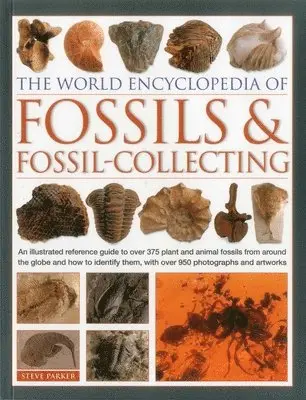
This is a practical directory and identification aid to more than 300 plant and animal fossils. This is the ultimate photographic guide to recognizing fossils of plants and animals. It features more than 300 named specimens of plant, invertebrate creatures, and vertebrate animals are grouped with similar species that shared their habitat. 350 superb photographs capture the beauty and intricacy of the fossilization process, with 250 additional artworks and clear annotations to aid identification. Concise factfile panels explain the origins of fossil names, when the organisms first appeared, and where the fossil hunter is likely to find them. This superb visual directory profiles some of the most fascinating fossils on the planet, with fine photographs of some of the world's best specimens. Over 300 generic groups are named, described and dated. These fossilized organisms are divided into three biological groups: plants, invertebrate animals, and vertebrate animals. With over 600 illustrations showing the complex, intricate process of fossilization as well as the appearance of the living organisms, here is a book to inspire and educate.This handbook provides an informative and accessible approach to the subject that will encourage budding fossil-hunters to trace the remnants of ancient life.
94 kr
Tillfälligt slut
How to find, classify and date fossils, and assess their geological context, together with an illustrated directory of more than 375 fossil examples.
68 kr
Skickas
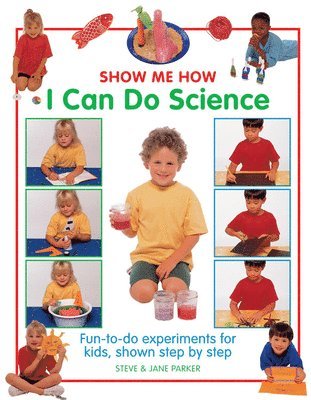
This title features fun-to-do experiments for kids, shown step by step. It includes 16 stimulating projects that help children to learn about science by conducting their own experiments. It introduces and explains very simple ideas in physics, chemistry and biology: light and shade, water, weather, sound, and everything children can see, touch and hear. You can find out how mirrors work, tell the time by the sun, investigate sound by making a string telephone, and see how the wind moves a homemade sail boat. All the experiments are shown in clear step-by-step photographs, and use simple materials and very basic equipment that can be found around the home. It is the perfect starter book for ages 3 to 7 years - for older readers to use with minimum supervision, and for younger children to enjoy with adult help. The world around us is a source of incredible wonder and amazement to children. This book will reveal and explain how things work, and respond to youngsters' first questions.It encourages readers to devise and carry out their own practical experiments - such as exploring the way light travels in straight lines by making shadow puppets, and melting ice cubes to learn about temperature - instilling real understanding and the excitement and enthusiasm that will carry them positively into more 'serious' science in the future.
68 kr
Tillfälligt slut
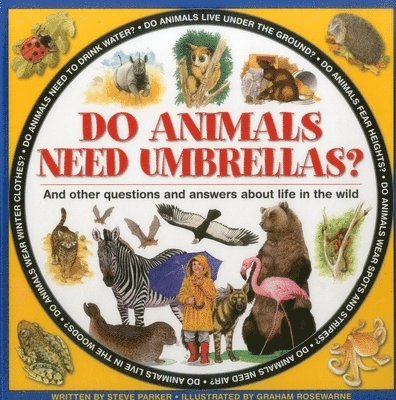
These are other questions and answers about life in the wild. Do animals bump into each other in the dark, live under the ground, need air and water, or fear heights? Children are fascinated by wild animals, and this book will answer the questions they most commonly ask about them - and some they might not have thought of! Steve Parker's simple and informative text explains how creatures adapt their bodies and habits to suit their surroundings, while each animal described is brought to life by Graham Rosewarne's detailed illustrations. It is the perfect introduction for 5- to 8-year-olds to the amazing diversity of the animal kingdom. Do animals carry umbrellas or wear winter clothes? Of course they don't! In nature, animals have to survive using only their own bodies. Creatures in cold climates have thick fur, feathers or fat to keep them warm. Those that live in dry places need to drink very little water. Animals in wet places have waterproof fur, feathers, scales or skin to keep them dry. Such adaptations help creatures to survive. Do animals play in the waves? Do they ever get stuck in the mud?These and many more questions about how animals live in different habitats are answered in this entertaining book.
68 kr
Skickas
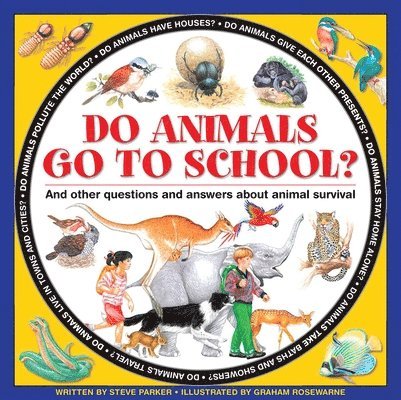
These are other questions and answers about animal survival. Do animals live in houses, take trips to far-away places, have babysitters or give each other presents? Children are fascinated by wildlife, and this book will answer the questions they most frequently ask. Steve Parker's simple and informative text compares and contrasts a child's own experiences and activities with those of animals in the wild. Each animal described is brought to life by Graham Rosewarne's beautiful illustrations. This is the perfect introduction for 5- to 8-year-olds to the marvels and mysteries of the natural world. Do you think animals go to school? Of course not! They don't sit at desks or learn to read, write and do sums like we do. But think a bit harder. Although animals don't go to school in a special building, they do have to learn important lessons to survive. They must master how to catch and store food, make nests, fight against enemies and find their way around. Sometimes their parents teach them. Sometimes they learn by themselves. Do animals have refrigerators? Do they go to the doctor? Do they dance and sing?These and many more questions are answered in this intriguing natural history book.
68 kr
Skickas
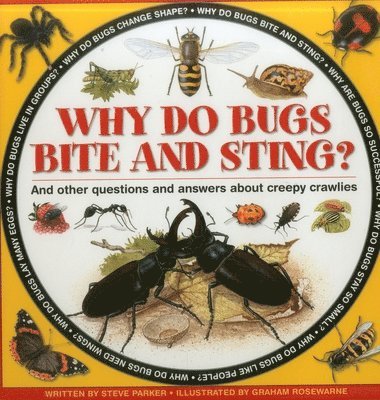
This book also features other questions and answers about creepy crawlies. Why do bugs stay so small, have lots of legs, lay lots of eggs, live in groups, change shape, or need wings? Children are fascinated by insects and other creepy crawlies, and this book will answer all of the questions they most frequently ask. Steve Parker's simple and informative text explains how different bugs live and why they behave as they do, while Graham Rosewarne's stunning illustrations reveal each tiny creature in vivid detail. This is the perfect introduction for 5- to 8-year-olds to the wonderful and mysterious world of bugs. Bugs, creepy crawlies, minibeasts...these are names we use for all sorts of small creatures, including beetles, flies and other insects, spiders, scorpions and other arachnids, snails, slugs and other molluscs, centipedes, millipedes, leeches and worms. What all of these creatures have in common is that they are invertebrates: animals without backbones. Some bugs bite and sting us - but it's nothing personal! Why do they do it?The answer to this and many other questions can be found in this book, which will show you their fascinating world, and will help you to understand how they live their tiny lives.
68 kr
Tillfälligt slut
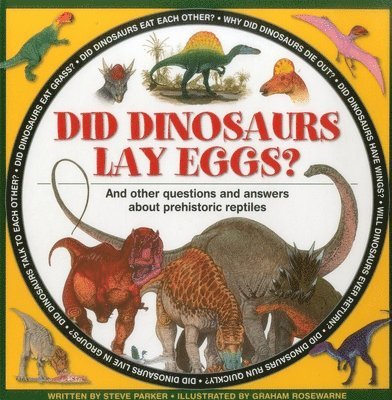
This book also deals with other questions and answers about prehistoric reptiles. Did dinosaurs go swimming, live in groups, have wings, eat grass, tower over trees, or talk to each other? Children are fascinated by dinosaurs and other prehistoric creatures, and this book will answer all of the questions they most frequently ask. Steve Parker's simple and informative text explains every aspect of dinosaur existence, while Graham Rosewarne's stunning illustrations bring over 60 of these magnificent beasts back to life. This is the perfect introduction for 5- to 8-year-olds to the fascinating and extraordinary age of the dinosaurs. Would you like a pet dinosaur? A small one might seem cute and friendly...but what would it eat? Should you take it for walks? Dinosaurs lived a very long time ago. Their world was very different to the one in which we live today. We know about prehistoric creatures mainly from their fossils - bones, teeth and other remains, preserved in the rocks. Fossils tell us that some dinosaurs were big, others small. Some ate plants, others meat. The females laid eggs - probably. How did dinosaurs die out? Could they ever return?The answers to these and many other questions can be found in this fascinating book.
92 kr
Skickas
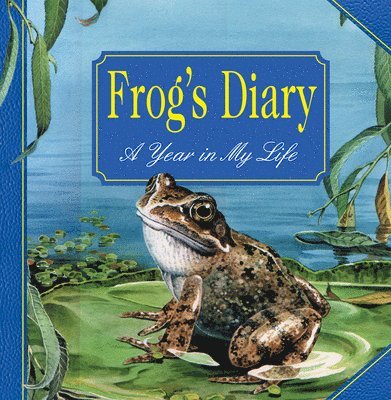
A Year in My Life. Have you ever wondered what it is like to be an amphibian - read this special book and find out! The narrative introduces youngsters to the true wonders of the natural world in an entertaining way. From waking up in the spring, to returning to his woodland den in the autumn, Frog gives a fascinating, funny and frightening true-to-life account of pond life. You can read all about his slimy snacks, see his tadpole babies growing up and transforming, and tremble at his terrifying encounters with Heron and Cat! Well, here we go - my very own diary! I think I should start with a few notes about me. I'm a frog. I've got two big eyes to see my food and one wide mouth to gulp it down. I've got a tubby green body, two strong back legs for leaping with, and two small front legs for landing on - but no tail. My know-all friend Newt tells me that I'm an amphibian. He says there are about 4,000 kinds, or species, of them. He is one too! He's almost as clever as my human friend Steve Parker, who helped me to get this book published. There are also illustrations by Robert Morton, Robin Carter and Philip Bishop, who I think you'll agree have captured my natural good looks.When it's warm enough, I live in the Pond.It's very busy. There are ducks, fish and bugs, as well as lots of other frogs, and visitors from far away. Life is never dull there, as you will discover when you read my exciting story!
92 kr
Skickas
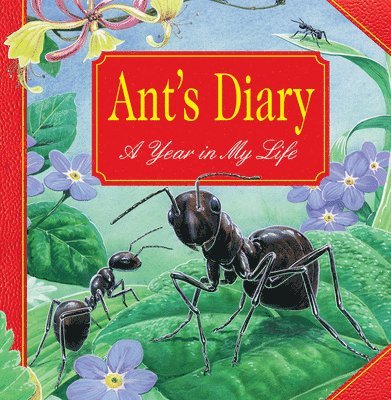
A Year in My Life. Have you ever wondered what it is like to be an ant - well, read this special book and find out! In her own words, Ant describes her busy life underground and the exciting adventures that she and her sisters have when they venture out of their nest. The diary format introduces youngsters to the true wonders of the natural world in an entertaining way. You can watch the ant meet her huge Queen mother, help to feed the grubs, fight off a beetle attack, and beware of the egg-stealing spiders! I have a few minutes to spare, so I can begin my diary at last. Here are a few facts about me, my ant sisters and my friends. Ants are tiny. Ants' brains are even tinier. We don't have much room for learning, but we are born knowing all we need to know - which is, how to work. All ants work very hard. We love it. Work is all we do and all we want to do. There's no time for playing. By the time l've worked, eaten and rested, it's time to work again - YIPPEE! I found all this out from 'Old Ant', our oldest and wisest sister, who knows EVERYTHING! She let me nibble some pages out of a book she found, which explains it all. l've stuck some of the pages in my diary, and there are also illustrations by Tim Hayward, Robin Carter and Adam Stower - they've been working hard too.Right, rest period over. I'm on duty again. Back to work - HOORAY!