Patricia O'Toole – författare
Visar alla böcker från författaren Patricia O'Toole. Handla med fri frakt och snabb leverans.
6 produkter
6 produkter
Häftad, Engelska, 2006
390 kr
Skickas inom 3-6 vardagar
Häftad, Engelska, 2006
365 kr
Skickas inom 3-6 vardagar
E-bok
Engelska, 2007208 kr
Läs direkt efter köp
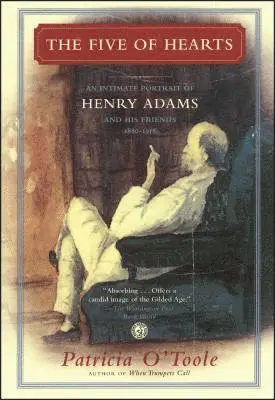
The Five of Hearts, who first gathered in Washington in the Gilded Age, included Henry Adams, historian and scion of America''s first political dynasty; his wife, Clover, gifted photographer and tragic victim of depression; John Hay, ambassador and secretary of state; his wife, Clara, a Midwestern heiress; and Clarence King, pioneering geologist, entrepreneur, and man of mystery. They knew every president from Abraham Lincoln to Theodore Roosevelt and befriended Henry James, Mark Twain, Edith Wharton, and a host of other illustrious figures on both sides of the Atlantic.
Inbunden, Engelska, 2012
317 kr
Skickas inom 10-15 vardagar
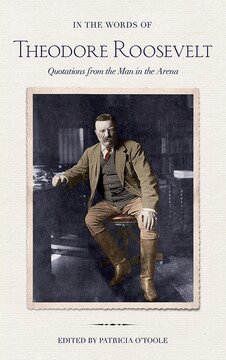
"We cannot do great deeds unless we are willing to do the small things that make up the sum of greatness."—on Action"The American people are good-natured to the point of lax indifference; but once roused, they act with the most straightforward and practical resolution."—on America"Speak softly and carry a big stick—you will go far. If a man continually blusters, if he lacks civility, a big stick will not save him from trouble; and neither will speaking softly avail, if back of the softness there does not lie strength, power."—on the Big Stick"We are, as a whole, still in that low state of civilization where we do not understand that it is also vandalism wantonly to destroy or to permit the destruction of what is beautiful in nature, whether it be a cliff, a forest, or a species of mammal or bird. Here in the United States we turn our rivers and streams into sewers and dumping-grounds, we pollute the air, we destroy forests, and exterminate fishes, birds and mammals—not to speak of vulgarizing charming landscapes with hideous advertisements. But at last it looks as if our people were awakening."—on Natural ResourcesThe public life of Theodore Roosevelt (1858–1919) was marked by his service as the twenty-sixth President of the United States, Vice President, Governor of New York State, Assistant Secretary of the Navy, U.S. Civil Service Commissioner, President of the New York City Police Commission, and New York State Assemblyman. In his life outside of government he was famous as an author, naturalist, rancher, big game hunter, and explorer. The twentieth century would become known as the American Century, and it was Theodore Roosevelt, through his foreign policy, who ushered the United States into the ranks of the world's great powers. In domestic affairs, he used his presidential powers to level the playing field between capital and labor, to protect consumers, and to establish a conservation program that was far-sighted and comprehensive, covering the nation's natural resources, its wilderness areas, its endangered species, its scenic beauty, and the cultural artifacts of its indigenous peoples. Distilled from Roosevelt's voluminous writings and speeches, In the Words of Theodore Roosevelt is a discerning collection of quotations by this American icon who continues to inspire and captivate an extraordinary array of twenty-first-century Americans. Carefully selected and organized by topic by Patricia O'Toole, these quotations reflect the vast range of Roosevelt's interests, the depth of his wisdom, his almost superhuman energy, and his directness. Many of the issues that Roosevelt addressed—from America's international role to the environment—remain pressing concerns today, giving his century-old words remarkable currency. This singular collection of quotations—enhanced by O'Toole's illuminating introductory essay, notes on biographical and historical context, and bibliographies of Roosevelt's writings—is a trove for writers, teachers, students, and all who recognize Theodore Roosevelt's unique role in U.S. history.
E-bok
Engelska, 2005202 kr
Läs direkt efter köp
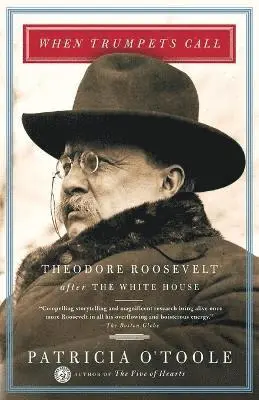
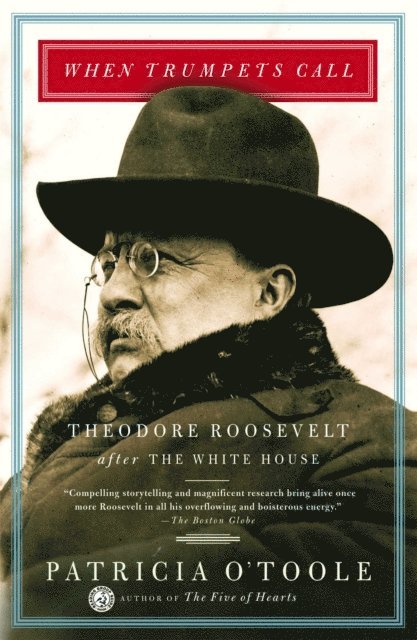
A remarkable portrait of one of our most remarkable presidents, When Trumpets Call focuses on Theodore Roosevelt''s life after the White House. TR had reveled in his power and used it to enlarge the scope of the office, expand government''s role in economic affairs, and increase U.S. influence abroad. Only fifty when he left the White House, he would spend the rest of his life longing to return. Drawing from a wealth of new and previously unused sources, Patricia O''Toole, author of the highly acclaimed biography of Henry Adams and his friends, The Five of Hearts, conducts the first thorough investigation of the most eventful, most revealing decade of Roosevelt''s life. When he left office in March 1909, Roosevelt went on safari, leaving the political stage to William Howard Taft, the friend he had selected to succeed him. Home from Africa and gravely disappointed in Taft, he could not resist challenging Taft for the Republican nomination in 1912. When Taft bested him, Roosevelt formed the Bull Moose Party and ran for president on a third ticket, a move that split the Republican vote and put Woodrow Wilson in the White House.In 1914, after the beginning of World War I, Roosevelt became the most vocal critic of Wilson''s foreign policy, and two years later, hoping to oust Wilson, Roosevelt maneuvered behind the scenes in another failed bid for the Republican nomination. Turned down by Wilson in his request to raise troops and take them to France, TR helped his four sons realize their wish to serve, then pressured Washington to speed up the war effort. His youngest son was killed on Bastille Day, 1918. Theodore Roosevelt died six months later. His last written words were a reminder to himself to see the chairman of the Republican Party. Surprising, original, deeply moving, When Trumpets Call is a portrait framed by a deeply human question: What happens to a powerful man when he loses power? Most of all, it is an unforgettable close-up of Theodore Roosevelt as he struggled not only to recover power but also to maintain a much-needed sense of purpose. Through her perceptive treatment of his last decade, Patricia O''Toole shows why Theodore Roosevelt still enjoys the affection and esteem of Americans across the political spectrum.
E-bok
Engelska, 2018202 kr
Läs direkt efter köp
Acclaimed author Patricia O’Toole’s “superb” (The New York Times) account of Woodrow Wilson, one of the most high-minded, consequential, and controversial US presidents. A “gripping” (USA TODAY) biography, The Moralist is “an essential contribution to presidential history” (Booklist, starred review).“In graceful prose and deep scholarship, Patricia O’Toole casts new light on the presidency of Woodrow Wilson” (Star Tribune, Minneapolis). The Moralist shows how Wilson was a progressive who enjoyed unprecedented success in leveling the economic playing field, but he was behind the times on racial equality and women’s suffrage. As a Southern boy during the Civil War, he knew the ravages of war, and as president he refused to lead the country into World War I until he was convinced that Germany posed a direct threat to the United States. Once committed, he was an admirable commander-in-chief, yet he also presided over the harshest suppression of political dissent in American history. After the war Wilson became the world’s most ardent champion of liberal internationalism—a democratic new world order committed to peace, collective security, and free trade. With Wilson’s leadership, the governments at the Paris Peace Conference in 1919 founded the League of Nations, a federation of the world’s democracies. The creation of the League, Wilson’s last great triumph, was quickly followed by two crushing blows: a paralyzing stroke and the rejection of the treaty that would have allowed the United States to join the League. Ultimately, Wilson’s liberal internationalism was revived by Franklin D. Roosevelt and it has shaped American foreign relations—for better and worse—ever since. A cautionary tale about the perils of moral vanity and American overreach in foreign affairs, The Moralist “does full justice to Wilson’s complexities” (The Wall Street Journal).