Patrick A. Heelan - Böcker
Visar alla böcker från författaren Patrick A. Heelan. Handla med fri frakt och snabb leverans.
3 produkter
3 produkter
577 kr
Skickas inom 3-6 vardagar
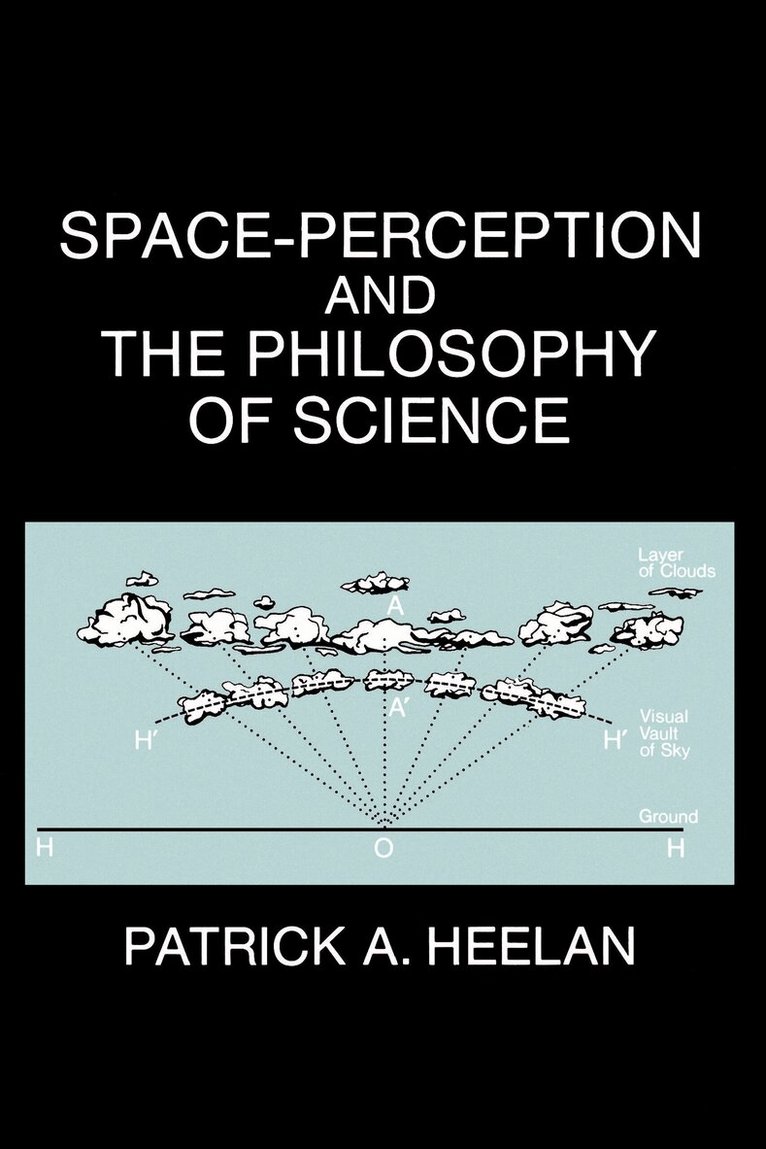
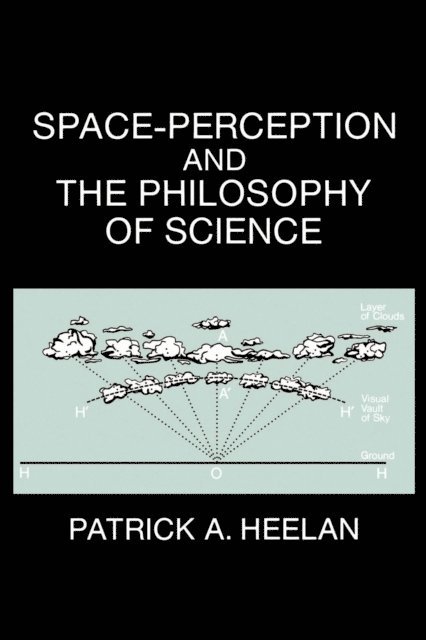
Drawing on the phenomenological tradition in the philosophy of science and philosophy of nature, Patrick Heelan concludes that perception is a cognitive, world-building act, and is therefore never absolute or finished.
Del 225 - Boston Studies in the Philosophy and History of Science
Hermeneutic Philosophy of Science, Van Gogh’s Eyes, and God
Essays in Honor of Patrick A. Heelan, S.J.
Inbunden, Engelska, 2002
2 101 kr
Skickas inom 10-15 vardagar
Bridging analytic, hermeneutic and phenomenological philosophy of science, this book features resources for students of the philosophy and history of quantum mechanics and the "Copenhagen interpretation", cognitive theory and the psychology of perception, the history and philosophy of art, and the pragmatic and historical relationships between religion and science. It introduces the technology of variational graphic representations with the insights (and mathematical apparatus) of Patrick Heelan's work on the perception of space and the history of art, particularly the work of Cezanne and Van Gogh. This book should interest students of the scientific philosophies of Heisenberg and Bohr, Wittgenstein (on science - Hertz - and on religion - Rush Rhees), as well as the social histories of Thomas Kuhn and Ludwig Fleck, and the philosophical insights of Husserl, Heidegger, Merleau-Ponty, Lacan, Foucault.
Quantum Mechanics and Objectivity
A Study of the Physical Philosophy of Werner Heisenberg
Häftad, Engelska, 1965
536 kr
Skickas inom 10-15 vardagar
Quantum mechanics has raised in an acute form three problems which go to the heart of man's relationship with nature through experimental science: (r) the public objectivity of science, that is, its value as a universal science for all investigators; (2) the empirical objectivity of scientific objects, that is, man's ability to construct a precise or causal spatio-temporal model of microscopic systems; and finally (3), the formal objectivity of science, that is, its value as an expression of what nature is independently of its being an object of human knowledge. These are three aspects of what is generally called the "crisis of objec tivity" or the "crisis of realism" in modern physics. This crisis is. studied in the light of Werner Heisenberg's work. Heisenberg was one of the architects of quantum mechanics, and we have chosen his writings as the principal source-material for this study. Among physicists of the microscopic domain, no one except perhaps Bohr has expressed himself so abundantly and so profoundly on the philosophy of science as Heisenberg. His writings, both technical and non-technical, show an awareness of the mysterious element in scientific knowledge, far from the facile positivism of Bohr and others of his contemporaries. The mystery of human knowledge and human SUbjectivity is for him an abiding source of wonder.