
Paul B. Stephan, III – författare
Visar alla böcker från författaren Paul B. Stephan, III. Handla med fri frakt och snabb leverans.
2 produkter
2 produkter
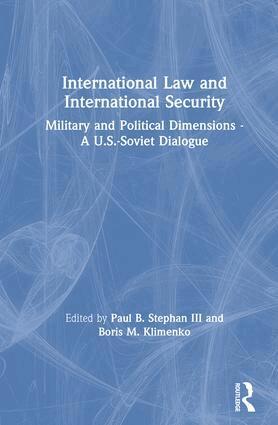
Inbunden, Engelska, 1992
2 198 kr
Skickas inom 10-15 vardagar
This volume brings together experts and political actors from the United States and the USSR to assess the status of international law in the post-Cold War era with the intention of contributing ideas, judgements, and proposals tempered by experience. The topics covered range from terrorism to peaceful conflict resolution; from the renunciation of aggression to the right of self-defence; from chemical, biological, and nuclear weapons limitations to problems of verification; and from the military use of space to the right of political self-determination. Each chapter features contributions by both US and Soviet experts who have themselves participated in high-level policy making and international negotiations in the area (including, for example, the ABM, SALTI, SALTII, CFE, and START talks).

E-bok
PDF, Engelska, 20234 461 kr
Läs direkt efter köp
This book represents an effort to assess the unprecedented political, economic, and social reforms that have swept through Central and Eastern Europe in the five years since the collapse of Communism. The dismantling of the Warsaw Pact, the Council for Mutual Economic Assistance, the Communist Party apparatus, and the various manifestations of the `nomenklatura' political control system have meant different things in different countries, but throughout the region we have witnessed a struggle to replace an authoritarian, one-party political system and a command economy with something resembling Western-style constitutional democracy and market economics. Accompanying this struggle have been attempts to transform the legal structure of these countries. It is no exaggeration to claim that lawyers, and particularly legal scholars, have played a central role in the struggle for reform in post-communist Europe. As conceived by its principal organizer and editor (Stanislaw Frankowski), this study gives these scholars an opportunity to express their perceptions of the success achieved to date and the work still remaining. A secondary goal is to expose a Western audience to the views and insights of legal scholars who have worked within the Central and Eastern European traditions. The four parts of this book reflect the principal areas in which legal reform seemed essential. First comes the reconstitutionalization of the societies in question, which means above all else the elimination of single-party politics and the notion of unity of powers. Then comes the creation of the legal institutions that would make possible a civil society under law. Then the institutions that moderate and control the uses of state power to discipline and punish persons that have transgressed the society's norms. Finally there is the question of how law reform had dealt with industrial democracy and the anticipated transformation of the workplace.