Paul Craig Roberts – författare
Visar alla böcker från författaren Paul Craig Roberts. Handla med fri frakt och snabb leverans.
10 produkter
10 produkter
Inbunden, Engelska, 1997
484 kr
Skickas inom 5-8 vardagar
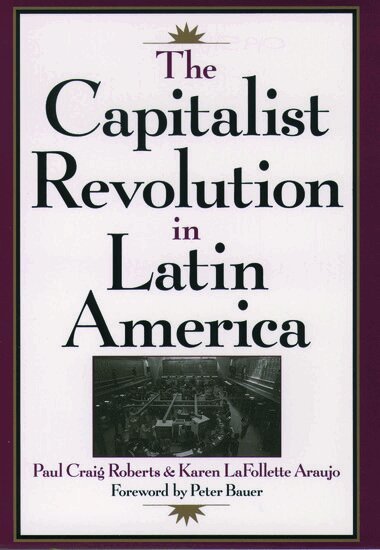
The political and social upheavals that have transformed the economies of Eastern Europe and the former Soviet Union during the past ten years have sparked considerable interest and speculation on the part of Western observers. Less noted, though hardly less dramatic, has been the revolutionary spread of free market capitalism throughout much of Latin America during the same period. In a wide-ranging survey that illuminates both the history and present businessclimate of the region, Paul Roberts and Karen Araujo describe the economic transformation currently taking place in Latin America. And as they do so, they also reexamine many of the prevailingorthodoxies concerning international development and the regulation of markets, and point to the success of privatization and free enterprise in Mexico, Argentina, and Chile as harbingers of the economic future for both hemispheres.The potential strength of the economies of Central and South America has always been obvious, the authors point out. Abundant natural resources, combined with vast expanses of fertile land and a sophisticated and relatively cohesive social culture,are found throughout the region. But the authors show that the Latin American nations were slow to discard the economic and social climate that they had inherited from their Spanish colonial masters,who had ruled by selling government jobs--creating a network of privilege--and by suppressing through over-regulation the development of markets for goods, services, and capital. The prevalent cultural attitude in Latin America was hostile to commerce, trade, and work--indeed, it was more socially acceptable to court government privilege than to compete in markets. The authors further show that U.S. aid packages to the region actually reinforced this culture of privilege and further hamperedthe growth of a free economy. Not until the 1980s did the picture begin to change, largely in response to the economic crises brought on through catastrophic national debts and hyperinflation. The bookdescribes the efforts of the Salinas, Pinochet, and Menem governments to combat the established interests of the local elites and the international development agencies, to privatized state industries, and to established independent markets. In this new climate, private capitalists and entrepreneurs are feted and celebrated, and productivity has risen to levels unimagined only a few years before. But this dramatic economic turnaround, the authors show, is a mixed blessing for the U.S. For if itprovides us with a vast new market for our goods, it has also created a powerful new competitor for capital investment. To keep American and foreign capitalists investing in America, the governmentneeds to make changes, which the authors outline in a provocative conclusion.Central and South America have a combined population of 460 million people, a potential market greater than the United States and Canada combined or the European Community. Thus the rise of free market capitalism in Latin America is of vital interest to the United States. The Capitalist Revolution in Latin America provides an insightful portrait of this dramatic economic turn-around,illuminating the economic consequences for our own society.
E-bok
PDF, Engelska, 1997389 kr
Läs direkt efter köp
The political and social upheavals that have transformed the economies of Eastern Europe and the former Soviet Union during the past ten years have sparked considerable interest and speculation on the part of Western observers. Less noted, though hardly less dramatic, has been the revolutionary spread of free market capitalism throughout much of Latin America during the same period. In a wide-ranging survey that illuminates both the history and present business climate of the region, Paul Roberts and Karen Araujo describe the economic transformation currently taking place in Latin America. And as they do so, they also reexamine many of the prevailing orthodoxies concerning international development and the regulation of markets, and point to the success of privatization and free enterprise in Mexico, Argentina, and Chile as harbingers of the economic future for both hemispheres. The potential strength of the economies of Central and South America has always been obvious, the authors point out. Abundant natural resources, combined with vast expanses of fertile land and a sophisticated and relatively cohesive social culture, are found throughout the region. But the authors show that the Latin American nations were slow to discard the economic and social climate that they had inherited from their Spanish colonial masters, who had ruled by selling government jobs--creating a network of privilege--and by suppressing through over-regulation the development of markets for goods, services, and capital. The prevalent cultural attitude in Latin America was hostile to commerce, trade, and work--indeed, it was more socially acceptable to court government privilege than to compete in markets. The authors further show that U.S. aid packages to the region actually reinforced this culture of privilege and further hampered the growth of a free economy. Not until the 1980s did the picture begin to change, largely in response to the economic crises brought on through catastrophic national debts and hyperinflation. The book describes the efforts of the Salinas, Pinochet, and Menem governments to combat the established interests of the local elites and the international development agencies, to privatized state industries, and to established independent markets. In this new climate, private capitalists and entrepreneurs are feted and celebrated, and productivity has risen to levels unimagined only a few years before. But this dramatic economic turnaround, the authors show, is a mixed blessing for the U.S. For if it provides us with a vast new market for our goods, it has also created a powerful new competitor for capital investment. To keep American and foreign capitalists investing in America, the government needs to make changes, which the authors outline in a provocative conclusion. Central and South America have a combined population of 460 million people, a potential market greater than the United States and Canada combined or the European Community. Thus the rise of free market capitalism in Latin America is of vital interest to the United States. The Capitalist Revolution in Latin America provides an insightful portrait of this dramatic economic turn-around, illuminating the economic consequences for our own society.
Häftad, Engelska, 2008
178 kr
Skickas inom 5-8 vardagar
E-bok
Engelska, 200869 kr
Läs direkt efter köp
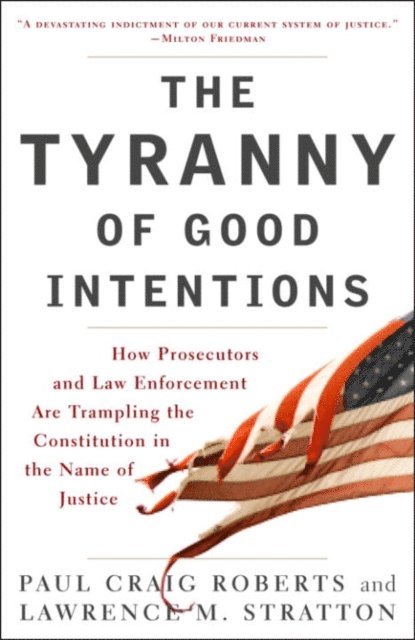
A thousand years of legal protections against tyranny are being stolen right before our eyes. Under the guise of good intentions, personal liberties as old as the Magna Carta have become casualties in the wars being waged on pollution, drugs, white-collar crime, and all of the other real and imagined social ills. The result: innocent people caught up in a bureaucratic web that destroys lives and livelihoods; businesses shuttered because of victimless infractions; a justice system that values coerced pleas over the search for truth; bullying police agencies empowered to confiscate property without due process. "A devastating indictment of our current system of justice." — Milton FriedmanIn this provocative book, Paul Craig Roberts and Lawrence M. Stratton show how the law, which once shielded us from the government, has now become a powerful weapon in the hands of overzealous prosecutors and bureaucrats. Lost is the foundation upon which our freedom rest—the intricate framework of Constitutional limits that protect our property, our liberty, and our lives. Roberts and Stratton convincingly argue that this abuse of government power doesn''t have ideological boundaries. Indeed, conservatives and liberals alike use prosecutors, regulators, and courts to chase after their own favorite "devils," to seek punishment over justice and expediency over freedom. The authors present harrowing accounts of people both rich and poor, of CEOs and blue-collar workers who have fallen victim to the tyranny of good intentions, who have lost possessions, careers, loved ones, and sometimes even their lives. This book is a sobering wake-up call to reclaim that which is rightly ours—liberty protected by the rule of law.From the Hardcover edition.
E-bok
Engelska, 2010215 kr
Läs direkt efter köp
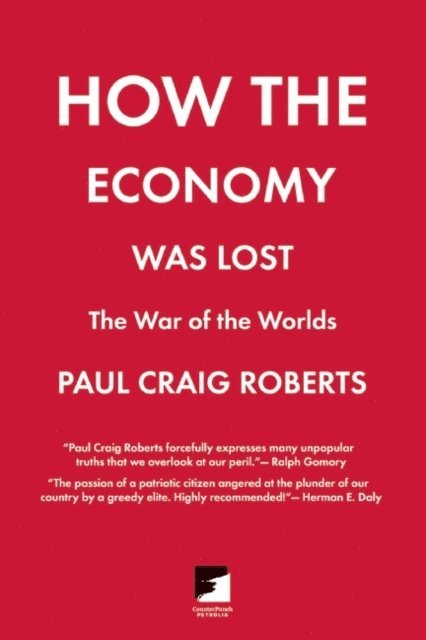
An outline of how the economy works by an insider-turned-outsider. Roberts breaks down how our recent recession came about, how deep it will get, and how we can avoid one in the future.
Inbunden, Tyska, 2013
245 kr
Skickas inom 3-6 vardagar
E-bok
Tyska, 2014141 kr
Läs direkt efter köp
Mit "Amerikas Kriege(r)" erscheint eine provokante und verstörende Sammlung von Kolumnen des US-amerikanischen Journalisten und Regierungsmitgliedes unter US-Präsident Ronald Reagan, Dr. Paul Craig Roberts.Seit 2009 prangert Roberts die anhaltenden Kriegsverbrechen der US-amerikanischen Regierung und seiner Verbündeten an, die unersättliche Gier der Machthaber nach Profit und internationaler Hegemonie. Dabei reichen seine Betrachtungen bis zur Mitte des 20. Jahrhunderts zurück und entlarven mit gut recherchierten Fakten die verlogene Scheinheiligkeit der offiziellen Propaganda seitens der westlichen Regierungen."Amerikas Kriege(r)" bringt die wichtigsten von Roberts'' Kolumnen von 2009 bis Mitte 2013 erstmals in deutscher Sprache in Buchform zusammen, sodass seine erschreckenden Ausführungen für jeden im deutschen Sprachraum zugänglich werden. Es mag beinahe ironisch erscheinen, dass mehrere von Roberts'' Kritikpunkten, die die US-amerikanische Regierung allesamt abstreiten würde, durch den gegenwärtigen NSA-Skandal bestätigt werden. In dieser Angelegenheit werden noch einige Überraschungen zutage treten. So liefert die USA einem ihrer größten Kritiker unfreiwillig einen perfekten Zeitpunkt für die Veröffentlichung eines Buches, das die Vereinigten Staaten – einst Symbol für Freiheit und Demokratie – als einen von einer korrupten, kriegstreiberischen, machthungrigen, profitgierigen Regierung zerrütteten Staat entlarvt. Roberts lässt sich nicht als einen wirren Verschwörungstheoretiker abstempeln und kleinreden. Stattdessen klärt er dem Leser den Blick für die Wahrheit, die, einmal entdeckt, nicht mehr ignoriert werden kann.
Inbunden, Engelska, 2020
390 kr
Skickas inom 5-8 vardagar
Häftad, Engelska, 2023
313 kr
Skickas inom 5-8 vardagar
Inbunden, Engelska, 2014
879 kr
Tillfälligt slut