Pauline Maier – författare
Visar alla böcker från författaren Pauline Maier. Handla med fri frakt och snabb leverans.
8 produkter
8 produkter
E-bok
Engelska, 2012177 kr
Läs direkt efter köp
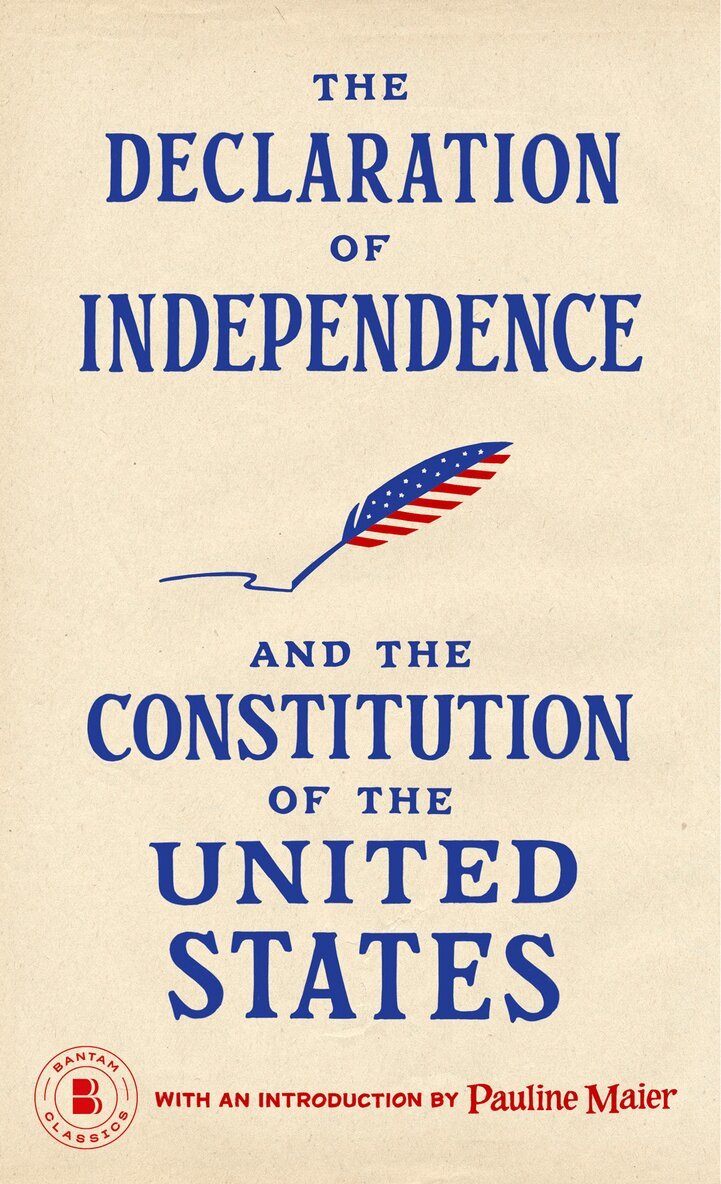
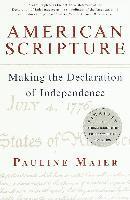
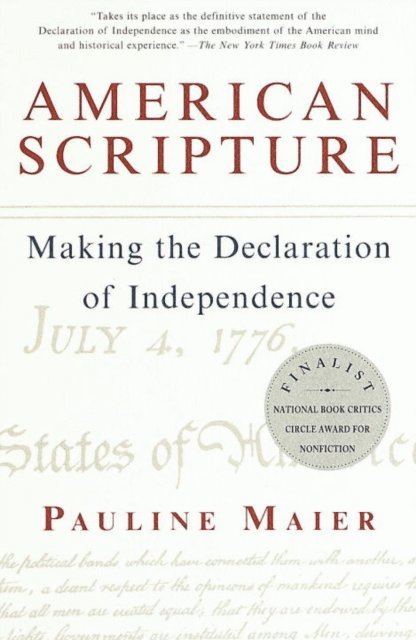
Pauline Maier shows us the Declaration as both the defining statement of our national identity and the moral standard by which we live as a nation. It is truly "American Scripture," and Maier tells us how it came to be -- from the Declaration''s birth in the hard and tortuous struggle by which Americans arrived at Independence to the ways in which, in the nineteenth century, the document itself became sanctified.Maier describes the transformation of the Second Continental Congress into a national government, unlike anything that preceded or followed it, and with more authority than the colonists would ever have conceded to the British Parliament; the great difficulty in making the decision for Independence; the influence of Paine''s []Common Sense[], which shifted the terms of debate; and the political maneuvers that allowed Congress to make the momentous decision.In Maier''s hands, the Declaration of Independence is brought close to us. She lets us hear the voice of the people as revealed in the other "declarations" of 1776: the local resolutions -- most of which have gone unnoticed over the past two centuries -- that explained, advocated, and justified Independence and undergirded Congress''s work. Detective-like, she discloses the origins of key ideas and phrases in the Declaration and unravels the complex story of its drafting and of the group-editing job which angered Thomas Jefferson.Maier also reveals what happened to the Declaration after the signing and celebration: how it was largely forgotten and then revived to buttress political arguments of the nineteenth century; and, most important, how Abraham Lincoln ensured its persistence as a living force in American society. Finally, she shows how by the very act of venerating the Declaration as we do -- by holding it as sacrosanct, akin to holy writ -- we may actually be betraying its purpose and its power.From the Hardcover edition.
E-bok
Engelska, 2013214 kr
Läs direkt efter köp
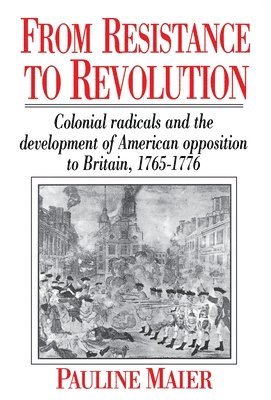
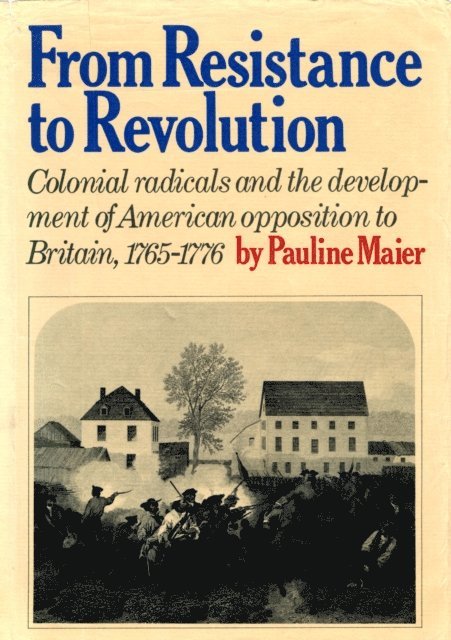
Maintaining that the outbreak of revolution in 1775 was not the result of secret planning by radicals but rather the end product of years of painful evolution, Pauline Maier brilliantly traces the American colonists’ road to independence from 1765 to 1776 and examines the role of popular violence as political allegiances corroded and once-loyal subjects were gradually transformed into revolutionaries. Mrs. Maier presents a view of the American leaders different from that which prevailed a generation ago, when historians saw them as lawless demagogues who, already set upon independence at the outset of the conflict with England, manipulated the public toward their goal through propaganda and mob violence. She shows that none of the men in the forefront of American opposition to British policies favored independence when the colonies blocked England’s efforts to impose a tamp Tax upon them in 1765. Their love of British institutions was undermined gradually and for reasons beyond their opposition to legislation affecting American interest. Developments in England itself, in Ireland, Corsica, and the West Indies also fed American disillusionment with imperial rule, until leading colonists came to believe that just government required casting loose from Britain and monarchy. Indeed, Mrs. Maier demonstrates that participants saw the American Revolution as part of an international struggle between freedom and despotism. Like independence, violence was a last resort. Arguing that colonial leaders, like many present-day “revolutionaries,” quickly learned that popular violence was counterproductive, Mrs. Maier makes it clear that they organized resistance in part to contain disorder. Building association to discipline opposition, they gradually made self-rule founded upon carefully designed “social compacts” a reality. Out of the struggle with Britain emerged not merely separation, but the beginnings of American republican government.
E-bok
Engelska, 201374 kr
Läs direkt efter köp
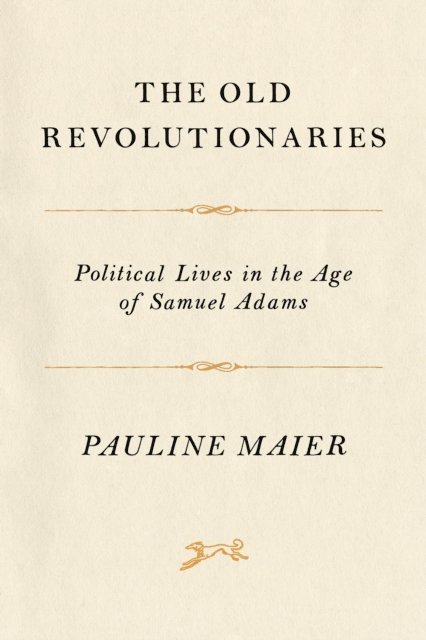
The "old revolutionaries" were Samuel Adams, Isaac Sears, Thomas Young, Richard Henry Lee and Charels Carroll, five men who played significant roles in the American Revolution, and who are usually overlooked in history books today. Of widely varying backgrounds and interests, all of them had thir gratest influence in the years between 1769 and 1776 and all of them saw their power transferred after the war to the men we know as "the founding fathers." In telling the stories of these men, Pauline Maier shows how the American Revolution was less a collective movement than a committment to an ideal of a republic, which different people interpreted differently, and she describes "not just why Americans made the Revolution, but what the Revolution did to them."
Häftad, Engelska, 1993
324 kr
Skickas inom 5-8 vardagar
The “old revolutionaries” were Samuel Adams, Isaac Sears, Thomas Young, Richard Henry Lee, and Charles Carroll, five men of widely varying backgrounds who played significant roles in the American Revolution. What motivations brought these different men together and made them decide to join the movement for Independence? In telling their stories, Pauline Maier explores the American Revolution not so much as a collective movement as a commitment to an ideal republic—which different people interpreted differently. Pauline Maier has written a new Introduction to the Norton paperback edition, in which she discusses the Old Revolutionaries’ pertinence to current debates over liberalism in the American Revolution. Professor Maier teaches history at MIT and is also the author of From Resistance to Revolution: Colonial Radicals and the Development of American Opposition to Britain, 1765-1776.
Häftad, Engelska, 1992
369 kr
Skickas inom 3-6 vardagar
In this classic account of the American revolution, Pauline Maier traces the step-by-step process through which the extra-legal institutions of the colonial resistance movement assumed authority from the British. She follows the American Whigs as they moved by stages from the organized resistance of the Stamp Act crisis of 1765 through the non-importation associations of the late 1760s to the collapse of royal government after 1773, the implication of the king in a conspiracy against American liberties, and the consequent Declaration of Independence. Professor Maier's great achievement is to explain how Americans came to contemplate and establish their independence, guided by principle, reason, and experience.
Häftad, Engelska, 2011
287 kr
Skickas inom 3-6 vardagar
E-bok
Engelska, 2010146 kr
Läs direkt efter köp
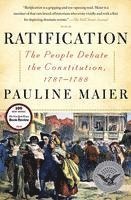
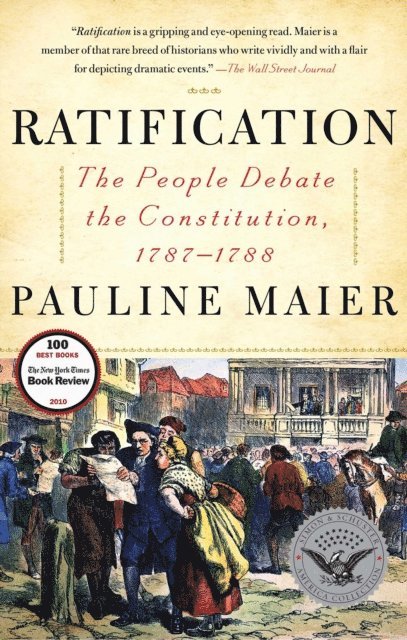
The defining book of the American Revolution era and a winner of the George Washington Book Award, Ratification chronicles the pivotal moments and key figures in transforming the US Constitution from an idea into a transformational document and the Constitutional Convention into a working government.When the delegates left the Constitutional Convention in Philadelphia in September 1787, the new Constitution they had written was no more than a proposal. Elected conventions in at least nine of the thirteen states would have to ratify it before it could take effect. There was reason to doubt whether that would happen. The document we revere today as the foundation of our country’s laws, the cornerstone of our legal system, was hotly disputed at the time. Some Americans denounced the Constitution for threatening the liberty that Americans had won at great cost in the Revolutionary War. One group of fiercely patriotic opponents even burned the document in a raucous public demonstration on the Fourth of July. In this splendid new history, Pauline Maier tells the dramatic story of the yearlong battle over ratification that brought such famous founders as Washington, Hamilton, Madison, Jay, and Henry together with less well-known Americans who sometimes eloquently and always passionately expressed their hopes and fears for their new country. Men argued in taverns and coffeehouses; women joined the debate in their parlors; broadsides and newspaper stories advocated various points of view and excoriated others. In small towns and counties across the country people read the document carefully and knew it well. Americans seized the opportunity to play a role in shaping the new nation. Then the ratifying conventions chosen by "We the People" scrutinized and debated the Constitution clause by clause. Although many books have been written about the Constitutional Convention, this is the first major history of ratification. It draws on a vast new collection of documents and tells the story with masterful attention to detail in a dynamic narrative. Each state’s experience was different, and Maier gives each its due even as she focuses on the four critical states of Pennsylvania, Massachusetts, Virginia, and New York, whose approval of the Constitution was crucial to its success. The New Yorker Gilbert Livingston called his participation in the ratification convention the greatest transaction of his life. The hundreds of delegates to the ratifying conventions took their responsibility seriously, and their careful inspection of the Constitution can tell us much today about a document whose meaning continues to be subject to interpretation. Ratification is the story of the founding drama of our nation, superbly told in a history that transports readers back more than two centuries to reveal the convictions and aspirations on which our country was built.
E-bok
PDF, Tyska, 2020474 kr
Läs direkt efter köp
Bachelorarbeit aus dem Jahr 2020 im Fachbereich Medien / Kommunikation - Medien und Politik, Pol. Kommunikation, Note: 1,8, Hochschule Mittweida (FH), Sprache: Deutsch, Abstract: Die Arbeit untersucht die Islamberichterstattung in Deutschland zu Zeiten der "e;Fluchtlingskrise"e; in den Jahren 2015/2016. Das Ziel ist dabei herauszufinden, wie prasent die positive beziehungsweise die negative Islamberichterstattung zu dieser Zeit war. Um diese Forschungsaufgabe beantworten zu konnen, wurden 52 Tagesschau-Sendungen vom Juni 2015 bis Juni 2016 untersucht. Einerseits wurden formelle Kategorien analysiert, um die Prasenz der Islamberichterstattung in diesen Sendungen auszumachen, anderseits wurden vor dem Hintergrund der Framing-Forschung wertende Medien-Frames in diesen Sendungen gesucht. Dabei wurde qualitativ sowie quantitativ gearbeitet. Die Ergebnisse der Arbeit zeigen, dass die Islamberichterstattung in den deutschen Medien in den Jahren 2015/2016 sehr prasent war, allerdings wurden negative Medien-Frames weitaus ofter ausgemacht als positive, sodass zusatzlich festgestellt wurde, dass die negative Islamberichterstattung prasenter war als die positive. Mit diesen Erkenntnissen konnte die Relevanz der Framing-Forschung in der politischen Medienberichterstattung bestatigt werden. Des Weiteren konnten vorangegangene Forschungsergebnisse, die eine negativ gepragte Islamberichterstattung in deutschen Medien erkennen, bestatigt werden.