Peng Er Lam – författare
Visar alla böcker från författaren Peng Er Lam. Handla med fri frakt och snabb leverans.
16 produkter
Japan's Relations With China
Facing a Rising Power
Av Peng Er Lam
Inbunden, 2006
2510 kr
Lägg i varukorg
The essays in this collection examine Sino-Japanese political relations given the phenomenon of ‘a rising China and a stagnating Japan’. Questioning whether their relationship is one of cooperation or conflict, the book reviews China and Japan’s bilateral ties to see whether they have deepened and …
Japan's Peace-Building Diplomacy in Asia
Seeking a More Active Political Role
Av Peng Er Lam
Inbunden, 2009
2510 kr
Lägg i varukorg
The conventional portrayal of Japan’s role in international affairs is of a passive political player which – despite its position as the world’s second largest economic power – punches below its weight on the world stage: its foreign policy driven by Washington, mercantilism and constrained by …
Japan's Relations With China
Facing a Rising Power
Av Peng Er Lam
Häftad, 2009
749 kr
Lägg i varukorg
The essays in this collection examine Sino-Japanese political relations given the phenomenon of ‘a rising China and a stagnating Japan’. Questioning whether their relationship is one of cooperation or conflict, the book reviews China and Japan’s bilateral ties to see whether they have deepened and …
Japan's Peace-Building Diplomacy in Asia
Seeking a More Active Political Role
Av Peng Er Lam
Häftad, 2011
909 kr
Lägg i varukorg
The conventional portrayal of Japan’s role in international affairs is of a passive political player which – despite its position as the world’s second largest economic power – punches below its weight on the world stage: its foreign policy driven by Washington, mercantilism and constrained by …
Japan's Relations with Southeast Asia
The Fukuda Doctrine and Beyond
Av Peng Er Lam
Inbunden, 2012
2510 kr
Lägg i varukorg
The Fukuda Doctrine has been the official blueprint to Japan’s foreign policy towards Southeast Asia since 1977. This book examines the Fukuda Doctrine in the context of Japan-Southeast Asia relations, and discusses the possibility of a non-realist approach in the imagining and conduct of …
Japan's Peace-Building Diplomacy in Asia
Seeking a More Active Political Role
Av Peng Er Lam
E-bok, 2009
1036 kr
Lägg i varukorg
The conventional portrayal of Japan’s role in international affairs is of a passive political player which – despite its position as the world’s second largest economic power – punches below its weight on the world stage: its foreign policy driven by Washington, mercantilism and constrained …
Japan's Peace-Building Diplomacy in Asia
Seeking a More Active Political Role
Av Peng Er Lam
E-bok, 2009
1025 kr
Lägg i varukorg
The conventional portrayal of Japan’s role in international affairs is of a passive political player which – despite its position as the world’s second largest economic power – punches below its weight on the world stage: its foreign policy driven by Washington, mercantilism and constrained …
Japan's Relations With China
Facing a Rising Power
Av Peng Er Lam
E-bok, 2006
883 kr
Lägg i varukorg
The essays in this collection examine Sino-Japanese political relations given the phenomenon of ‘a rising China and a stagnating Japan’. Questioning whether their relationship is one of cooperation or conflict, the book reviews China and Japan’s bilateral ties to see whether they have …
Japan's Relations With China
Facing a Rising Power
Av Peng Er Lam
E-bok, 2006
883 kr
Lägg i varukorg
The essays in this collection examine Sino-Japanese political relations given the phenomenon of ‘a rising China and a stagnating Japan’. Questioning whether their relationship is one of cooperation or conflict, the book reviews China and Japan’s bilateral ties to see whether they have …
Japan's Relations with Southeast Asia
The Fukuda Doctrine and Beyond
Av Peng Er Lam
E-bok, 2012
990 kr
Lägg i varukorg
The Fukuda Doctrine has been the official blueprint to Japan’s foreign policy towards Southeast Asia since 1977. This book examines the Fukuda Doctrine in the context of Japan-Southeast Asia relations, and discusses the possibility of a non-realist approach in the imagining and conduct of …
Japan's Relations with Southeast Asia
The Fukuda Doctrine and Beyond
Av Peng Er Lam
E-bok, 2012
1004 kr
Lägg i varukorg
The Fukuda Doctrine has been the official blueprint to Japan’s foreign policy towards Southeast Asia since 1977. This book examines the Fukuda Doctrine in the context of Japan-Southeast Asia relations, and discusses the possibility of a non-realist approach in the imagining and conduct of …
Japan's Relations with Southeast Asia
The Fukuda Doctrine and Beyond
Av Peng Er Lam
Häftad, 2015
851 kr
Lägg i varukorg
The Fukuda Doctrine has been the official blueprint to Japan’s foreign policy towards Southeast Asia since 1977. This book examines the Fukuda Doctrine in the context of Japan-Southeast Asia relations, and discusses the possibility of a non-realist approach in the imagining and conduct of …
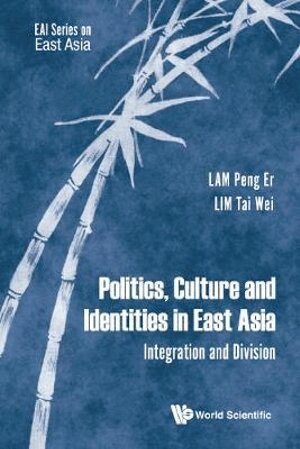
POLITICS, CULTURE AND IDENTITIES IN EAST ASIA: INTEGRATION AND DIVISION
Av Lam Peng Er, Peng Er Lam m. fl.
Inbunden, 2017
1307 kr
Lägg i varukorg
This edited book reflects the "yin-yang" of East Asia — the analogy of co-existing "hot and cold" trends in that region. To concentrate only on geopolitical competition and regional "hot spots" will exaggerate, if not misrepresent East Asia as a Hobbesian world. Nevertheless, geopolitical …
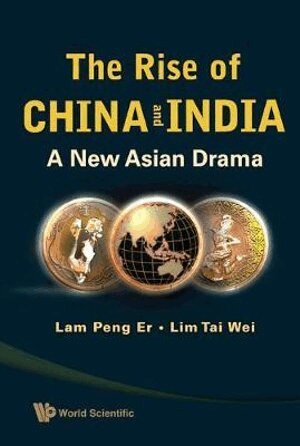
RISE OF CHINA AND INDIA, THE: A NEW ASIAN DRAMA
Av Er Lam Peng, Peng Er Lam m. fl.
Inbunden, 2009
1526 kr
Lägg i varukorg
The most remarkable phenomenon in Asia in the 21st century is arguably the economic rise of China and India. Amazingly, the two most populous countries in the world are uplifting millions of their citizens annually from poverty through rapid economic growth. What is the impact on the region, given …
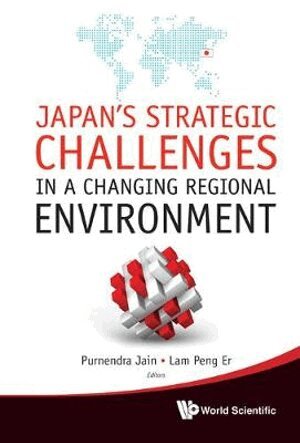
JAPAN'S STRATEGIC CHALLENGES IN A CHANGING REGIONAL ENVIRONMENT
Av Purnendra Jain, Purnendra Jain m. fl.
Inbunden, 2012
1577 kr
Lägg i varukorg
Japan faces significant challenges in both traditional and non-traditional areas of national security policy as the economic resurgence of China and the loss of US hegemonic clout significantly transform the strategic landscape of the Asia-Pacific region. How is Japan coping with this new global …
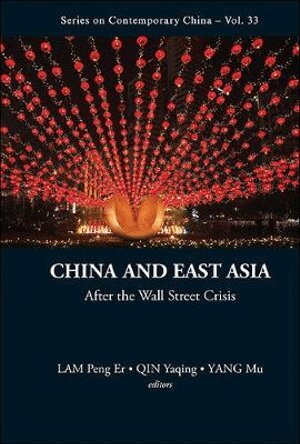
CHINA AND EAST ASIA: AFTER THE WALL STREET CRISIS
Av Qin Yaqing, Peng Er LAM m. fl.
Inbunden, 2013
1720 kr
Lägg i varukorg
This book examines the need for greater East Asian cooperation and the challenges to this grand endeavor. With differing national outlooks, how can East Asia preserve peace, prosperity and stability amidst geopolitical competition? To answer this question, the volume examines the political and …