
Penny M. Von Eschen – författare
Visar alla böcker från författaren . Handla med fri frakt och snabb leverans.
4 produkter
4 produkter

Häftad, Engelska, 2006
269 kr
Skickas inom 5-8 vardagar
At the height of the ideological antagonism of the Cold War, the U.S. State Department unleashed an unexpected tool in its battle against Communism: jazz. From 1956 through the late 1970s, America dispatched its finest jazz musicians to the far corners of the earth, from Iraq to India, from the Congo to the Soviet Union, in order to win the hearts and minds of the Third World and to counter perceptions of American racism. Penny Von Eschen escorts us across the globe, backstage and onstage, as Dizzy Gillespie, Louis Armstrong, Duke Ellington, and other jazz luminaries spread their music and their ideas further than the State Department anticipated. Both in concert and after hours, through political statements and romantic liaisons, these musicians broke through the government's official narrative and gave their audiences an unprecedented vision of the black American experience. In the process, new collaborations developed between Americans and the formerly colonized peoples of Africa, Asia, and the Middle East--collaborations that fostered greater racial pride and solidarity.Though intended as a color-blind promotion of democracy, this unique Cold War strategy unintentionally demonstrated the essential role of African Americans in U.S. national culture. Through the tales of these tours, Von Eschen captures the fascinating interplay between the efforts of the State Department and the progressive agendas of the artists themselves, as all struggled to redefine a more inclusive and integrated American nation on the world stage.
Häftad, Engelska, 1997
392 kr
Skickas inom 10-15 vardagar
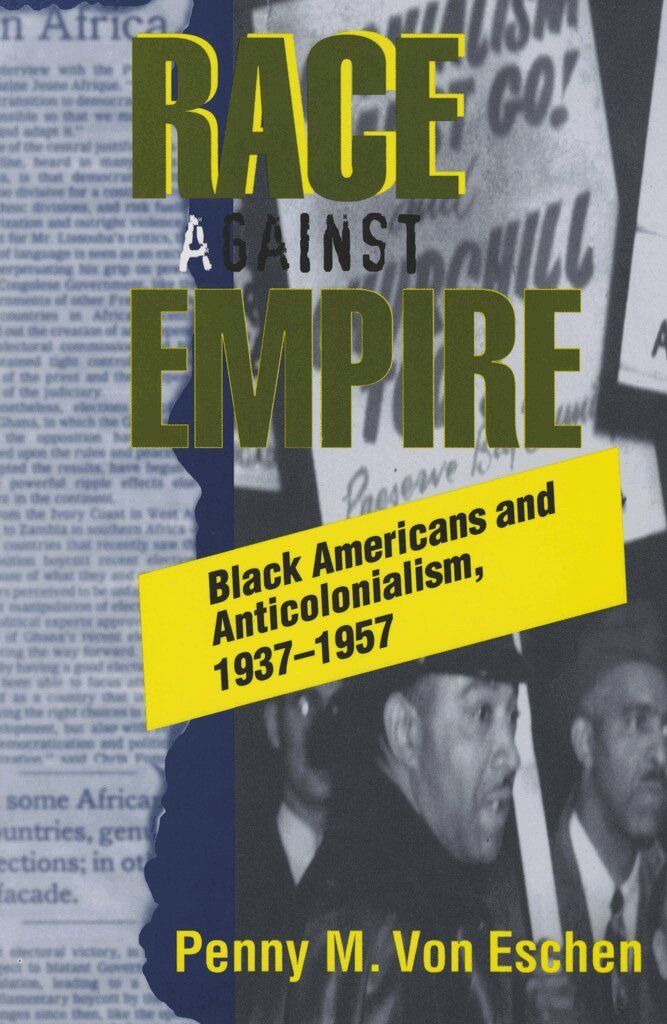
Marshaling evidence from a wide array of international sources, including the black presses of the time, Penny M. Von Eschen offers a vivid portrayal of the African diaspora in its international heyday, from the 1945 Manchester Pan-African Congress to early cooperation with the United Nations. Tracing the relationship between transformations in anti-colonial politics and the history of the United States during its emergence as the dominant world power, she challenges bipolar Cold War paradigms. She documents the efforts of African-American political leaders, intellectuals, and journalists who forcefully promoted anti-colonial politics and critiqued U.S. foreign policy. The eclipse of anti-colonial politics—which Von Eschen traces through African-American responses to the early Cold War, U.S. government prosecution of black American anti-colonial activists, and State Department initiatives in Africa—marked a change in the very meaning of race and racism in America from historical and international issues to psychological and domestic ones. She concludes that the collision of anti-colonialism with Cold War liberalism illuminates conflicts central to the reshaping of America; the definition of political, economic, and civil rights; and the question of who, in America and across the globe, is to have access to these rights.
Inbunden, Engelska, 2022
1 301 kr
Skickas inom 5-8 vardagar
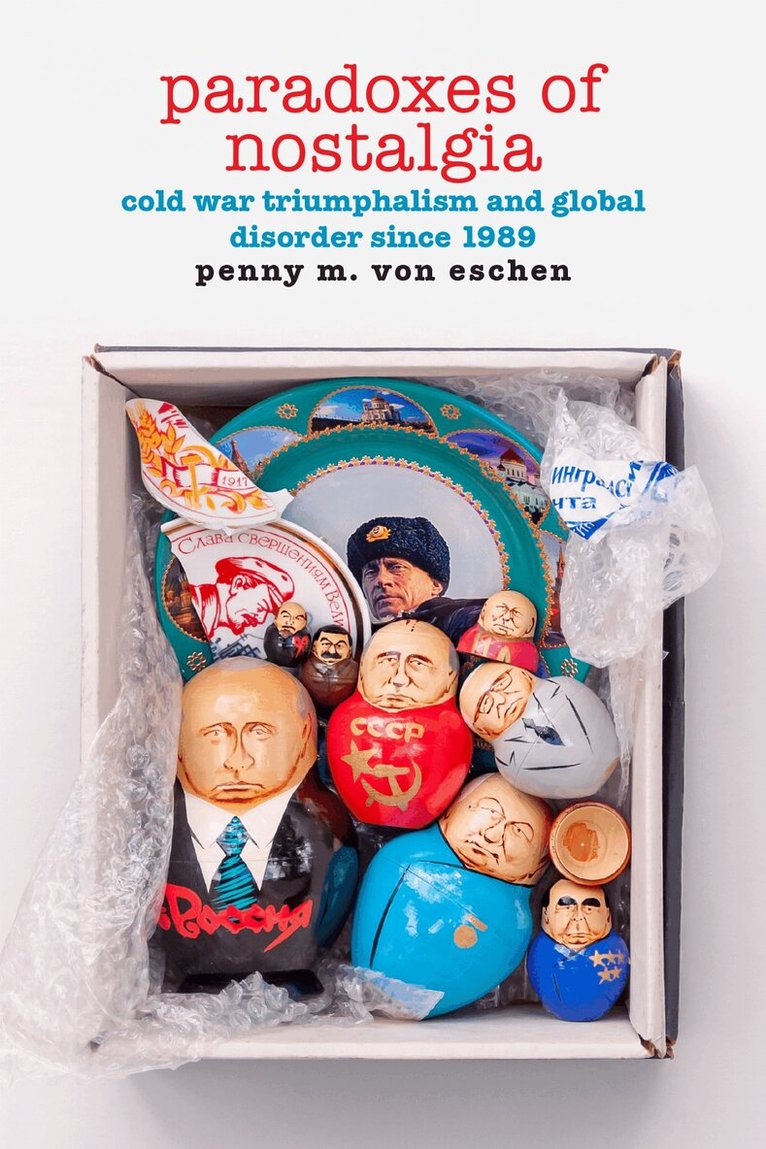
In Paradoxes of Nostalgia Penny M. Von Eschen offers a sweeping examination of the cold war’s afterlife and the lingering shadows it casts over geopolitics, journalism, and popular culture. She shows how myriad forms of nostalgia across the globe-from those that posit a mythic national past to those critical of neoliberalism that remember a time when people believed in the possibility of a collective good-indelibly shape the post-cold war era. When Western triumphalism moved into the global South and former Eastern bloc spaces, many articulated a powerful sense of loss and a longing for stability. Innovatively bringing together diplomatic archives, museums, films, and video games, Von Eschen shows that as the United States continuously sought new enemies for its unipolar world, cold war triumphalism fueled the ascendancy of xenophobic right-wing nationalism and the embrace of authoritarian sensibilities in the United States and beyond. Ultimately, she demonstrates that triumphalist claims that capitalism and military might won the cold war distort the past and disfigure the present, undermining democratic values and institutions.
Häftad, Engelska, 2022
345 kr
Skickas inom 5-8 vardagar
In Paradoxes of Nostalgia Penny M. Von Eschen offers a sweeping examination of the cold war’s afterlife and the lingering shadows it casts over geopolitics, journalism, and popular culture. She shows how myriad forms of nostalgia across the globe-from those that posit a mythic national past to those critical of neoliberalism that remember a time when people believed in the possibility of a collective good-indelibly shape the post-cold war era. When Western triumphalism moved into the global South and former Eastern bloc spaces, many articulated a powerful sense of loss and a longing for stability. Innovatively bringing together diplomatic archives, museums, films, and video games, Von Eschen shows that as the United States continuously sought new enemies for its unipolar world, cold war triumphalism fueled the ascendancy of xenophobic right-wing nationalism and the embrace of authoritarian sensibilities in the United States and beyond. Ultimately, she demonstrates that triumphalist claims that capitalism and military might won the cold war distort the past and disfigure the present, undermining democratic values and institutions.