Per Andersen – författare
Visar alla böcker från författaren Per Andersen. Handla med fri frakt och snabb leverans.
2 produkter
2 produkter
2 540 kr
Skickas inom 7-10 vardagar
The hippocampus is one of a group of remarkable structures embedded within the medial temporal lobe of the brain. Long known to be important for memory, it has been a prime focus of neuroscience research for many years. The Hippocampus Book promises to facilitate developments in the field in a major way by bringing together, for the first time, contributions by leading international scientists working on hippocampal anatomy, physiology, and function. This authoritative volume offers the most comprehensive, up-to-date account of what the hippocampus does, how it does it and what happens when things go wrong. At the same time, it illustrates how research focusing on this single brain structure has revealed principles of wider generality for the whole brain in relation to anatomical connectivity, synaptic plasticity, cognition and behaviour, and computational algorithms. Well-organised in its presentation of both theory and experimental data, this peerless work vividly illustrates the astonishing progress that has been made in unravelling the workings of the brain. The Hippocampus Book is destined to take a central place on every neuroscientist's bookshelf.
Del 11 - Medieval Law and Its Practice
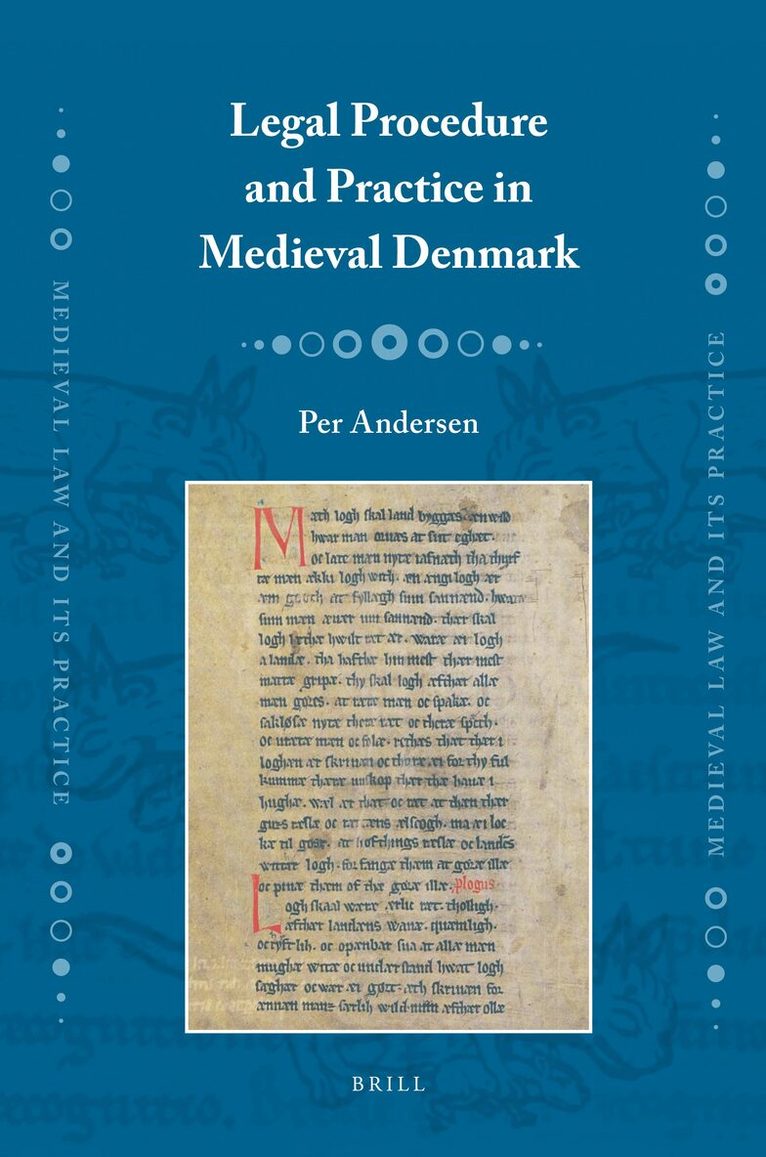
Legal Procedure and Practice in Medieval Denmark
Inbunden, Engelska, 2011
4 043 kr
Skickas inom 3-6 vardagar
This book offers a comprehensive examination of how the Fourth Lateran Council’s prohibition against trial by ordeal was implemented in Danish secular law and how it required both a fundamental restructuring of legal procedure and an entirely different approach to jurisprudence in practice. It offers a broader understanding of how ideology could penetrate and change jurisprudence firstly by changing the norms, secondly by presupposing new kind of legal institutions. Rather than focusing on pure dogmatics, this investigation will focus on uncovering the ideological character of procedure with regard to how those learned in law and those holding political power thought that jurisprudence needed to be constructed in order to ensure that justice was done in medieval Denmark.