Peter D. Jacobson – författare
Visar alla böcker från författaren Peter D. Jacobson. Handla med fri frakt och snabb leverans.
5 produkter
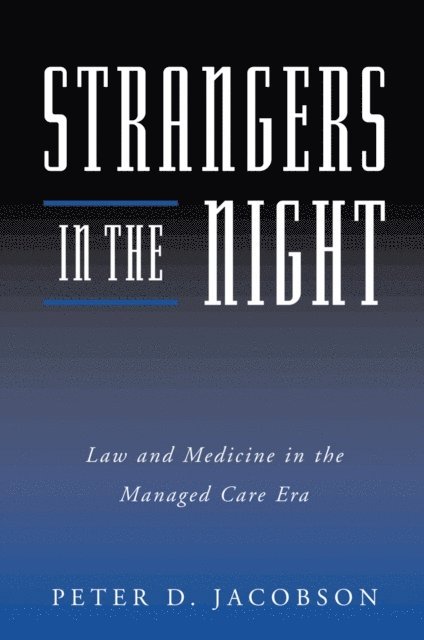
Strangers in the Night
Law and Medicine in the Managed Care Era
E-bok, 2002
152 kr
Lägg i varukorg
More than ever before, the legal system plays a vital role in virtually every aspect of the current health care system. From the congressional debate over patients'' rights legislation to judicial rulings on the denial of health care services, the legal system is integrally involved in the …
False Hope
Bone Marrow Transplantation for Breast Cancer
Av Wade M. Aubry M.D., Cynthia M. Farquhar M.D. m. fl.
E-bok, 2007
567 kr
Lägg i varukorg
In the late 1980s, a promising new treatment for breast cancer emerged: high-dose chemotherapy with autologous bone marrow transplantation or HDC/ABMT. By the 1990s, it had burst upon the oncology scene and disseminated rapidly before having been carefully evaluated. By the time published studies …
False Hope
Bone Marrow Transplantation for Breast Cancer
Av Richard A. Rettig, Peter D. Jacobson m. fl.
Inbunden, 2007
1035 kr
Lägg i varukorg
In the late 1980s, a promising new treatment for breast cancer emerged: high-dose chemotherapy with autologous bone marrow transplantation or HDC/ABMT. By the 1990s, it had burst upon the oncology scene and disseminated rapidly before having been carefully evaluated. By the time published studies …
False Hope
Bone Marrow Transplantation for Breast Cancer
Av Wade M. Aubry M.D., Cynthia M. Farquhar M.D. m. fl.
E-bok, 2007
567 kr
Lägg i varukorg
In the late 1980s, a promising new treatment for breast cancer emerged: high-dose chemotherapy with autologous bone marrow transplantation or HDC/ABMT. By the 1990s, it had burst upon the oncology scene and disseminated rapidly before having been carefully evaluated. By the time published studies …
Combating Teen Smoking
Research and Policy Strategies
Av Peter D. Jacobson, Paula M. Lantz m. fl.
Häftad, 2001
442 kr
Tillfälligt slut
Every year, more than 400,000 Americans die prematurely because of tobacco use. Most began smoking during their teen years. Adolescent tobacco use remains our nation's most preventable threat to life and health. This public health crisis has generated widespread debate over how best to prevent …