Peter Godman – författare
Visar alla böcker från författaren Peter Godman. Handla med fri frakt och snabb leverans.
12 produkter
Archpoet and Medieval Culture
Av Peter Godman
E-bok, 2014
1729 kr
Lägg i varukorg
This is the first monograph to be published about one of the most famous and least understood authors of the Latin Middle Ages. We know him by the pseudonym of Archpoet. Setting the Archpoet''s world and works in their historical contexts, Peter Godman argues that they provide insight into a …
The Bishops, Kings, and Saints of York
Av Alcuin, Peter Godman
Inbunden, 1983
5442 kr
Lägg i varukorg
The Bishops, Kings, and Saints of York
The Archpoet and Medieval Culture
Av Peter Godman
Inbunden, 2014
2099 kr
Lägg i varukorg
This is the first monograph to be published about one of the most famous and least understood authors of the Latin Middle Ages. We know him by the pseudonym of Archpoet. Setting the Archpoet's world and works in their historical contexts, Peter Godman argues that they provide insight into a …
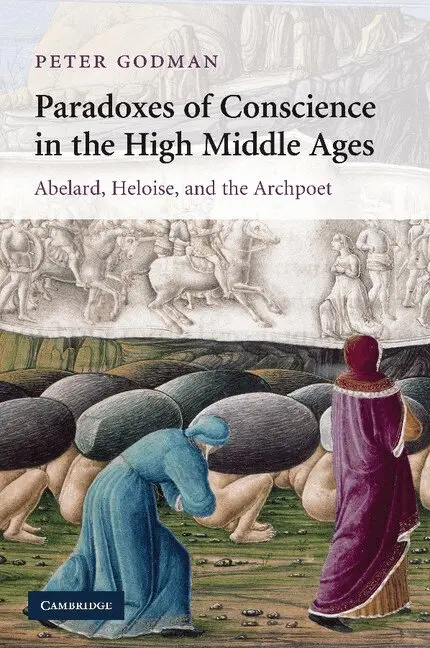
Paradoxes of Conscience in the High Middle Ages
Abelard, Heloise and the Archpoet
Av Peter Godman
Inbunden, 2009
1872 kr
Lägg i varukorg
The autobiographical and confessional writings of Abelard, Heloise and the Archpoet were concerned with religious authenticity, spiritual sincerity and their opposite - fictio, a composite of hypocrisy and dissimulation, lying and irony. How and why moral identity could be feigned or falsified were …
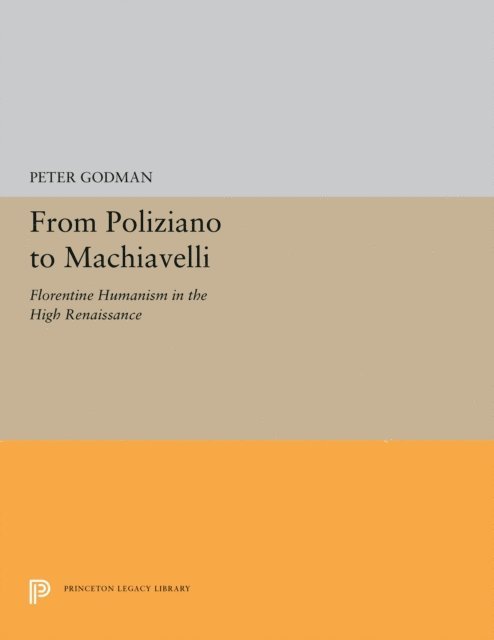
From Poliziano to Machiavelli
Florentine Humanism in the High Renaissance
Av Peter Godman
E-bok, 2019
934 kr
Lägg i varukorg
Peter Godman presents the first intellectual history of Florentine humanism from the lifetime of Angelo Poliziano in the later fifteenth century to the death of Niccolo Machiavelli in 1527. Making use of unpublished and rare sources, Godman traces the development of philological and official …
From Poliziano to Machiavelli
Florentine Humanism in the High Renaissance
Av Peter Godman
Häftad, 2019
678 kr
Lägg i varukorg
Peter Godman presents the first intellectual history of Florentine humanism from the lifetime of Angelo Poliziano in the later fifteenth century to the death of Niccolo Machiavelli in 1527. Making use of unpublished and rare sources, Godman traces the development of philological and official …
From Poliziano to Machiavelli
Florentine Humanism in the High Renaissance
Av Peter Godman
Inbunden, 2019
2848 kr
Lägg i varukorg
Peter Godman presents the first intellectual history of Florentine humanism from the lifetime of Angelo Poliziano in the later fifteenth century to the death of Niccolo Machiavelli in 1527. Making use of unpublished and rare sources, Godman traces the development of philological and official …
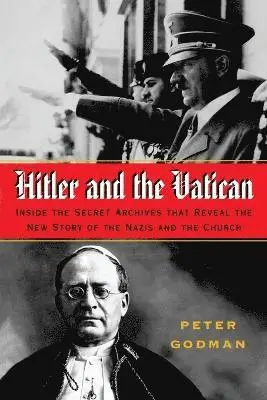
Hitler and the Vatican
Inside the Secret Archives That Reveal the New Story of the Nazis and the Church
Av Peter Godman
Häftad, 2007
286 kr
Lägg i varukorg
Paradoxes of Conscience in the High Middle Ages
Abelard, Heloise and the Archpoet
Av Peter Godman
Häftad, 2013
654 kr
Lägg i varukorg
The autobiographical and confessional writings of Abelard, Heloise and the Archpoet were concerned with religious authenticity, spiritual sincerity and their opposite - fictio, a composite of hypocrisy and dissimulation, lying and irony. How and why moral identity could be feigned or falsified were …
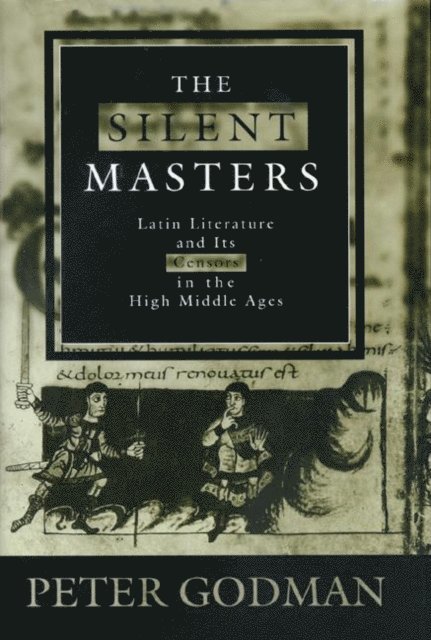
Silent Masters
Latin Literature and Its Censors in the High Middle Ages
Av Peter Godman
E-bok, 2012
1640 kr
Lägg i varukorg
In the tension between competing ideas of authority and the urge to literary experiment, writers of the High Middle Ages produced some of their most distinctive achievements. This book examines these themes in the high culture of Western Europe during the eleventh and twelfth centuries, showing how …
Am Vorabend Der Kaiserkrönung
Das Epos Karolus Magnus Et Leo Papa Und Der Papstbesuch in Paderborn 799
Av Peter Godman, Jörg Jarnut m. fl.
Inbunden, 2002
1484 kr
Lägg i varukorg
Im Mittelpunkt des Buches steht das sogenannte Karlsepos, das früher auch als Aachener oder Paderborner Epos bezeichnet wurde. Aus verschiedenen Perspektiven erfolgt eine neue Auseinandersetzung mit dem Text, der in seiner literaturwissenschaftlichen Umgebung wie auch im zeitgenössischen …
Am Vorabend der Kaiserkrönung
Das Epos "Karolus Magnus et Leo papa" und der Papstbesuch in Paderborn 799
Av Peter Johanek, Jorg Jarnut m. fl.
E-bok, 2011
1612 kr
Lägg i varukorg
Im Mittelpunkt des Buches steht das sogenannte Karlsepos, das früher auch als Aachener oder Paderborner Epos bezeichnet wurde. Aus verschiedenen Perspektiven erfolgt eine neue Auseinandersetzung mit dem Text, der in seiner literaturwissenschaftlichen Umgebung wie auch im zeitgenössischen …