Peter J. Collier - Böcker
Visar alla böcker från författaren Peter J. Collier. Handla med fri frakt och snabb leverans.
4 produkter
4 produkter
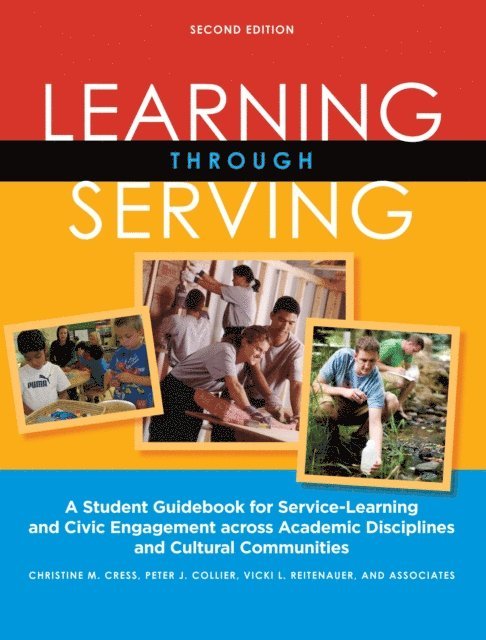
Learning Through Serving
A Student Guidebook for Service-Learning and Civic Engagement Across Academic Disciplines and Cultural Communities
Inbunden, Engelska, 2013
2 029 kr
Skickas inom 10-15 vardagar
This substantially expanded new edition of this widely-used and acclaimed text maintains the objectives and tenets of the first. It is designed to help students understand and reflect on their community service experiences both as individuals and as citizens of communities in need of their compassionate expertise. It is designed to assist faculty in facilitating student development of compassionate expertise through the context of service in applying disciplinary knowledge to community issues and challenges. In sum, the book is about how to make academic sense of civic service in preparing for roles as future citizen leaders.Each chapter has been developed to be read and reviewed, in sequence, over the term of a service-learning course. Students in a semester course might read just one chapter each week, while those in a quarter-term course might need to read one to two chapters per week. The chapters are intentionally short, averaging 8 to 14 pages, so they do not interfere with other course content reading.This edition presents four new chapters on Mentoring, Leadership, Becoming a Change Agent, and Short-Term Immersive and Global Service-Learning experiences. The authors have also revised the original chapters to more fully address issues of social justice, privilege/power, diversity, intercultural communication, and technology; have added more disciplinary examples; incorporated additional academic content for understanding service-learning issues (e.g., attribution theory); and cover issues related to students with disabilities, and international students.This text is a student-friendly, self-directed guide to service-learning that:Develops the skills needed to succeedClearly links service-learning to the learning goals of the courseCombines self-study and peer-study workbook formats with activities that can be incorporated in class, to give teachers maximum flexibility in structuring their service-learning coursesPromotes independent and collaborative learningEqually suitable for courses of a few weeks’ or a few months’ durationShows students how to assess progress and communicate end-resultsWritten for students participating in service learning as a class, but also suitable for students working individually on a project.Instructor's ManualThis Instructor Manual discusses the following six key areas for aligning your course with use of Learning through Serving, whether you teach a senior-level high school class, freshman studies course, or a college capstone class:1. Course and syllabus design2. Community-partner collaboration3. Creating class community4. Strategic teaching techniques5. Developing intercultural competence6. Impact assessment
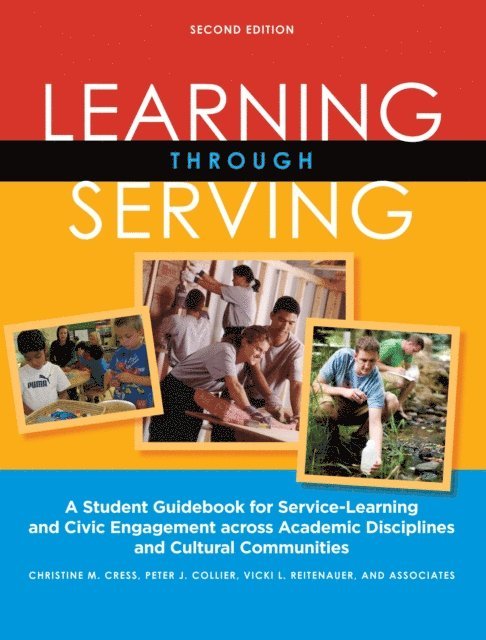
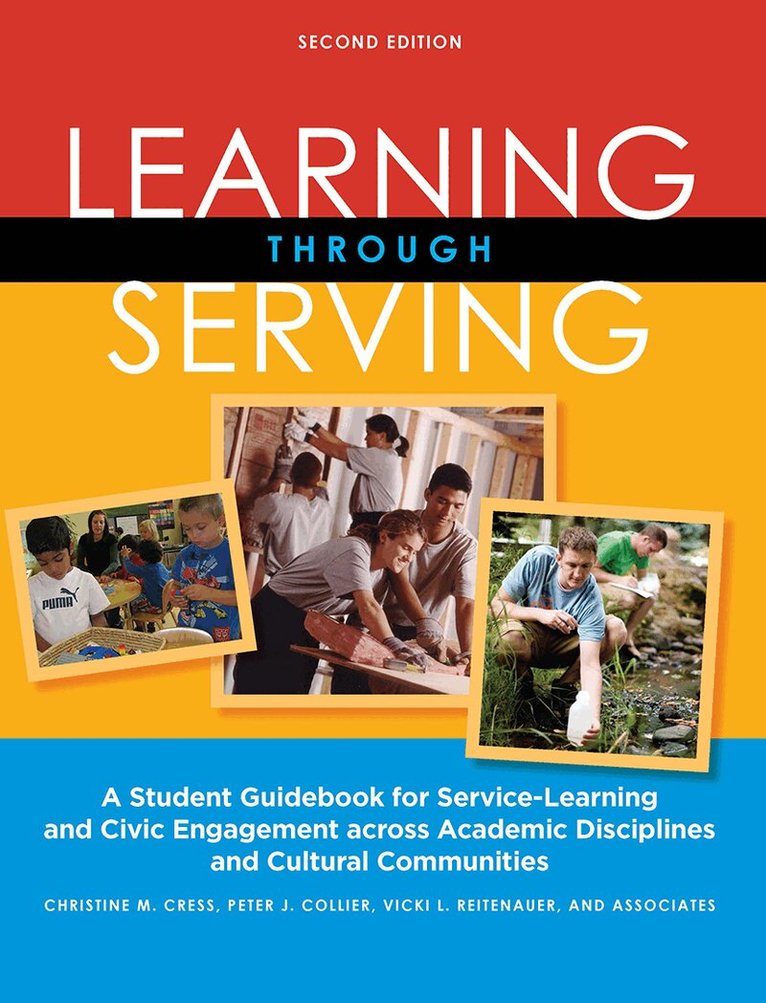
Learning Through Serving
A Student Guidebook for Service-Learning and Civic Engagement Across Academic Disciplines and Cultural Communities
Häftad, Engelska, 2013
415 kr
Skickas inom 10-15 vardagar
This substantially expanded new edition of this widely-used and acclaimed text maintains the objectives and tenets of the first. It is designed to help students understand and reflect on their community service experiences both as individuals and as citizens of communities in need of their compassionate expertise. It is designed to assist faculty in facilitating student development of compassionate expertise through the context of service in applying disciplinary knowledge to community issues and challenges. In sum, the book is about how to make academic sense of civic service in preparing for roles as future citizen leaders.Each chapter has been developed to be read and reviewed, in sequence, over the term of a service-learning course. Students in a semester course might read just one chapter each week, while those in a quarter-term course might need to read one to two chapters per week. The chapters are intentionally short, averaging 8 to 14 pages, so they do not interfere with other course content reading.This edition presents four new chapters on Mentoring, Leadership, Becoming a Change Agent, and Short-Term Immersive and Global Service-Learning experiences. The authors have also revised the original chapters to more fully address issues of social justice, privilege/power, diversity, intercultural communication, and technology; have added more disciplinary examples; incorporated additional academic content for understanding service-learning issues (e.g., attribution theory); and cover issues related to students with disabilities, and international students.This text is a student-friendly, self-directed guide to service-learning that:Develops the skills needed to succeedClearly links service-learning to the learning goals of the courseCombines self-study and peer-study workbook formats with activities that can be incorporated in class, to give teachers maximum flexibility in structuring their service-learning coursesPromotes independent and collaborative learningEqually suitable for courses of a few weeks’ or a few months’ durationShows students how to assess progress and communicate end-resultsWritten for students participating in service learning as a class, but also suitable for students working individually on a project.Instructor's ManualThis Instructor Manual discusses the following six key areas for aligning your course with use of Learning through Serving, whether you teach a senior-level high school class, freshman studies course, or a college capstone class:1. Course and syllabus design2. Community-partner collaboration3. Creating class community4. Strategic teaching techniques5. Developing intercultural competence6. Impact assessment
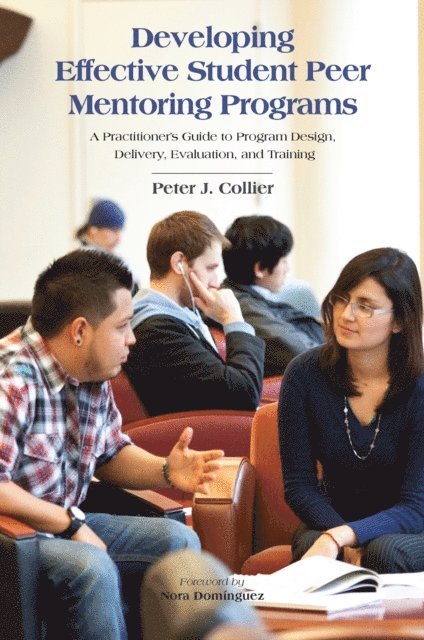
Developing Effective Student Peer Mentoring Programs
A Practitioner's Guide to Program Design, Delivery, Evaluation, and Training
Inbunden, Engelska, 2015
2 029 kr
Skickas inom 10-15 vardagar
At a time when college completion is a major issue, and there is particular concern about the retention of underserved student populations, peer mentoring programs offer one solution to promoting student success. This is a comprehensive resource for creating, refining and sustaining effective student peer mentoring programs. While providing a blueprint for successfully designing programs for a wide range of audiences – from freshmen to doctoral students – it also offers specific guidance on developing programs targeting three large groups of under-served students: first-generation students, international students and student veterans.This guidebook is divided into two main sections. The opening section begins by reviewing the issue of degree non-completion, as well as college adjustment challenges that all students and those in each of the targeted groups face. Subsequent chapters in section one explore models of traditional and non-traditional student transition, persistence and belonging, address what peer mentoring can realistically achieve, and present a rubric for categorizing college student peer-mentoring programs. The final chapter in section one provides a detailed framework for assessing students’ adjustment issues to determine which ones peer mentoring programs can appropriately address. Section two of the guidebook shifts from the theoretical to the practical by covering the nuts and bolts of developing a college student peer-mentoring program. The initial chapter in section two covers a range of design issues including establishing a program timeline, developing a budget, securing funding, getting commitments from stakeholders, hiring staff, recruiting mentors and mentees, and developing policies and procedures. Subsequent chapters analyze the strengths and limitations of different program delivery options, from paired and group face-to-face mentoring to their e-mentoring equivalents; offer guidance on the creation of program content and resources for mentors and mentees, and provide mentor training exercises and curricular guidelines. Section two concludes by outlining processes for evaluating programs, including setting goals, collecting appropriate data, and methods of analysis; and by offering advice on sustaining and institutionalizing programs. Each chapter opens with a case study illustrating its principal points. This book is primarily intended as a resource for student affairs professionals and program coordinators who are developing new peer-mentoring programs or considering refining existing ones. It may also serve as a text in courses designed to train future peer mentors and leaders.
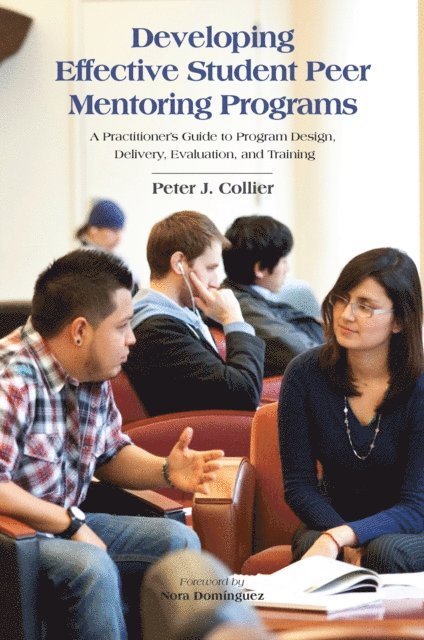
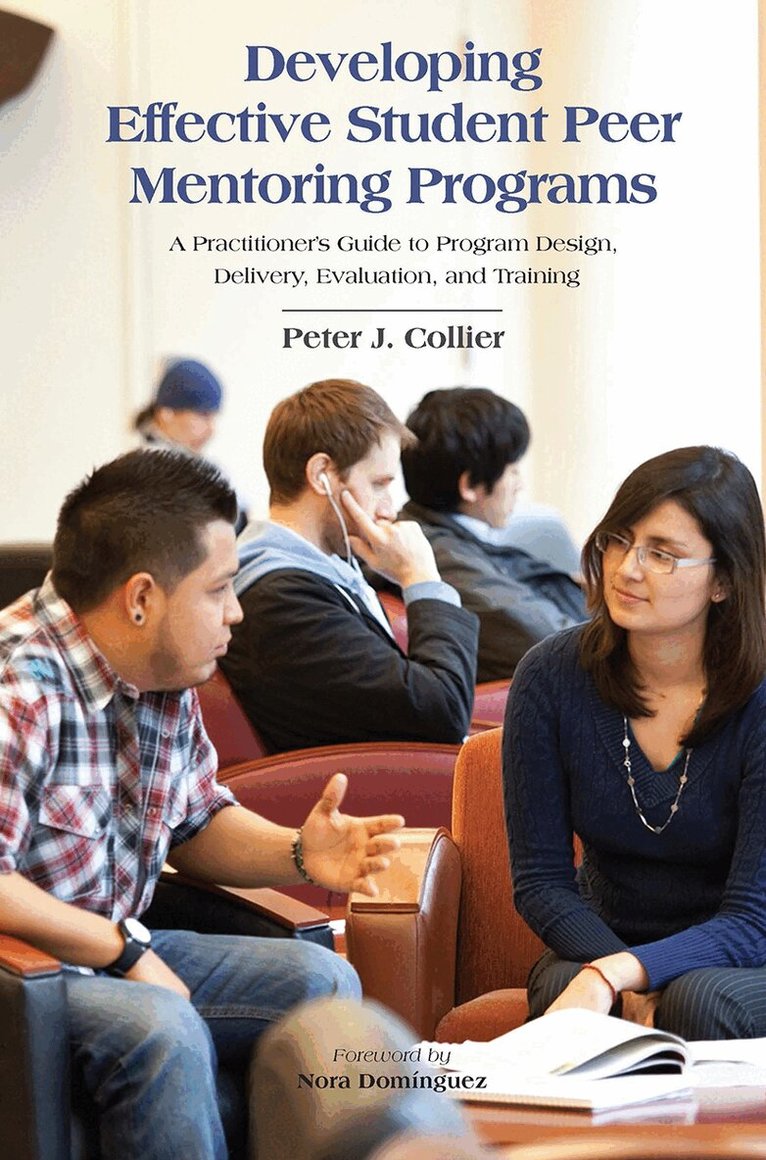
Developing Effective Student Peer Mentoring Programs
A Practitioner's Guide to Program Design, Delivery, Evaluation, and Training
Häftad, Engelska, 2015
468 kr
Skickas inom 10-15 vardagar
At a time when college completion is a major issue, and there is particular concern about the retention of underserved student populations, peer mentoring programs offer one solution to promoting student success. This is a comprehensive resource for creating, refining and sustaining effective student peer mentoring programs. While providing a blueprint for successfully designing programs for a wide range of audiences – from freshmen to doctoral students – it also offers specific guidance on developing programs targeting three large groups of under-served students: first-generation students, international students and student veterans.This guidebook is divided into two main sections. The opening section begins by reviewing the issue of degree non-completion, as well as college adjustment challenges that all students and those in each of the targeted groups face. Subsequent chapters in section one explore models of traditional and non-traditional student transition, persistence and belonging, address what peer mentoring can realistically achieve, and present a rubric for categorizing college student peer-mentoring programs. The final chapter in section one provides a detailed framework for assessing students’ adjustment issues to determine which ones peer mentoring programs can appropriately address. Section two of the guidebook shifts from the theoretical to the practical by covering the nuts and bolts of developing a college student peer-mentoring program. The initial chapter in section two covers a range of design issues including establishing a program timeline, developing a budget, securing funding, getting commitments from stakeholders, hiring staff, recruiting mentors and mentees, and developing policies and procedures. Subsequent chapters analyze the strengths and limitations of different program delivery options, from paired and group face-to-face mentoring to their e-mentoring equivalents; offer guidance on the creation of program content and resources for mentors and mentees, and provide mentor training exercises and curricular guidelines. Section two concludes by outlining processes for evaluating programs, including setting goals, collecting appropriate data, and methods of analysis; and by offering advice on sustaining and institutionalizing programs. Each chapter opens with a case study illustrating its principal points. This book is primarily intended as a resource for student affairs professionals and program coordinators who are developing new peer-mentoring programs or considering refining existing ones. It may also serve as a text in courses designed to train future peer mentors and leaders.