Peter L. King – författare
Visar alla böcker från författaren Peter L. King. Handla med fri frakt och snabb leverans.
9 produkter
9 produkter
779 kr
Skickas inom 10-15 vardagar
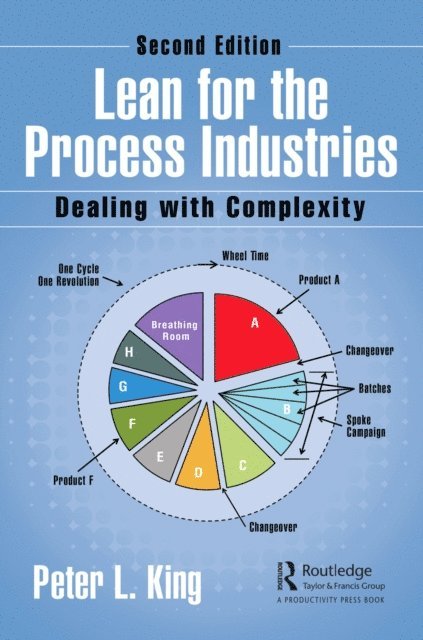
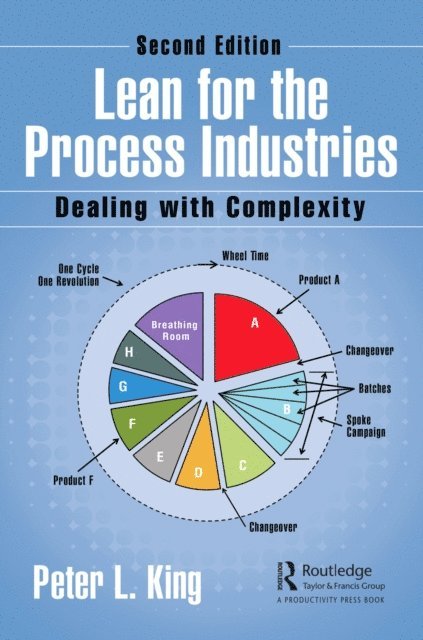
Compared to its widespread implementation across almost all areas of production, Lean improvement efforts lag within the process industries. While many innovators have successfully applied Lean principles to these industries during the past three decades, most of those pioneering efforts were never recorded to guide the improvement efforts of others.Drawing on more than 40 years of application experience at one of the world’s largest chemical and materials manufacturers, coupled with 10 years in private practice, Peter King corrects this void by providing the first comprehensive resource written explicitly for change agents within the process industries. Focusing on areas where the improvement needs of the process industry differ from parts assembly manufacturing, Lean for the Process Industries: Dealing with Complexity, Second Edition: Covers each of the eight wastes commonly described in Lean literature, looking at how they manifest themselves in process operations. Explains how to adapt value stream mapping for process operations. Shows how to identify the root causes of bottlenecks, and how to manage them to optimize flow until they can be eliminated. Provides practical techniques to overcome the barriers which have prevented the application of Cellular Manufacturing to process operations. Discusses the role of business leadership in a Lean strategy, describing both enabling and counter-productive management behaviors Since the publication of the first edition of this book, Peter King has been busy consulting with food, beverage, gasoline additive, and nutraceutical companies -- these new experiences have broadened his perspectives on certain Lean processes and have given him a richer set of examples to discuss in this new edition.While Value Stream Mapping is a very powerful tool to understand flow, bottlenecks, and waste in an operation, the traditional format as presented in many other books does not describe all of the data required to fully understand process flow and its detractors. This new edition highlights the necessary additions with examples of why they are useful.Product wheel scheduling achieves production leveling in a far more comprehensive and effective way than traditional heijunka methods. This edition has a more thorough description of the wheel concept and design steps, and more examples from actual applications.
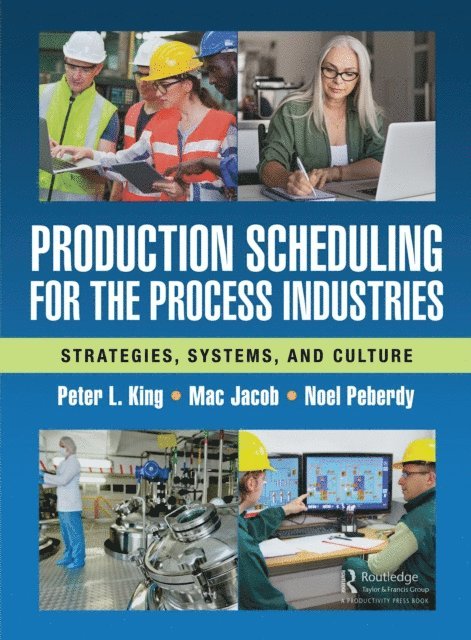
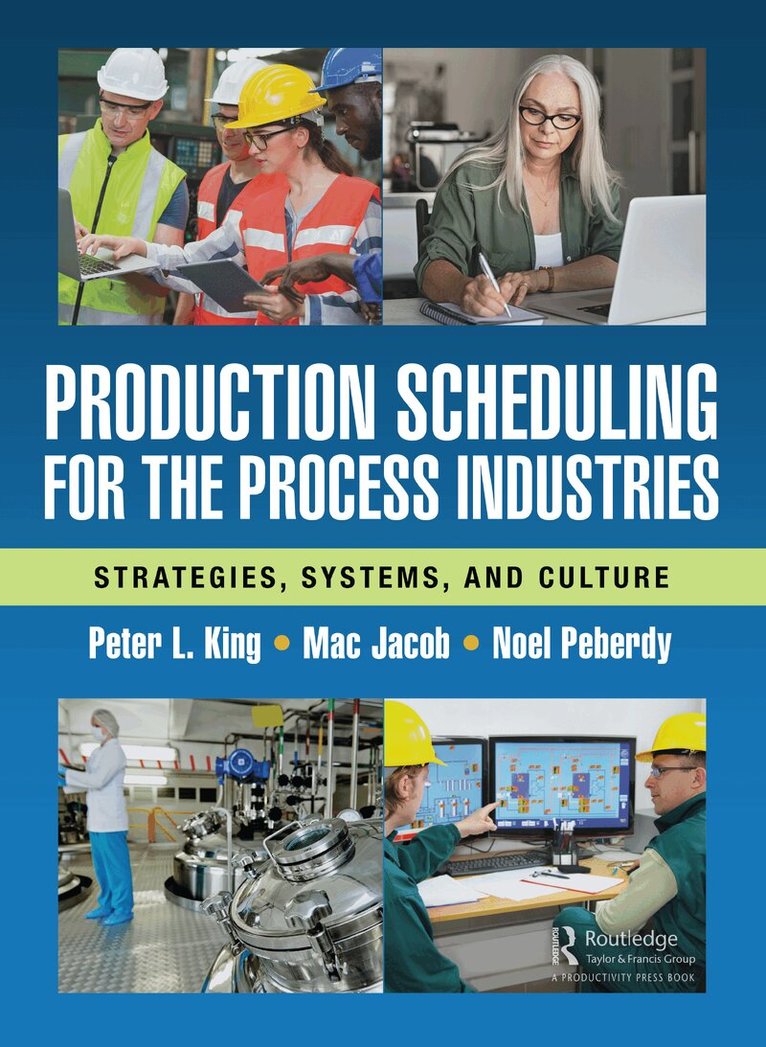
Production Scheduling for the Process Industries
Strategies, Systems, and Culture
Inbunden, Engelska, 2023
2 393 kr
Skickas inom 10-15 vardagar
This book is aimed at manufacturing and planning managers who struggle to bring a greater degree of stability and more effective use of assets to their operations, not realizing the degree to which production scheduling affects those objectives. It has been reported that 75% of the problems on the manufacturing floor are caused by activities outside the plant floor. Poor production scheduling strategies and systems are often the biggest contributors to the 75%. The book explains in detail that no scheduling strategy, and especially no transition to a different and better scheduling strategy, will succeed without strong commitment and guidance from senior leadership. Leadership must understand their active role in the transition, that people will feel uncomfortable and even threatened by change, and that they will need to be measured by different standards. Effective scheduling requires that following the schedule and production to plan is more important than trying to maximize each day’s throughput. The book explains the advantages of a structured, regularly repeating schedule: how it can increase throughput, right-size inventory based on cycles and variabilities and therefore make it more usable, and improve customer delivery. It will explain the trade-offs between throughput, inventory, and delivery performance, how those trade-offs are actually decided in production scheduling, and how an appropriate scheduling strategy can make the trade-offs and their ramifications visible. It discusses several popular structured scheduling concepts, their similarities, and differences, to allow the readers to decide which might fit best in their environments. In addition, the authors discuss what makes an appropriate scheduling software system, and why a package designed for structured scheduling offers capabilities well beyond the Excel workbooks used by many companies, and how it offers much more design capability and ease of use than the finite scheduling modules in SAP or Oracle. Finally, the authors offer a proven roadmap for implementation, critical success factors necessary to achieve the full potential, and give examples of operations that have done this well. In addition, a guide for leaders and managers post-implementation is provided to help them fully exploit the advantages of a structured, repeating scheduling strategy.
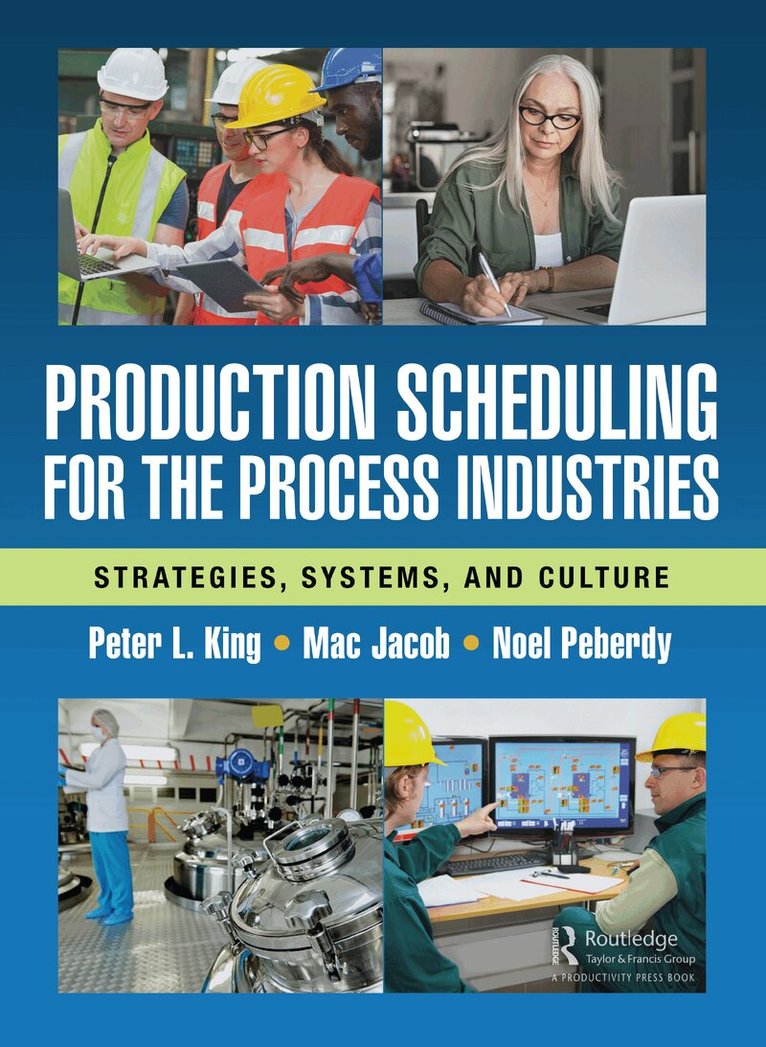
Production Scheduling for the Process Industries
Strategies, Systems, and Culture
Häftad, Engelska, 2023
835 kr
Skickas inom 10-15 vardagar
This book is aimed at manufacturing and planning managers who struggle to bring a greater degree of stability and more effective use of assets to their operations, not realizing the degree to which production scheduling affects those objectives. It has been reported that 75% of the problems on the manufacturing floor are caused by activities outside the plant floor. Poor production scheduling strategies and systems are often the biggest contributors to the 75%. The book explains in detail that no scheduling strategy, and especially no transition to a different and better scheduling strategy, will succeed without strong commitment and guidance from senior leadership. Leadership must understand their active role in the transition, that people will feel uncomfortable and even threatened by change, and that they will need to be measured by different standards. Effective scheduling requires that following the schedule and production to plan is more important than trying to maximize each day’s throughput. The book explains the advantages of a structured, regularly repeating schedule: how it can increase throughput, right-size inventory based on cycles and variabilities and therefore make it more usable, and improve customer delivery. It will explain the trade-offs between throughput, inventory, and delivery performance, how those trade-offs are actually decided in production scheduling, and how an appropriate scheduling strategy can make the trade-offs and their ramifications visible. It discusses several popular structured scheduling concepts, their similarities, and differences, to allow the readers to decide which might fit best in their environments. In addition, the authors discuss what makes an appropriate scheduling software system, and why a package designed for structured scheduling offers capabilities well beyond the Excel workbooks used by many companies, and how it offers much more design capability and ease of use than the finite scheduling modules in SAP or Oracle. Finally, the authors offer a proven roadmap for implementation, critical success factors necessary to achieve the full potential, and give examples of operations that have done this well. In addition, a guide for leaders and managers post-implementation is provided to help them fully exploit the advantages of a structured, repeating scheduling strategy.
1 651 kr
Kommande
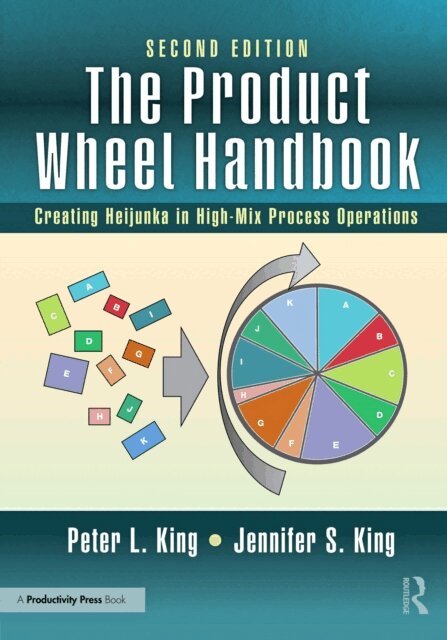
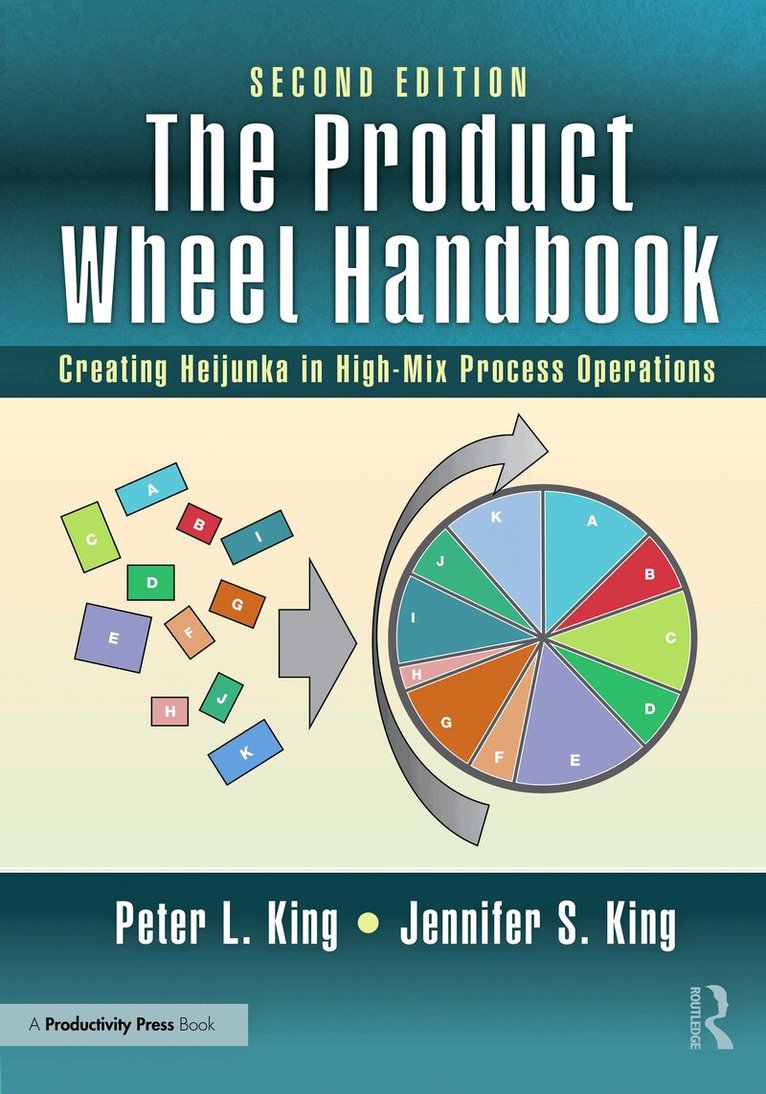
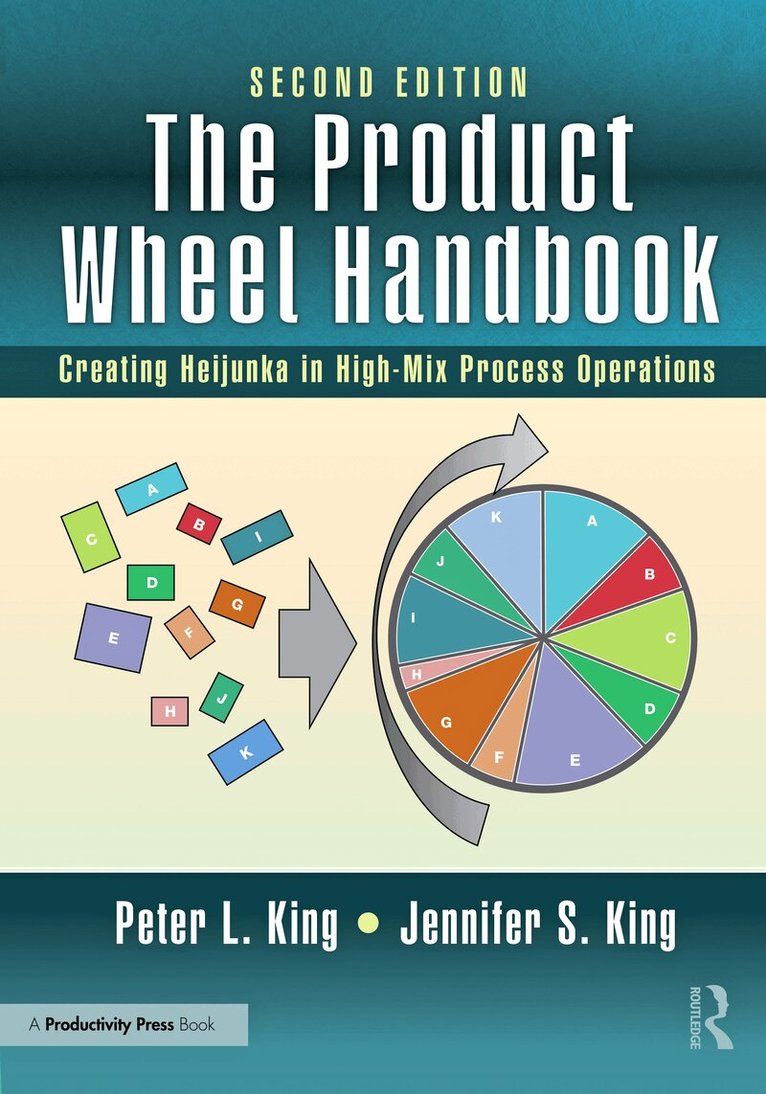
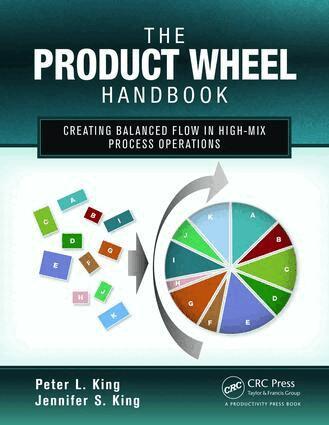
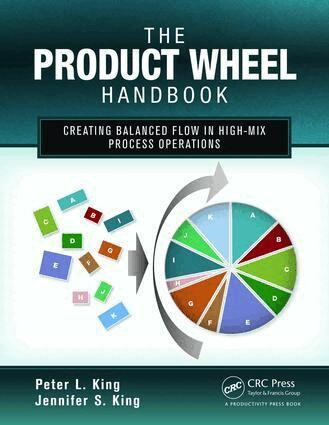
Product Wheel is a scheduling strategy that has practical, well-proven methods for enabling operations managers to find the optimum balance between inventory, operating cost, and customer service, particularly useful in high-mix process operations. They do so in a way that increases throughput to either increase revenue or reduce operating cost while providing a structured, repeatable manufacturing platform that reduces plant floor chaos. DuPont, Exxon Mobil, Dow Chemical, and Litehouse Foods are just a few companies that have used the product wheel concept to achieve and sustain a competitive advantage.Breaking down a fairly complex design process into manageable steps, The Product Wheel Handbook: Creating Heijunka in High-Mix Process Operations, 2nd Edition walks readers through the process for designing, implementing, and maintaining the product wheel technique. It describes each step in detail based on a case study taken from actual practice.This book:Provides clear, practical guidance on how to balance the trade-offs encountered in implementing any scheduling strategyDescribes how product wheels satisfy the lean goal of production levelling, Heijunka, in a much more comprehensive wayDefines the cultural foundation necessary for smooth product wheel design and implementationDescribes how product wheel design places appropriate emphasis on people engagement and empowerment as well as on process and technologyMany of the steps in wheel design described in this book are not new. What is new is a proven road map explaining how to apply them in an integrated, holistic manner, starting with a thorough understanding of material flow and equipment performance coupled with product characteristics and requirements. The result is a disciplined scheduling structure that will allow you to spend less of your time firefighting and more time in higher valued, more productive work. More importantly it provides your organization with a stable platform to deal with abnormal events in a less stressful and more logical manner.This second edition benefits from the additional perspectives, experiences, and insights gained through the past thirteen years of product wheel design and implementation in a wider range of companies and industry sectors.It describes some of the advanced scheduling systems that have evolved over the past dozen years, how to take advantage of them, and when traditional tools like Excel are still appropriate and the better choiceIt details a dozen examples of the successes and benefits that various companies have achieved with product wheels. The Supply Chain Vice Presidents and Operations Directors describe in their own words the impact that product wheels have had on their operations
801 kr
Kommande
Product Wheel is a scheduling strategy that has practical, well-proven methods for enabling operations managers to find the optimum balance between inventory, operating cost, and customer service, particularly useful in high-mix process operations. They do so in a way that increases throughput to either increase revenue or reduce operating cost while providing a structured, repeatable manufacturing platform that reduces plant floor chaos. DuPont, Exxon Mobil, Dow Chemical, and Litehouse Foods are just a few companies that have used the product wheel concept to achieve and sustain a competitive advantage.Breaking down a fairly complex design process into manageable steps, The Product Wheel Handbook: Creating Heijunka in High-Mix Process Operations, 2nd Edition walks readers through the process for designing, implementing, and maintaining the product wheel technique. It describes each step in detail based on a case study taken from actual practice.This book:Provides clear, practical guidance on how to balance the trade-offs encountered in implementing any scheduling strategyDescribes how product wheels satisfy the lean goal of production levelling, Heijunka, in a much more comprehensive wayDefines the cultural foundation necessary for smooth product wheel design and implementationDescribes how product wheel design places appropriate emphasis on people engagement and empowerment as well as on process and technologyMany of the steps in wheel design described in this book are not new. What is new is a proven road map explaining how to apply them in an integrated, holistic manner, starting with a thorough understanding of material flow and equipment performance coupled with product characteristics and requirements. The result is a disciplined scheduling structure that will allow you to spend less of your time firefighting and more time in higher valued, more productive work. More importantly it provides your organization with a stable platform to deal with abnormal events in a less stressful and more logical manner.This second edition benefits from the additional perspectives, experiences, and insights gained through the past thirteen years of product wheel design and implementation in a wider range of companies and industry sectors.It describes some of the advanced scheduling systems that have evolved over the past dozen years, how to take advantage of them, and when traditional tools like Excel are still appropriate and the better choiceIt details a dozen examples of the successes and benefits that various companies have achieved with product wheels. The Supply Chain Vice Presidents and Operations Directors describe in their own words the impact that product wheels have had on their operations
2 393 kr
Skickas inom 10-15 vardagar
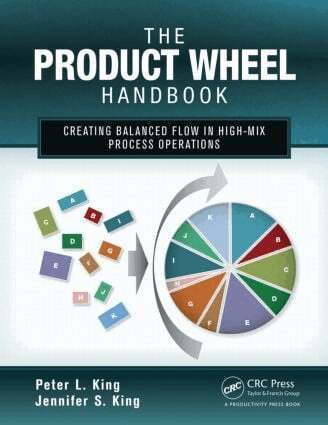
The Product Wheel (PW) design process has practical methods for finding the optimum sequence, minimizing changeover costs, and freeing up useful capacity. So much so, that the DuPont Company and Exxon Mobil are just a few companies that have used the product wheel concept to achieve and sustain a competitive advantage.Breaking down a fairly complex design process into manageable steps, The Product Wheel Handbook: Creating Balanced Flow in High-Mix Process Operations walks readers through the process for designing and implementing the PW technique. It includes a case study taken from actual practice that illustrates the design process and its benefits. Describing how to apply the product wheel technique to any manufacturing operation, the book:Details the steps required to implement product wheels Explains why certain traditional manufacturing metrics should be reevaluated so they don‘t inhibit product wheel performance Defines the cultural foundation necessary for smooth product wheel design and implementation Includes a real-world case study and several examples of product wheels being used by successful manufacturing companies including BG Products, Inc., the DuPont Company, the Dow Chemical Company, and Appleton Many of the steps in wheel design described in this book are not new. What‘s new is their application to production planning and scheduling problems, and more importantly, a clear roadmap explaining how and when they should be used in product wheel design.Supplying you with the tools to reduce the chaos often found in production scheduling, the book outlines a disciplined structure that will allow you to spend less of your time resolving schedule problems. Most importantly, it provides your organization with a stable platform to deal with abnormal events in a less stressful and more logical manner.
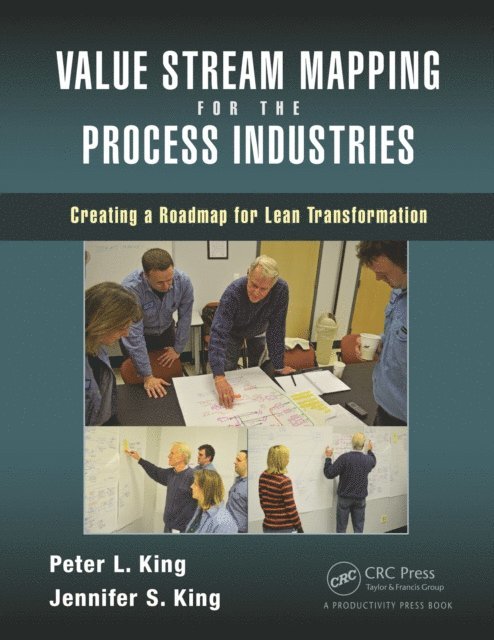
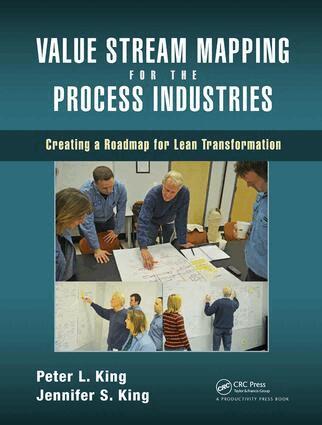
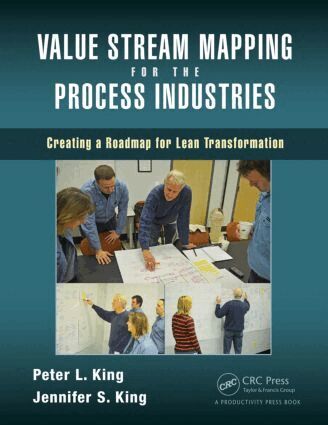
Value Stream Mapping for the Process Industries
Creating a Roadmap for Lean Transformation
Inbunden, Engelska, 2017
2 528 kr
Skickas inom 10-15 vardagar
Providing a framework that highlights waste and its negative effects on process performance, value stream maps (VSMs) are essential components for successful Lean initiatives. While the conventional VSM format has the basic structure to effectively describe process operations, it must be adapted and expanded to serve its purpose in the process industry.This book describes in detail how to create a complete VSM for a process industry manufacturing operation. Detailing the unique features of process operations and why they require additions and adjustments to traditional VSMs, the book walks readers through the steps in analyzing the map. It explains how to scope improvement projects, prioritize them, and then use future state VSMs to illustrate and motivate systemic improvement. In doing so, it supplies readers with a roadmap for a complete Lean transformation.Describes how to analyze the map for waste and flow issues so that they can be reduced and even eliminated Provides examples of the calculations needed for the flow parameters in data boxes Explains how the VSM concept can be applied to the entire supply chain Includes strategies for engaging your entire workforce in map creation The book introduces a target manufacturing process and uses it to describe how to create a complete VSM. The target process is complex enough to illustrate the issues often encountered in mapping a process industry operation, but straightforward enough to explain all of the mapping considerations and decisions.The book includes real examples of how VSMs brought much greater clarity to the real issues the processes faced and cases where the insight enabled management to avoid costly, inappropriate investments.
751 kr
Skickas inom 10-15 vardagar
The Product Wheel (PW) design process has practical methods for finding the optimum sequence, minimizing changeover costs, and freeing up useful capacity. So much so, that the DuPont™ Company and Exxon Mobil are just a few companies that have used the product wheel concept to achieve and sustain a competitive advantage.Breaking down a fairly complex design process into manageable steps, The Product Wheel Handbook: Creating Balanced Flow in High-Mix Process Operations walks readers through the process for designing and implementing the PW technique. It includes a case study taken from actual practice that illustrates the design process and its benefits. Describing how to apply the product wheel technique to any manufacturing operation, the book: Details the steps required to implement product wheelsExplains why certain traditional manufacturing metrics should be reevaluated so they don’t inhibit product wheel performanceDefines the cultural foundation necessary for smooth product wheel design and implementationIncludes a real-world case study and several examples of product wheels being used by successful manufacturing companies—including BG Products, Inc., the DuPont™ Company, the Dow Chemical Company, and AppletonMany of the steps in wheel design described in this book are not new. What’s new is their application to production planning and scheduling problems, and more importantly, a clear roadmap explaining how and when they should be used in product wheel design.Supplying you with the tools to reduce the chaos often found in production scheduling, the book outlines a disciplined structure that will allow you to spend less of your time resolving schedule problems. Most importantly, it provides your organization with a stable platform to deal with abnormal events in a less stressful and more logical manner.
Value Stream Mapping for the Process Industries
Creating a Roadmap for Lean Transformation
Häftad, Engelska, 2015
961 kr
Skickas inom 10-15 vardagar
Providing a framework that highlights waste and its negative effects on process performance, value stream maps (VSMs) are essential components for successful Lean initiatives. While the conventional VSM format has the basic structure to effectively describe process operations, it must be adapted and expanded to serve its purpose in the process industry.This book describes in detail how to create a complete VSM for a process industry manufacturing operation. Detailing the unique features of process operations and why they require additions and adjustments to traditional VSMs, the book walks readers through the steps in analyzing the map. It explains how to scope improvement projects, prioritize them, and then use future state VSMs to illustrate and motivate systemic improvement. In doing so, it supplies readers with a roadmap for a complete Lean transformation.Describes how to analyze the map for waste and flow issues so that they can be reduced and even eliminatedProvides examples of the calculations needed for the flow parameters in data boxesExplains how the VSM concept can be applied to the entire supply chainIncludes strategies for engaging your entire workforce in map creationThe book introduces a target manufacturing process and uses it to describe how to create a complete VSM. The target process is complex enough to illustrate the issues often encountered in mapping a process industry operation, but straightforward enough to explain all of the mapping considerations and decisions.The book includes real examples of how VSMs brought much greater clarity to the real issues the processes faced and cases where the insight enabled management to avoid costly, inappropriate investments.