Peter M. Tiidus – författare
Visar alla böcker från författaren Peter M. Tiidus. Handla med fri frakt och snabb leverans.
3 produkter
3 produkter
Inbunden, Engelska, 2020
3 365 kr
Skickas inom 10-15 vardagar
From its early beginnings in the 1960s, the academic field of biochemistry of exercise has expanded beyond examining and describing metabolic responses to exercise and adaptations to training to include a wide understanding of molecular biology, cell signalling, interorgan communication, stem cell physiology, and a host of other cellular and biochemical mechanisms regulating acute responses and chronic adaptations related to exercise performance, human health/disease, nutrition, and cellular functioning.The Routledge Handbook on Biochemistry of Exercise is the first book to pull together the full depth and breadth of this subject and to update a rapidly expanding field of study with current issues and controversies and a look forward to future research directions. Bringing together many experts and leading scientists, the book emphasizes the current understanding of the underlying metabolic, cellular, genetic, and cell signalling mechanisms associated with physical activity, exercise, training, and athletic performance as they relate to, interact with, and regulate cellular and muscular adaptations and consequent effects on human health/disease, nutrition and weight control, and human performance.With more emphasis than ever on the need to be physically active and the role that being active plays in our overall health from a whole-body level down to the cell, this book makes an important contribution for scholars, medical practitioners, nutritionists, and coaches/trainers working in research and with a wide range of clients. This text is important reading for all students, scholars, and others with an interest in health, nutrition, and exercise/training in general.
Häftad, Engelska, 2023
693 kr
Skickas inom 10-15 vardagar
From its early beginnings in the 1960s, the academic field of biochemistry of exercise has expanded beyond examining and describing metabolic responses to exercise and adaptations to training to include a wide understanding of molecular biology, cell signalling, interorgan communication, stem cell physiology, and a host of other cellular and biochemical mechanisms regulating acute responses and chronic adaptations related to exercise performance, human health/disease, nutrition, and cellular functioning.The Routledge Handbook on Biochemistry of Exercise is the first book to pull together the full depth and breadth of this subject and to update a rapidly expanding field of study with current issues and controversies and a look forward to future research directions. Bringing together many experts and leading scientists, the book emphasizes the current understanding of the underlying metabolic, cellular, genetic, and cell signalling mechanisms associated with physical activity, exercise, training, and athletic performance as they relate to, interact with, and regulate cellular and muscular adaptations and consequent effects on human health/disease, nutrition and weight control, and human performance.With more emphasis than ever on the need to be physically active and the role that being active plays in our overall health from a whole-body level down to the cell, this book makes an important contribution for scholars, medical practitioners, nutritionists, and coaches/trainers working in research and with a wide range of clients. This text is important reading for all students, scholars, and others with an interest in health, nutrition, and exercise/training in general.
Häftad, Engelska, 2025
715 kr
Skickas inom 5-8 vardagar
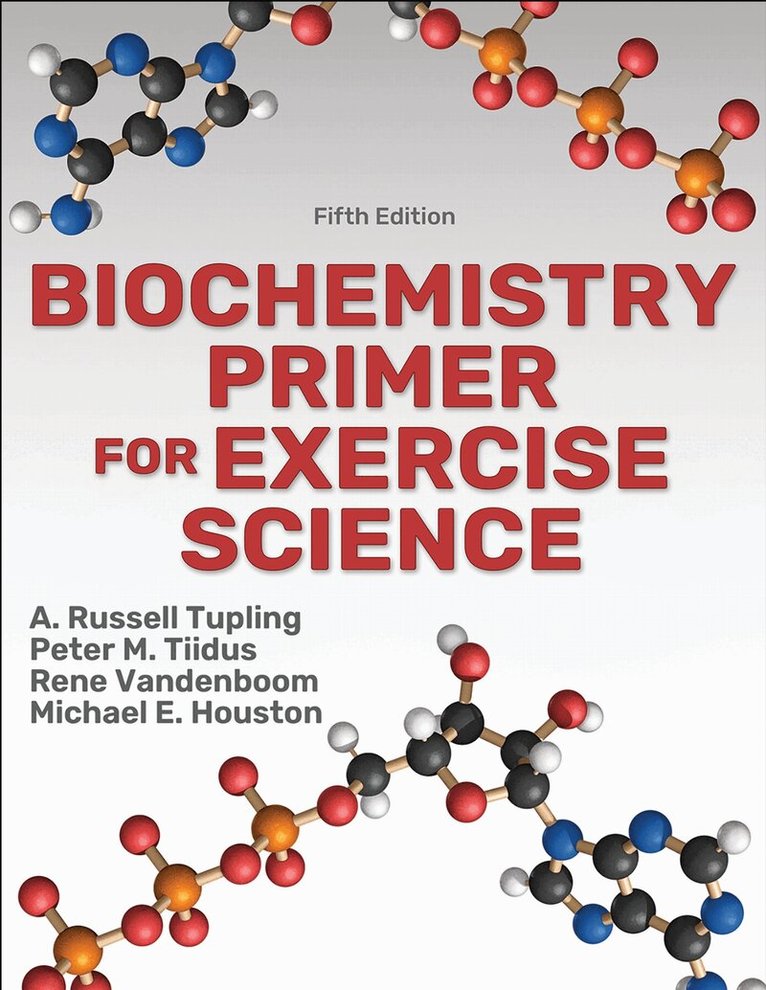
Students trained in traditional exercise physiology have learned the basic concepts of energy but often don’t fully understand human energy consumption at the molecular level. Biochemistry Primer for Exercise Science, Fifth Edition, offers students a fundamental understanding of how biochemical processes underpin physical activity, performance, and overall health.Reflecting the rapid development of the field, this foundational text continues to present the essentials of biochemistry-molecular biology, basic chemistry, metabolism, and transcription regulation-in an easy-to-understand format. With new and updated illustrations, the fifth edition features the most recent research in exercise biochemistry and contains new and expanded content on the following topics: The structure, expression, interactions, and adaptations of proteins in the body (proteomics) Muscle contraction and fatigue The regulation of gene expression in health and disease Control of biochemical and muscular adaptations to exercise and training through signaling pathways The basics of signaling mechanisms associated with different types of exercise and adaptations to different forms of exercise training New and developing research areas highlighted through Next Stage sidebars Biochemistry Primer for Exercise Science, Fifth Edition, combines information from nutrition, physiology, and biochemistry to provide a clear explanation of metabolism and the human body’s response to physical activity. Special elements throughout the text help to demystify this complex and dynamic field of study. Key points, sidebars, and chapter summaries help reinforce essential concepts. A comprehensive glossary and abbreviation and reference lists help students gain confidence in their understanding of exercise biochemistry.With its combination of essential topics, new findings, and future directions in research, Biochemistry Primer for Exercise Science, Fifth Edition, provides a foundational understanding on the working of cellular and integrative whole-body metabolism and the human body’s response to physical activity.