Peter Oldham – författare
Visar alla böcker från författaren Peter Oldham. Handla med fri frakt och snabb leverans.
11 produkter
11 produkter
E-bok
Engelska, 2021123 kr
Läs direkt efter köp
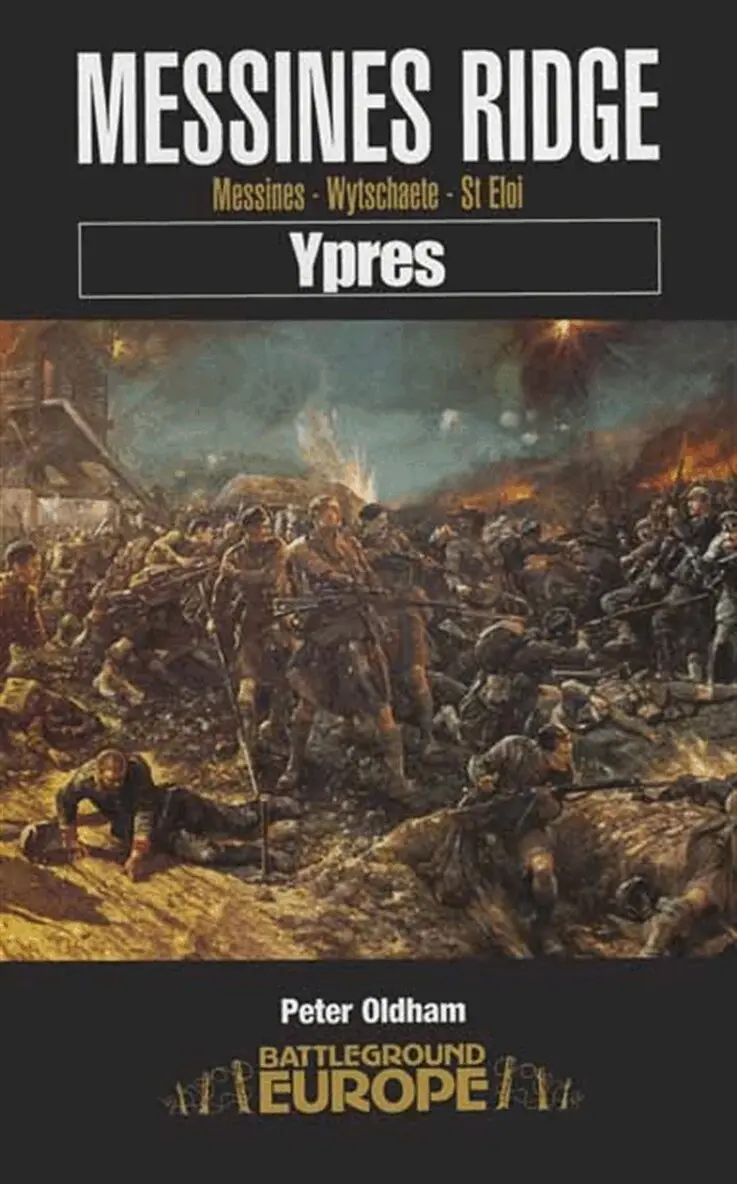
The battle for the possession of the villages of Messines Ridge, Messines, Wytchaete, St. Eloi, took place in 1914-17, and the final battle for Messines in 1918. The 1917 Battle of Messines was preceded by 19 giant mine explosions and was the biggest military mining effort in history. This book gives comprehensive details of what happened where and when, together with what can be seen today, including maps of all the remnants and sites.
E-bok
Engelska, 2021123 kr
Läs direkt efter köp
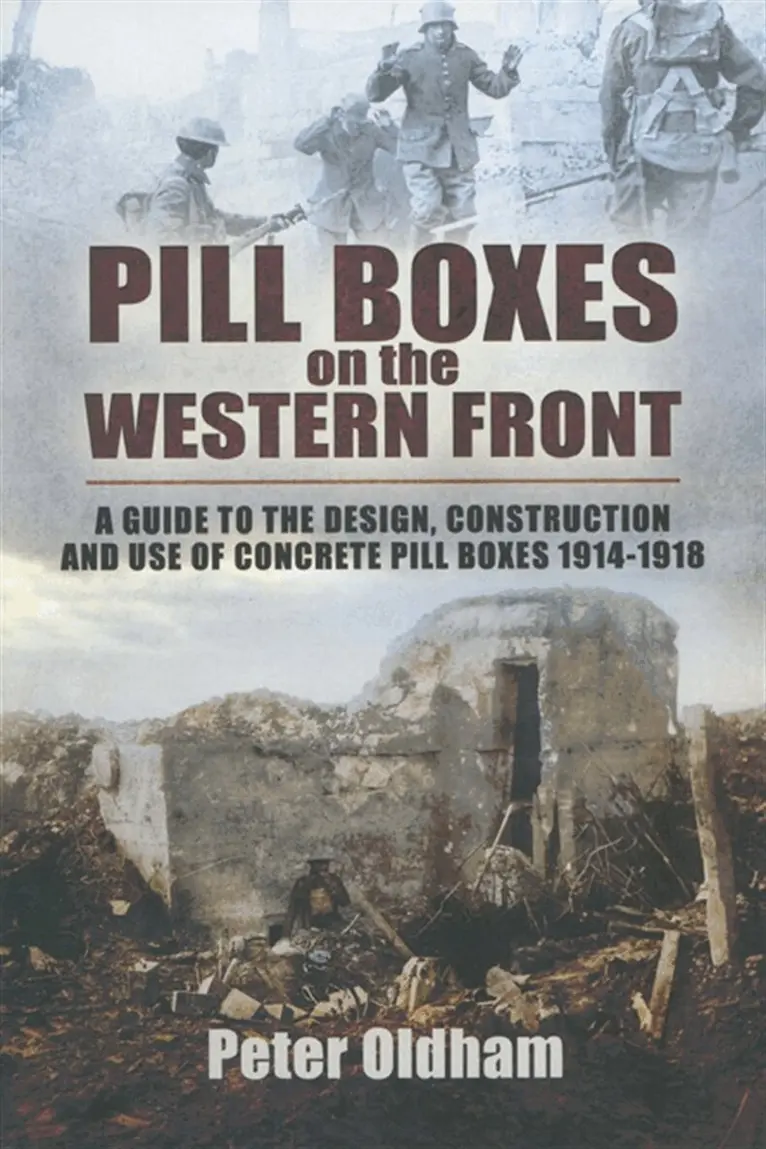
When the First World War froze into a static line of trenches stretching from the North Sea to the Swiss border, the most obvious means of protection against the murderous machine-gun fire which both sides inflicted upon each other was some form of shell-proof shelter which from which fire could be returned in safety, hence the development of the pill box. The idea was certainly not new but the technology required to build them under the prevailing circumstances presented problems hitherto undreamed of. In this remarkably absorbing study of what at first seems a somewhat arcane study of what at first seems a somewhat arcane subject, Peter Oldham, himself a concrete technologist, examines the problems of the design and construction of the pill boxes of the Western Front. He describes how the innumerable difficulties involved in what might to the untrained eye seem to be a fairly simple structure, were gradually overcome. Containing as it does, a gazetteer of the remaining pill boxes and bunkers still to be found in Flanders and Picardy, this book will prove an invaluable guide to the members of many clubs and societies which annually make pilgrimages to the battlefields of the First World War and certainly add a new dimension and interest to their visits to the Western Front.
E-bok
Engelska, 2021123 kr
Läs direkt efter köp
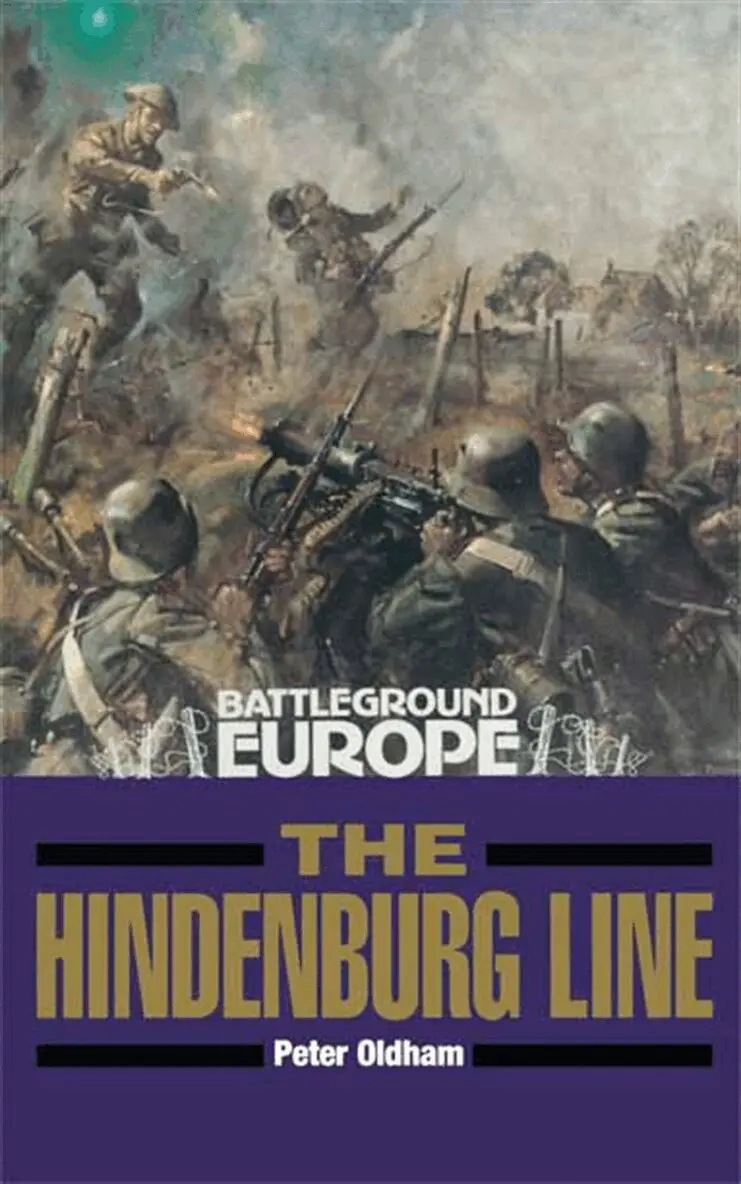
The Hindenburg Line, or Siegfriedstellung, achieved almost mythical status in the minds of the British public: the strongest defence system the world had then seen, scientifically designed by fortification experts with only one aim, to keep at bay the British Army. So pleased and delighted were the British that church bells were rung when the Line was pierced at Cambrai in November 1917. The new wonder-weapon, the Tank, had shown itself to be capable of great deeds and British Generals were seen to be capable of showing the Germans what Tommy could do when properly organised. The initial elation was followed by disappointment as the Germans fought back and the Hindenburg defences were retaken when the Germans used "defence-in-depth" and "elastic-defence", both new concepts to the British who were to learn from their mistakes. The British were to witness triumph and joy again, when, towards the end of the Great War, the Hindenburg Line was to be broken by men from the Midlands.This book examines the reasons for the German's decision to fall back to a strong defence line while their Navy starved Britain into submission, and the "burnt earth" policy of devastation in the area evacuated. The design and layout of the Hindenburg Line, and the Battles for its possession in 1917 and 1918, are given: with numerous maps covering different sectors and the struggles for each village and farm, together with the part played by many British Regiments. The maps contain information on how to find all remaining vestiges of both German and British defences in the region, most of which are rarely visited and many of which have not been seen by British eyes for many years.No book since the Great War has examined this area in such detail, nor has any single account contained so much for the battlefield visitor to see. The sites of individual acts of bravery, including the winning of many Victoria Crosses are featured, and existing locations of battle lines, headquarters, artillery observation and machine gun posts are also included, together with an absorbing narrative which also guides the armchair reader.
E-bok
Engelska, 2021123 kr
Läs direkt efter köp
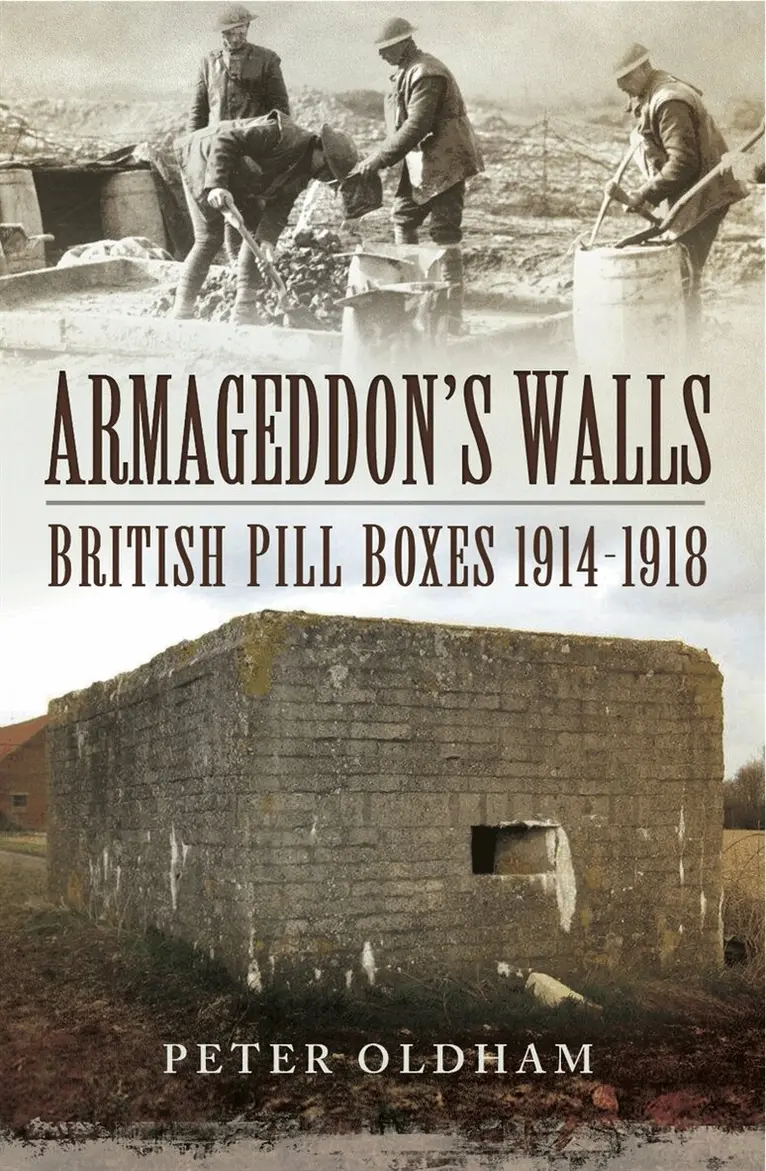
The British Army and her commonwealth Allies went to war in 1914 with little knowledge and experience of constructing permanent, shell proof protective structures. Some masonry fortifications, such as defensive blockhouses in South Africa, had been built but the Royal Engineers of the Army were more versed in simple temporary defences suitable for mobile warfare. Home defences were a limited number of forts around naval ports, and Martello Towers on the east coast. It was considered that the Navy was quite able to defend Britain's coasts.
The Germans, on the other hand, as with the other continental countries such as France, Belgium, Italy, Holland, Poland, Austria, etc. had been constantly renewing and updating border forts for several centuries. They had also maintained fortification and siege elements of their armies, who were experienced in designing and constructing strong shelters. Both German and French armies began the war with a degree of expertise in what was to become a static war with little movement. However, by 1918 the British were to surpass both enemy and her allies in the design and construction, with supply and logistics, of such shell proof cover for troops and defensive positions.
This book gives the history of development and innovation of concrete bunkers, pill boxes, blockhouses and general concrete constructions during the First World War. Many of these structures – some showing obvious signs of war damage - still exist in France and Belgium today.
All the existing structures, with photograph (except for some which are impractical, because of dense vegetation,) are shown within. Many entries have contemporary maps showing how they fitted into a defensive system, whilst for others the location can be identified from the text. GPS coordinates are given for each entry, except for a few which are on private land and where privacy has been requested.
Häftad, Engelska, 2027
990 kr
Kommande
E-bok
PDF, Engelska, 20251 106 kr
Läs direkt efter köp
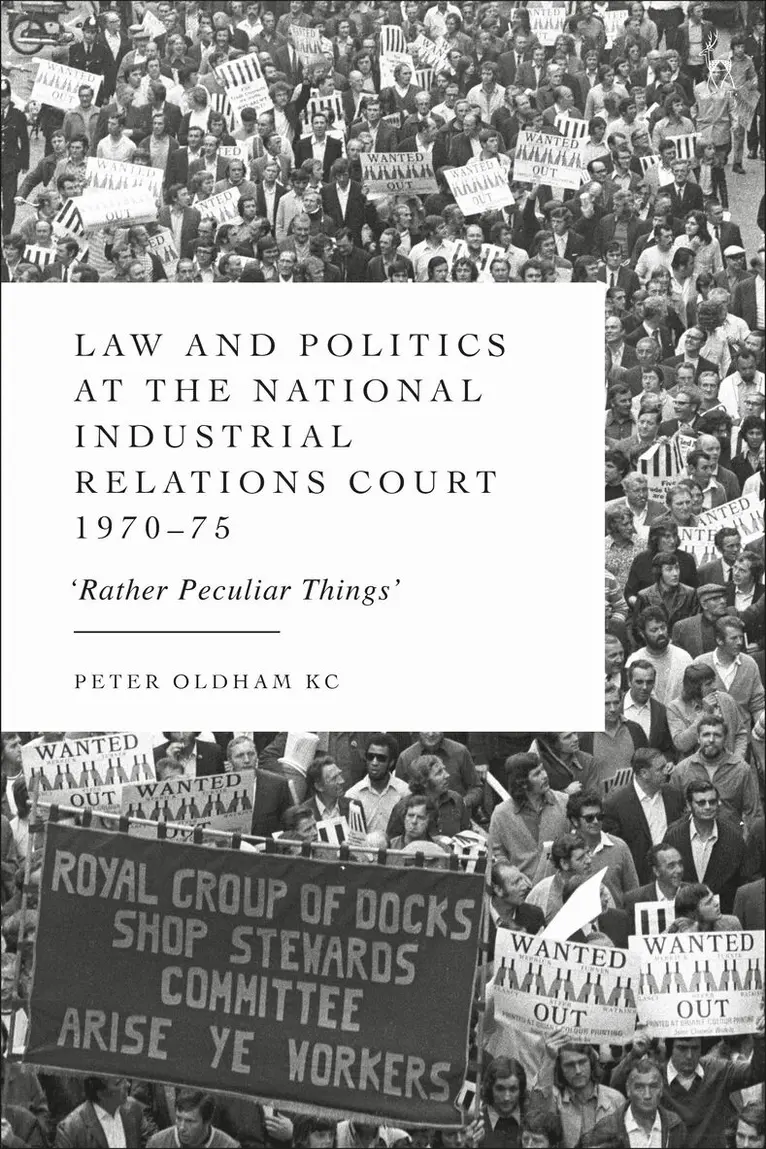
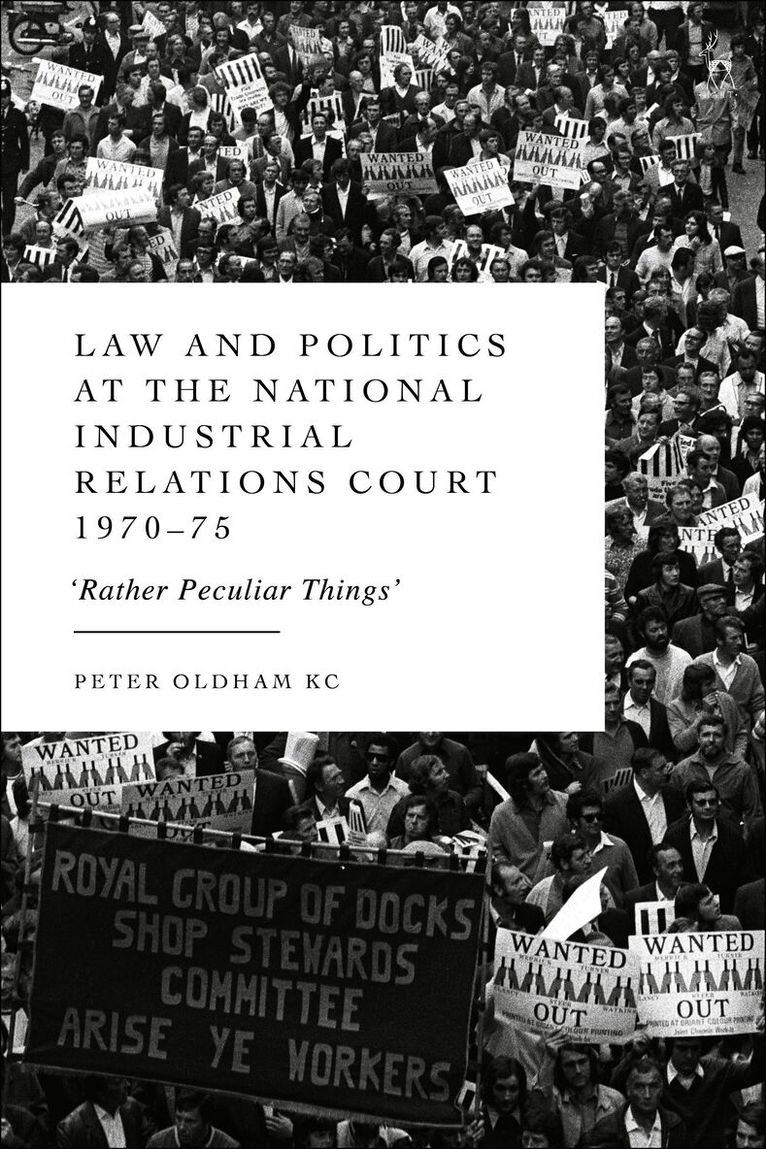
This book gives extraordinary new insights into the legal, political and industrial strife in the UK of the early 1970s, focusing on the National Industrial Relations Court and how its independence came to be injured at a time of national crisis. Constitutional and employment lawyers, and indeed anyone interested in the history of the times, will not want to be without this deeply researched yet entertaining work. When the Heath Government came to power in 1970, it set up the National Industrial Relations Court to referee highly contentious disputes between unions and employers. Regarded with hostility by the labour movement from the start, the Court and its President, Sir John Donaldson, faced mounting suspicion, and were regularly front-page news. When Donaldson jailed five dockers in 1972 the Pentonville Five for defying the Court's orders, strikes erupted and the docks closed. With the country's food supplies dwindling, a state of emergency loomed. How had it come to this? Could a way through be found? This is a revelatory account of the National Industrial Relations Court's defining crisis, set in the context of a wider, and frequently startling, exposition of how Donaldson went about his role as its President. Peter Oldham KC combines decades of experience as a barrister with archival research to shine a bright new light on how and why the Court found itself doing in Donaldson's own words 'rather peculiar things'.
E-bok
Engelska, 20251 106 kr
Läs direkt efter köp
This book gives extraordinary new insights into the legal, political and industrial strife in the UK of the early 1970s, focusing on the National Industrial Relations Court and how its independence came to be injured at a time of national crisis. Constitutional and employment lawyers, and indeed anyone interested in the history of the times, will not want to be without this deeply researched yet entertaining work. When the Heath Government came to power in 1970, it set up the National Industrial Relations Court to referee highly contentious disputes between unions and employers. Regarded with hostility by the labour movement from the start, the Court and its President, Sir John Donaldson, faced mounting suspicion, and were regularly front-page news. When Donaldson jailed five dockers in 1972 the Pentonville Five for defying the Court's orders, strikes erupted and the docks closed. With the country's food supplies dwindling, a state of emergency loomed. How had it come to this? Could a way through be found? This is a revelatory account of the National Industrial Relations Court's defining crisis, set in the context of a wider, and frequently startling, exposition of how Donaldson went about his role as its President. Peter Oldham KC combines decades of experience as a barrister with archival research to shine a bright new light on how and why the Court found itself doing in Donaldson's own words 'rather peculiar things'.
Inbunden, Engelska, 2025
1 157 kr
Skickas inom 10-15 vardagar
This book gives extraordinary new insights into the legal, political and industrial strife in the UK of the early 1970s, focusing on the National Industrial Relations Court and how its independence came to be injured at a time of national crisis. Constitutional and employment lawyers, and indeed anyone interested in the history of the times, will not want to be without this deeply researched yet entertaining work.When the Heath Government came to power in 1970, it set up the National Industrial Relations Court to referee highly contentious disputes between unions and employers. Regarded with hostility by the labour movement from the start, the Court and its President, Sir John Donaldson, faced mounting suspicion, and were regularly front-page news. When Donaldson jailed five dockers in 1972 – the Pentonville Five – for defying the Court’s orders, strikes erupted and the docks closed. With the country’s food supplies dwindling, a state of emergency loomed. How had it come to this? Could a way through be found?This is a revelatory account of the National Industrial Relations Court’s defining crisis, set in the context of a wider, and frequently startling, exposition of how Donaldson went about his role as its President.Peter Oldham KC combines decades of experience as a barrister with archival research to shine a bright new light on how and why the Court found itself doing – in Donaldson’s own words – 'rather peculiar things'.
425 kr
Skickas inom 3-6 vardagar
Häftad, Engelska
214 kr
Skickas inom 3-6 vardagar
109 kr
Skickas inom 3-6 vardagar