
Peter S. Dillard – författare
Visar alla böcker från författaren . Handla med fri frakt och snabb leverans.
19 produkter
19 produkter
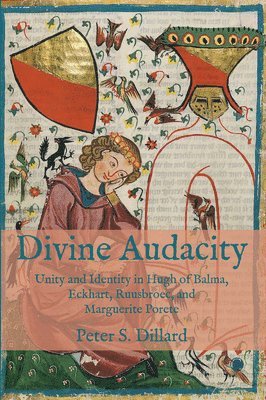
Inbunden, Engelska, 2022
1 076 kr
Skickas inom 5-8 vardagar
A new synthesis of the thought of four key Medieval writers on the themes of mystical union, volition and virtue.In Divine Audacity, Peter Dillard presents a historically informed and rigorous analysis of the themes of mystical union, volition and virtue that occupied several of the foremost theological minds in the late thirteenth and early fourteenth centuries. In particular, the work of Marguerite Porete raises complex questions in these areas, which are further explored by a trio of her near contemporaries. Their respective meditations are thoroughly analysed and then skilfully brought into dialogue.What emerges from Dillard’s synthesis of these voices is a contemporary mystical theology that is rooted in Hugh of Balma’s affective approach, sharpened through critical engagement with Meister Eckhart’s intellectualism, and strengthened by crucial insights gleaned from the writings of John Ruusbroec. The fresh examination of these thinkers – one of whom paid with her life for her radicalism – will appeal to philosophers and theologians alike, while Dillard’s own propositions demand attention from all who concern themselves with the nature of the union between the soul and God.
Häftad, Engelska, 2022
287 kr
Skickas inom 5-8 vardagar
A new synthesis of the thought of four key Medieval writers on the themes of mystical union, volition and virtue.In Divine Audacity, Peter Dillard presents a historically informed and rigorous analysis of the themes of mystical union, volition and virtue that occupied several of the foremost theological minds in the late thirteenth and early fourteenth centuries. In particular, the work of Marguerite Porete raises complex questions in these areas, which are further explored by a trio of her near contemporaries. Their respective meditations are thoroughly analysed and then skilfully brought into dialogue.What emerges from Dillard’s synthesis of these voices is a contemporary mystical theology that is rooted in Hugh of Balma’s affective approach, sharpened through critical engagement with Meister Eckhart’s intellectualism, and strengthened by crucial insights gleaned from the writings of John Ruusbroec. The fresh examination of these thinkers – one of whom paid with her life for her radicalism – will appeal to philosophers and theologians alike, while Dillard’s own propositions demand attention from all who concern themselves with the nature of the union between the soul and God.
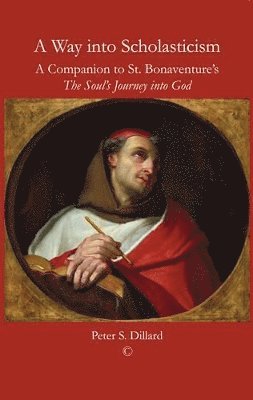
Häftad, Engelska, 2012
287 kr
Skickas inom 5-8 vardagar
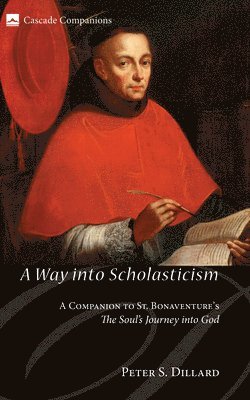
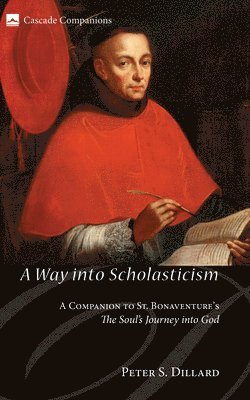
An introduction to scholastic philosophy through an analysis of Bonaventure's classic treatise, combining academic rigour with accessible clarity.St. Bonaventure of Bagnoregio's The Soul's Journey into God is a masterpiece of thirteenth-century Scholasticism. Unfortunately no comprehensive analysis of Bonaventure's seminal treatise exists that is accessible to contemporary audiences. Reinvigorating the medieval tradition of critical commentary for the twenty-first century, Peter Dillard's A Way into Scholasticism: A Companion to St. Bonaventure's The Soul's Journey into God introduces readers to basic Scholastic concepts and arguments by expounding and evaluating Bonaventure's speculative system. Dillard also highlights the relevance of Bonaventure's thought for contemporary philosophical theology.
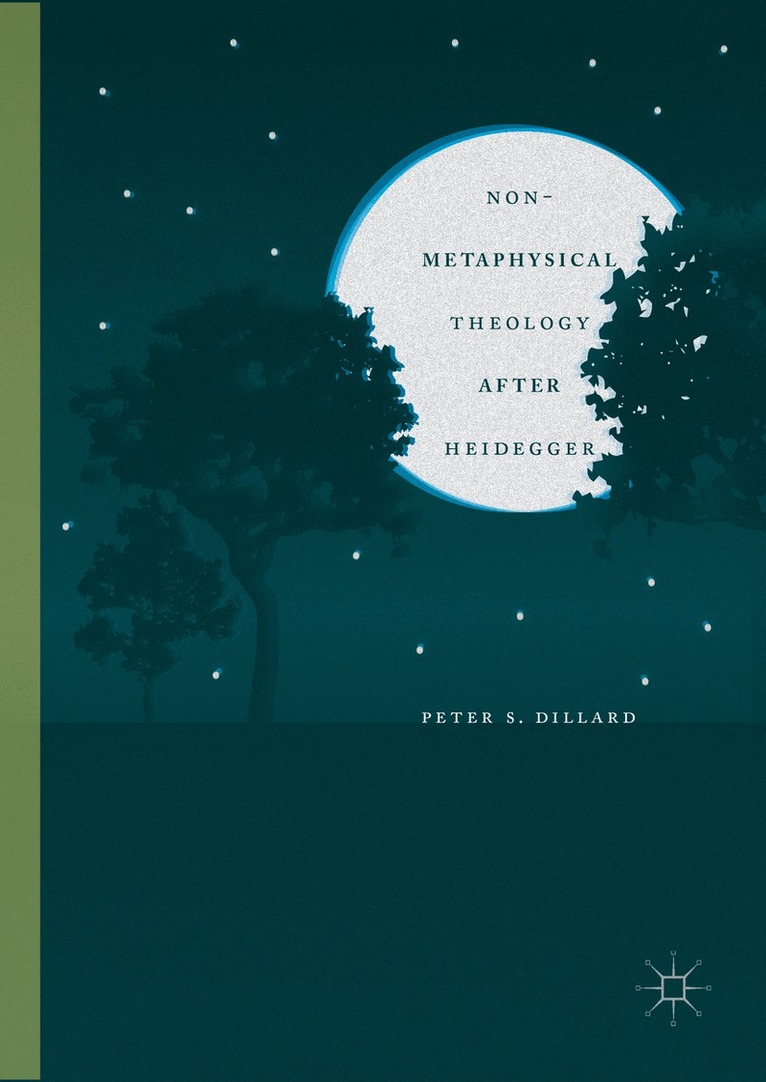
Inbunden, Engelska, 2016
542 kr
Skickas inom 10-15 vardagar
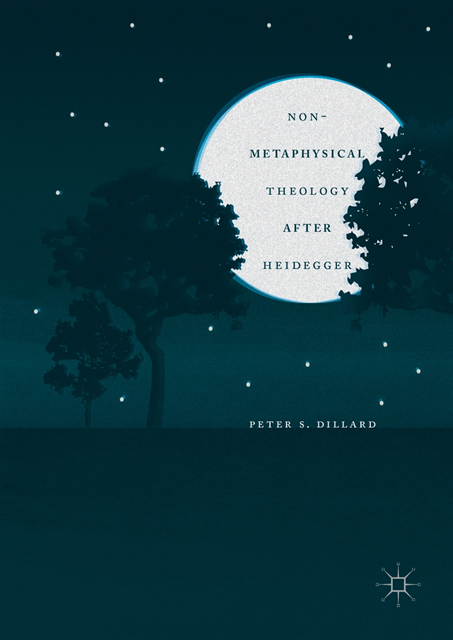
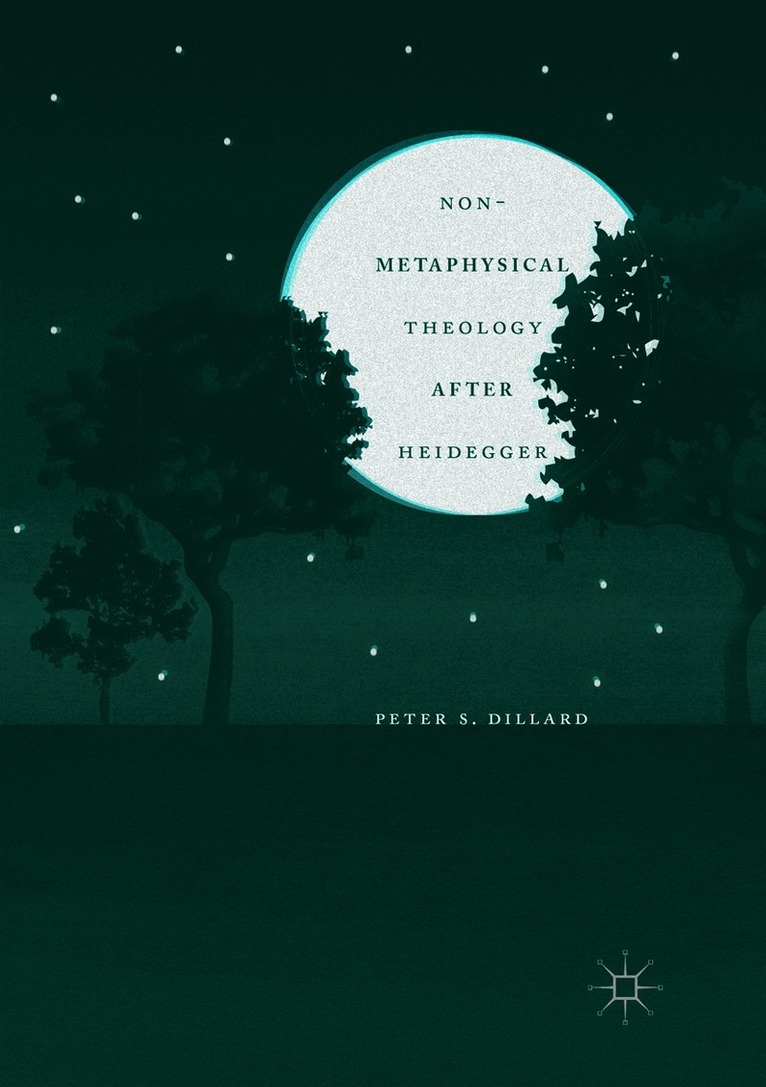
Using Martin Heidegger’s later philosophy as his springboard, Peter S. Dillard provides a radical reorientation of contemporary Christian theology. From Heidegger’s initially obscure texts concerning the holy, the gods, and the last god, Dillard extracts two possible non-metaphysical theologies: a theology of Streit and a theology of Gelassenheit. Both theologies promise to avoid metaphysical antinomies that traditionally hinder theology. After describing the strengths and weaknesses of each non-metaphysical theology, Dillard develops a Gelassenheit theology that ascribes a definite phenomenology to the human encounter with divinity. This Gelassenheit theology also explains how this divinity can guide human action in concrete situations, remain deeply consonant with Christian beliefs in the Incarnation and the Trinity, and shed light on the Eucharist and Religious Vocations. Seminal ideas from Rudolf Otto and Ludwig Wittgenstein are applied at key points. Dillard concludes by encouraging others to develop an opposing Streit theology within the non-metaphysical, Heidegerrian framework he presents.
E-bok
PDF, Engelska, 2016755 kr
Läs direkt efter köp
Using Martin Heidegger’s later philosophy as his springboard, Peter S. Dillard provides a radical reorientation of contemporary Christian theology. From Heidegger’s initially obscure texts concerning the holy, the gods, and the last god, Dillard extracts two possible non-metaphysical theologies: a theology of Streit and a theology of Gelassenheit. Both theologies promise to avoid metaphysical antinomies that traditionally hinder theology. After describing the strengths and weaknesses of each non-metaphysical theology, Dillard develops a Gelassenheit theology that ascribes a definite phenomenology to the human encounter with divinity. This Gelassenheit theology also explains how this divinity can guide human action in concrete situations, remain deeply consonant with Christian beliefs in the Incarnation and the Trinity, and shed light on the Eucharist and Religious Vocations. Seminal ideas from Rudolf Otto and Ludwig Wittgenstein are applied at key points. Dillard concludes by encouraging others to develop an opposing Streit theology within the non-metaphysical, Heidegerrian framework he presents.
Häftad, Engelska, 2018
542 kr
Skickas inom 10-15 vardagar
Using Martin Heidegger’s later philosophy as his springboard, Peter S. Dillard provides a radical reorientation of contemporary Christian theology. From Heidegger’s initially obscure texts concerning the holy, the gods, and the last god, Dillard extracts two possible non-metaphysical theologies: a theology of Streit and a theology of Gelassenheit. Both theologies promise to avoid metaphysical antinomies that traditionally hinder theology. After describing the strengths and weaknesses of each non-metaphysical theology, Dillard develops a Gelassenheit theology that ascribes a definite phenomenology to the human encounter with divinity. This Gelassenheit theology also explains how this divinity can guide human action in concrete situations, remain deeply consonant with Christian beliefs in the Incarnation and the Trinity, and shed light on the Eucharist and Religious Vocations. Seminal ideas from Rudolf Otto and Ludwig Wittgenstein are applied at key points. Dillard concludes by encouraging others to develop an opposing Streit theology within the non-metaphysical, Heidegerrian framework he presents.
E-bok
PDF, Engelska, 2008590 kr
Läs direkt efter köp
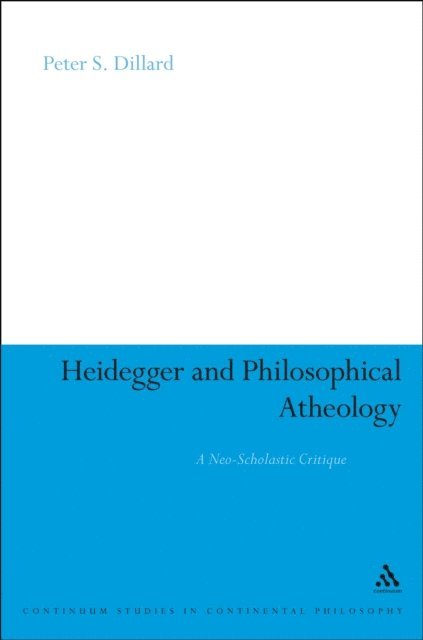
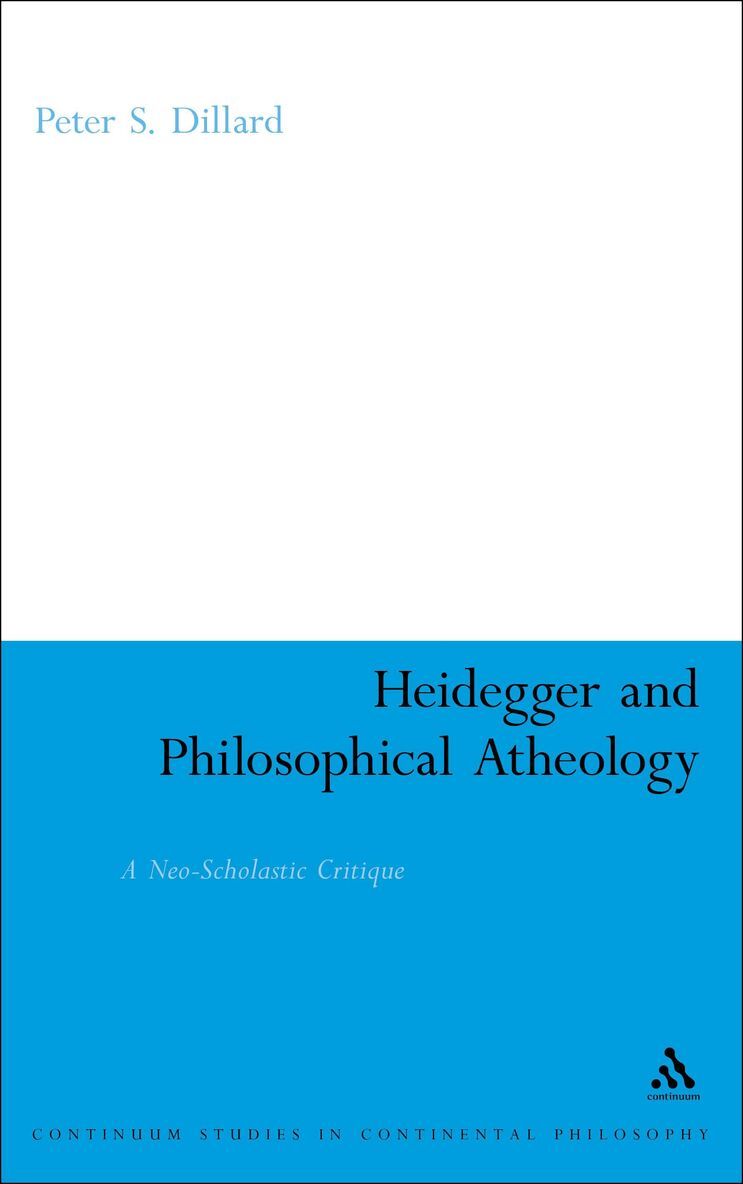
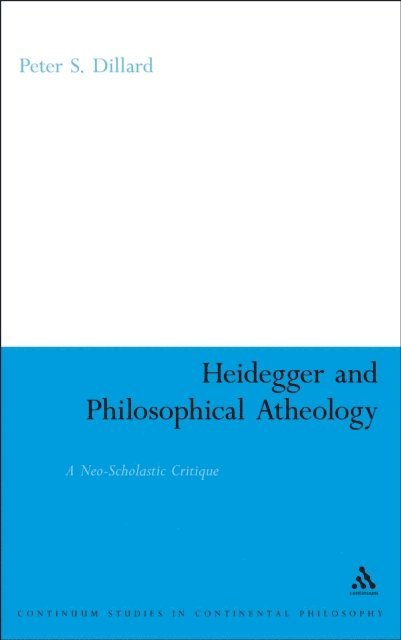
Heidegger and Philosophical Atheology offers an important new reading of Heidegger's middle and later thought. Beginning with Heidegger's early dissertation on the doctrine of categories in Duns Scotus, Peter S. Dillard shows how Heidegger's middle and later works develop a philosophical anti-theology or 'atheology' that poses a serious threat to traditional metaphysics, natural theology and philosophy of religion. Drawing on the insights of Scholastic thinkers such as St Thomas Aquinas and Duns Scotus, the book reveals the problematic assumptions of Heideggerian 'atheology' and shows why they should be rejected. Dillard's critique paves the way for a rejuvenation of Scholastic metaphysics and reveals its relevance to some contemporary philosophical disputes. In addition to clarifying the question of being and explaining the role of phenomenology in metaphysics, Dillard sheds light on the nature of nothingness, necessity and contingency. Ultimately the book offers a revolutionary reorientation of our understanding, both of the later Heidegger and of the legacy of Scholasticism.
Häftad, Engelska, 2011
546 kr
Skickas inom 10-15 vardagar
Heidegger and Philosophical Atheology offers an important new reading of Heidegger's middle and later thought. Beginning with Heidegger's early dissertation on the doctrine of categories in Duns Scotus, Peter S. Dillard shows how Heidegger's middle and later works develop a philosophical anti-theology or 'atheology' that poses a serious threat to traditional metaphysics, natural theology and philosophy of religion. Drawing on the insights of Scholastic thinkers such as St Thomas Aquinas and Duns Scotus, the book reveals the problematic assumptions of Heideggerian 'atheology' and shows why they should be rejected. Dillard's critique paves the way for a rejuvenation of Scholastic metaphysics and reveals its relevance to some contemporary philosophical disputes. In addition to clarifying the question of being and explaining the role of phenomenology in metaphysics, Dillard sheds light on the nature of nothingness, necessity and contingency. Ultimately the book offers a revolutionary reorientation of our understanding, both of the later Heidegger and of the legacy of Scholasticism.
E-bok
Engelska, 2011589 kr
Läs direkt efter köp
Heidegger and Philosophical Atheology offers an important new reading of Heidegger''s middle and later thought. Beginning with Heidegger''s early dissertation on the doctrine of categories in Duns Scotus, Peter S. Dillard shows how Heidegger''s middle and later works develop a philosophical anti-theology or ''atheology'' that poses a serious threat to traditional metaphysics, natural theology and philosophy of religion. Drawing on the insights of Scholastic thinkers such as St Thomas Aquinas and Duns Scotus, the book reveals the problematic assumptions of Heideggerian ''atheology'' and shows why they should be rejected. Dillard''s critique paves the way for a rejuvenation of Scholastic metaphysics and reveals its relevance to some contemporary philosophical disputes. In addition to clarifying the question of being and explaining the role of phenomenology in metaphysics, Dillard sheds light on the nature of nothingness, necessity and contingency. Ultimately the book offers a revolutionary reorientation of our understanding, both of the later Heidegger and of the legacy of Scholasticism.
Inbunden, Engelska, 2011
386 kr
Skickas inom 5-8 vardagar
Inbunden, Engelska, 2009
341 kr
Skickas inom 5-8 vardagar
E-bok
Engelska, 2009252 kr
Läs direkt efter köp
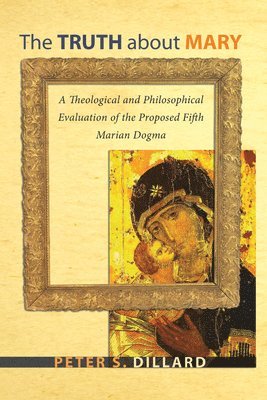
In recent years a powerful grassroots movement has emerged calling for the papal definition of a fifth Marian dogma declaring the Blessed Virgin Mary to be Co-Redemptrix, Mediatrix of all graces, and Advocate. There has also been strong opposition to any such definition for various reasons. In The Truth about Mary, Peter Dillard clarifies this debate by providing a rigorous analysis of each thesis contained in the proposed dogma and determining whether a formal definition is appropriate at this time. The resulting theological and philosophical evaluation will be helpful to readers seeking a better understanding of what is at stake in a controversy that has far-reaching ramifications for the future of the Church.
Häftad, Engelska, 2020
273 kr
Skickas inom 5-8 vardagar
Inbunden, Engelska, 2020
444 kr
Skickas inom 5-8 vardagar
E-bok
Engelska, 2020403 kr
Läs direkt efter köp
In this groundbreaking new work, Dillard makes a powerful case for bringing contemporary Christian theology into critical dialogue with Martin Heidegger's Contributions to Philosophy (Of the Event). Following his initial receptivity to theology in his early writings, Heidegger becomes increasingly agnostic and even atheistic in the 1930s until the sudden resurgence of religious discourse in Contributions. Dillard shows that there are good reasons for Heidegger's striking reversal. Key philosophical concepts from Contributions enable Heidegger to overcome earlier theological conundrums left unresolved in his earlier engagements with themes in St. Paul and Luther, while the need to make a fateful decision regarding "e;the last god"e; prevents the central philosophical task of Contributions from collapsing into empty tautology or relapsing into objectionable metaphysics. Nevertheless, Heidegger leaves us in the predicament of having no clear idea of how we are to make the crucial decision about divinity. After considering several unsuccessful proposals for escaping the dilemma, Dillard develops a christological solution based on Heidegger's engagement with the poetry of Georg Trakl. The resulting theological perspective is defended from some possible criticisms and situated within the broader context of contemporary postmetaphysical Heideggerian theology.
Häftad, Engelska, 2009
184 kr
Skickas inom 5-8 vardagar
Häftad, Engelska, 2011
251 kr
Skickas inom 5-8 vardagar
E-bok
Engelska, 2011403 kr
Läs direkt efter köp
St. Bonaventure of Bagnoregio''s The Soul''s Journey into God is a masterpiece of thirteenth-century Scholasticism. Unfortunately no comprehensive analysis of Bonaventure''s seminal treatise exists that is accessible to contemporary audiences. Reinvigorating the medieval tradition of critical commentary for the twenty-first century, Peter Dillard''s A Way into Scholasticism: A Companion to St. Bonaventure''s The Soul''s Journey into God introduces readers to basic Scholastic concepts and arguments by expounding and evaluating Bonaventure''s speculative system. Dillard also highlights the relevance of Bonaventure''s thought for contemporary philosophical theology. The book will appeal to a wide audience including seminarians, clergy, brothers and sisters of religious orders, students at the advanced undergraduate or graduate levels, professional scholars, and anyone seeking a better understanding of the Scholastic intellectual tradition.
Inbunden, Engelska, 2008
2 218 kr
Skickas inom 10-15 vardagar
This book offers a fascinating account of Heidegger's middle and later thought."Heidegger and Philosophical Atheology" offers an important new reading of Heidegger's middle and later thought. Beginning with Heidegger's early dissertation on the doctrine of categories in Duns Scotus, Peter S. Dillard shows how Heidegger's middle and later works develop a philosophical anti-theology or 'atheology' that poses a serious threat to traditional metaphysics, natural theology and philosophy of religion.Drawing on the insights of Scholastic thinkers such as St Thomas Aquinas and Duns Scotus, the book reveals the problematic assumptions of Heideggerian 'atheology' and shows why they should be rejected. Dillard's critique paves the way for a rejuvenation of Scholastic metaphysics and reveals its relevance to some contemporary philosophical disputes. In addition to clarifying the question of being and explaining the role of phenomenology in metaphysics, Dillard sheds light on the nature of nothingness, necessity and contingency. Ultimately the book offers a revolutionary reorientation of our understanding, both of the later Heidegger and of the legacy of Scholasticism.