Peter Swallow – författare
Visar alla böcker från författaren Peter Swallow. Handla med fri frakt och snabb leverans.
7 produkter
7 produkter
1 380 kr
Skickas inom 5-8 vardagar
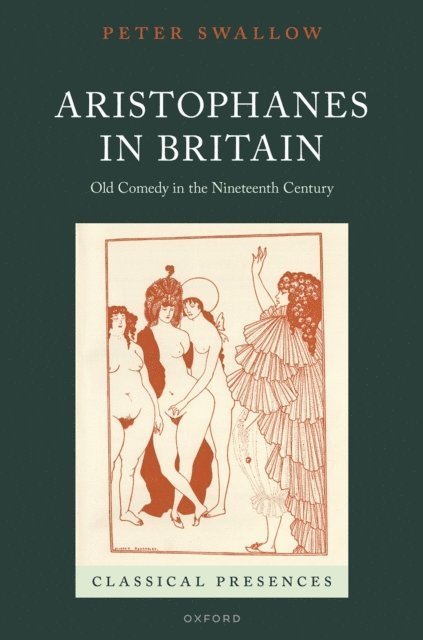
In this lively and wide-ranging study, Peter Swallow explores the reception of Aristophanes in Britain throughout the long-nineteenth century, setting it in the broader context of Victorian Classicism and, more specifically, the period's reception of Greek tragedy. Swallow shows the surprising extent to which Aristophanes was repurposed across an array of mediums in Victorian Britain, and demonstrates that Aristophanic reception in the period was always a process of speaking to contemporary issues--making Old Comedy new.The book examines two strands of Aristophanic reception: the political and the aesthetic. From the start of the long-nineteenth century, the British reception of Aristophanes tied into contemporary political debate, as historians, translators and commentators, and even the burlesque writer J.R. Planché activated Aristophanes in support of their own political positions. But each writer's conceptualisation of Aristophanes was as different as their political outlooks. While many writers who appropriated Aristophanes for their cause were Tories, a notable outlier is Percy Shelley, whose Aristophanic drama Swellfoot the Tyrant activated Old Comedy to argue for democratic republicanism--what we would now call a left-wing political revolution.The second strand of Aristophanic reception, which developed from around the middle of the nineteenth century, actively depoliticised Old Comedy and instead received it through an aesthetic lens. The aesthetics of Aristophanes--with an emphasis on the beautiful and the archaeological--also lay behind school and university productions of Old Comedy during this period.These strands of nineteenth-century Aristophanic reception find synthesis towards the book's conclusion. Edwardian women's receptions of Aristophanes show how activists used his plays to argue for equal educational opportunities and the right to vote. In the final chapter, Gilbert Murray and George Bernard Shaw's receptions reveal both the political and artistic potential of Aristophanes.
2 646 kr
Kommande
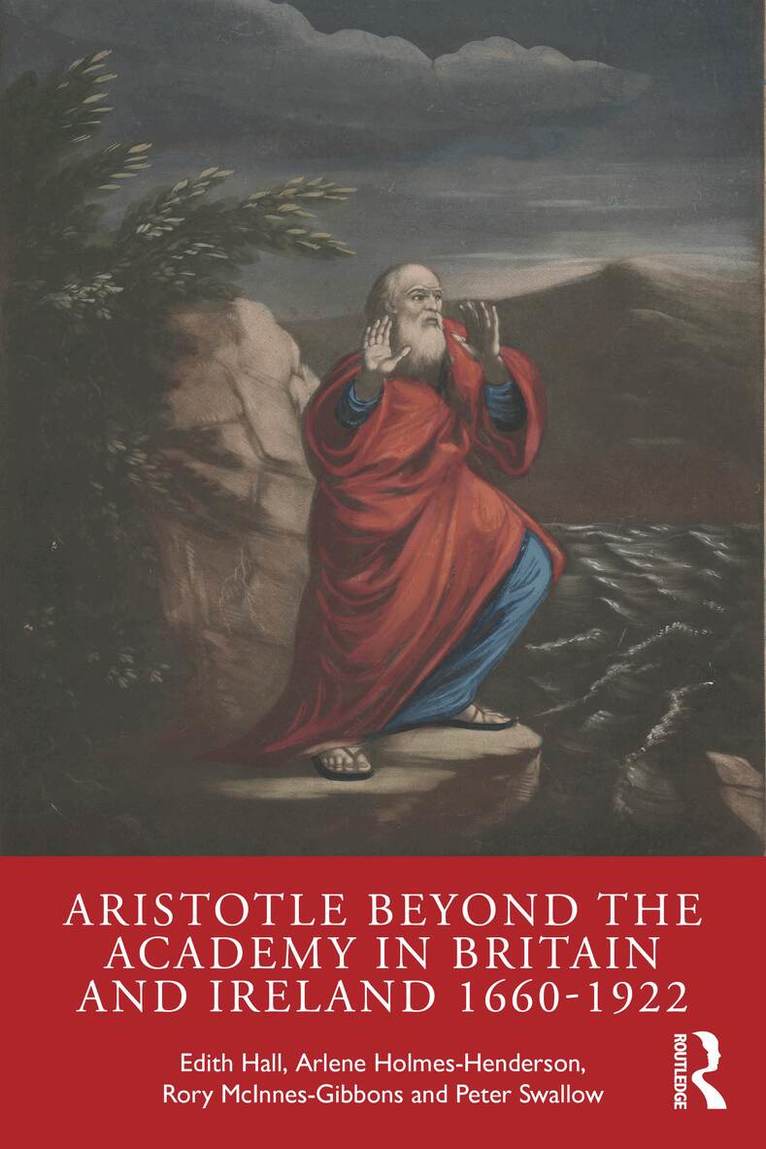
This book explores the questions of when, where, how and why Aristotle has appeared in England, Scotland, Ireland and Wales since the Restoration in 1660, through to Irish Independence in 1922.The primary focus is on ethics and politics, natural science, and rhetoric and the arts. Chapters explore the impact of specific events in the history of Aristotelian reception over this period, taking the reader thematically on a journey through Aristotle’s diverse academic interests. The authors argue that Aristotle's authority has been omnipresent but never monolithic: it has been vigorously contested. This giant of western culture has by no means been used uniformly to reinforce established authority or symbolise Catholic conservatives; he has equally been adopted by radicals and progressives. Aristotle’s authority has been invoked by apologists for absolute monarchy and by Chartist revolutionaries; by patriarchal opponents of women’s rights and by suffrage activists; by apologists for slavery and by advocates of universal suffrage; by critics of stage censorship and by its advocates; by Deists questioning God’s involvement in human affairs and Roman Catholics insisting upon it. This volume explores all these various interpretations, appropriations and adaptations of his work.This fascinating study appeals not only to students and scholars of classics and philosophy, but also to specialists in British and Irish early modern and modern history, popular culture, political and intellectual history, as well as those studying the history of science, sexuality, and rhetoric.
824 kr
Kommande
This book explores the questions of when, where, how and why Aristotle has appeared in England, Scotland, Ireland and Wales since the Restoration in 1660, through to Irish Independence in 1922.The primary focus is on ethics and politics, natural science, and rhetoric and the arts. Chapters explore the impact of specific events in the history of Aristotelian reception over this period, taking the reader thematically on a journey through Aristotle’s diverse academic interests. The authors argue that Aristotle's authority has been omnipresent but never monolithic: it has been vigorously contested. This giant of western culture has by no means been used uniformly to reinforce established authority or symbolise Catholic conservatives; he has equally been adopted by radicals and progressives. Aristotle’s authority has been invoked by apologists for absolute monarchy and by Chartist revolutionaries; by patriarchal opponents of women’s rights and by suffrage activists; by apologists for slavery and by advocates of universal suffrage; by critics of stage censorship and by its advocates; by Deists questioning God’s involvement in human affairs and Roman Catholics insisting upon it. This volume explores all these various interpretations, appropriations and adaptations of his work.This fascinating study appeals not only to students and scholars of classics and philosophy, but also to specialists in British and Irish early modern and modern history, popular culture, political and intellectual history, as well as those studying the history of science, sexuality, and rhetoric.
1 808 kr
Skickas inom 10-15 vardagar
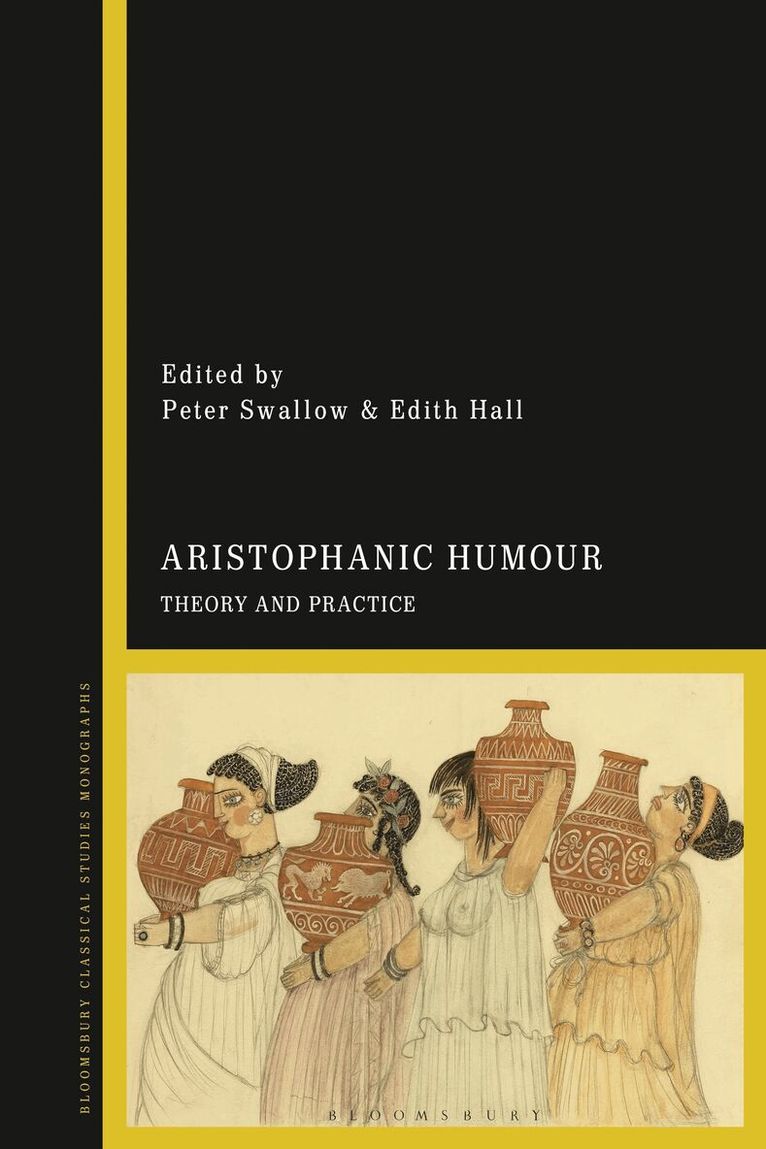
This volume sets out to discuss a crucial question for ancient comedy – what makes Aristophanes funny? Too often Aristophanes’ humour is taken for granted as merely a tool for the delivery of political and social commentary. But Greek Old Comedy was above all else designed to amuse people, to win the dramatic competition by making the audience laugh the hardest. Any discussion of Aristophanes therefore needs to take into account the ways in which his humour actually works.This question is addressed in two ways. The first half of the volume offers an in-depth discussion of humour theory – a field heretofore largely overlooked by classicists and Aristophanists – examining various theoretical models within the specific context of Aristophanes’ eleven extant plays. In the second half, contributors explore Aristophanic humour more practically, examining how specific linguistic techniques and performative choices affect the reception of humour, and exploring the range of subjects Aristophanes tackles as vectors for his comedy. A focus on performance shapes the narrative, since humour lives or dies on the stage – it is never wholly comprehensible on the page alone.
499 kr
Skickas inom 10-15 vardagar
This volume sets out to discuss a crucial question for ancient comedy – what makes Aristophanes funny? Too often Aristophanes’ humour is taken for granted as merely a tool for the delivery of political and social commentary. But Greek Old Comedy was above all else designed to amuse people, to win the dramatic competition by making the audience laugh the hardest. Any discussion of Aristophanes therefore needs to take into account the ways in which his humour actually works.This question is addressed in two ways. The first half of the volume offers an in-depth discussion of humour theory – a field heretofore largely overlooked by classicists and Aristophanists – examining various theoretical models within the specific context of Aristophanes’ eleven extant plays. In the second half, contributors explore Aristophanic humour more practically, examining how specific linguistic techniques and performative choices affect the reception of humour, and exploring the range of subjects Aristophanes tackles as vectors for his comedy. A focus on performance shapes the narrative, since humour lives or dies on the stage – it is never wholly comprehensible on the page alone.
827 kr
Skickas inom 5-8 vardagar
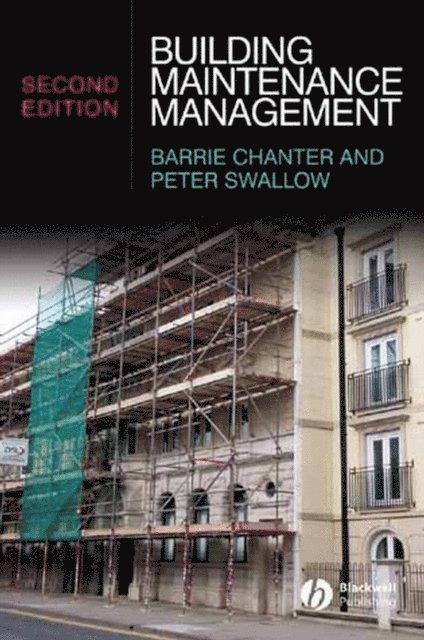
This new edition of an informative and accessible book guides building surveyors and facilities managers through the key aspects of property maintenance and continues to be of value to both students and practitioners. With the increasing cost of new-build, effective maintenance of existing building stock is becoming ever more important and building maintenance work now represents nearly half of total construction output in the UK. Building Maintenance Management provides a comprehensive profile of the many aspects of property maintenance. This second edition has been updated throughout, with sections on outsourcing; maintenance planning; benchmarking and KPIs; and current trends in procurement routes (including partnering and the growth of PFI) integrated into the text. There is also a new chapter on the changing context within which maintenance is carried out, largely concerned with its relationship to facilities management. More coverage is given of maintenance organisations and there are major updates to relevant aspects of health and safety and to contract forms.
2 190 kr
Skickas inom 10-15 vardagar
Now in its second edition, this book provides a practical guide to measured building surveys with special emphasis on recording the fabric of historic buildings. It includes two new chapters dealing with modern survey practice using instruments and photographic techniques, as well as a chapter examining recording methods as used on a specific project case study undertaken by the Museum of London Archaeology Service. Measured surveys for producing accurate scaled drawings of buildings and their immediate surroundings may be undertaken for a variety of reasons. The principal ones are to provide a historic record, and to form the base drawings upon which a proposed programme of works involving repairs, alterations, adaptations or extensions can be prepared. This book provides a practical guide to preparing measured surveys of historic buildings, with special emphasis on recording the fabric. The text assumes little previous knowledge of surveying and begins by describing basic measuring techniques before introducing elementary surveying and levelling. From these principles, the practices and techniques used to measure and record existing buildings are developed in a detailed step-by-step approach, covering sketching, measuring, plotting and drawing presentation. For this new edition the text on hand survey methods has been revised to note where new techniques and equipment can be incorporated, as well as explaining where more advanced survey methods may be best used to advantage. Information on locating early maps and plans, aerial photography and its uses, documentary research, procurement of surveys and conventional photography has been incorporated at various points as appropriate. In addition, Ross Dallas provides two new chapters dealing with modern survey practice using instruments and photographic techniques. Also, the opportunity has been taken to present a wider view of building recording projects by including a new chapter from the Museum of London Archaeological Service (MoLAS) building recording team. It encompasses their five key principles for recording within an illustrative case study.