Peukert Hagen Peukert – författare
Visar alla böcker från författaren Peukert Hagen Peukert. Handla med fri frakt och snabb leverans.
2 produkter
2 produkter
E-bok
Engelska, 2017991 kr
Läs direkt efter köp
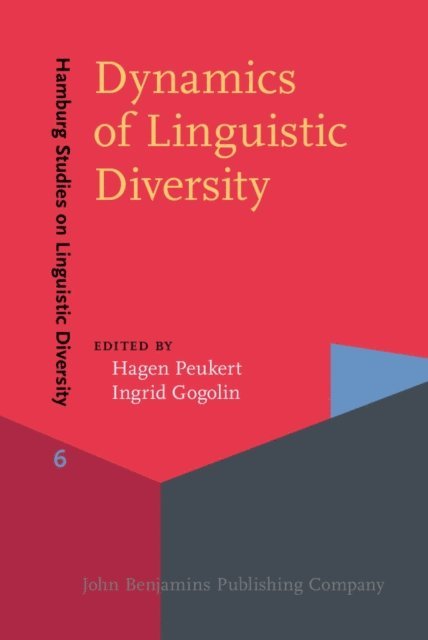
This volume emphasizes the energetic nature of linguistic diversity and its consequences of how we think about language, how it affects the individual, education in school, and urban spaces across the globe. Hence, linguistic diversity reflects the constant state of rapid change prevalent in modern societies bearing opportunities as well as challenges. It is the prime objective of this selection of contributions to give a differentiated picture of the chances of linguistic diversity. Dynamics of Linguistic Diversity pays tribute to more recent developments in the study of language, applied linguistics, and education sciences. Contributions in this volume discuss how the concept of language is contextualized in a world of polylanguaging, investigate latent factors of influence, multilingual individuals, multilingual proficiency, multilingual practices and development, multilingual communication as well as teaching practices and whether they foster or hamper multilingual development.
E-bok
PDF, Engelska, 2015991 kr
Läs direkt efter köp
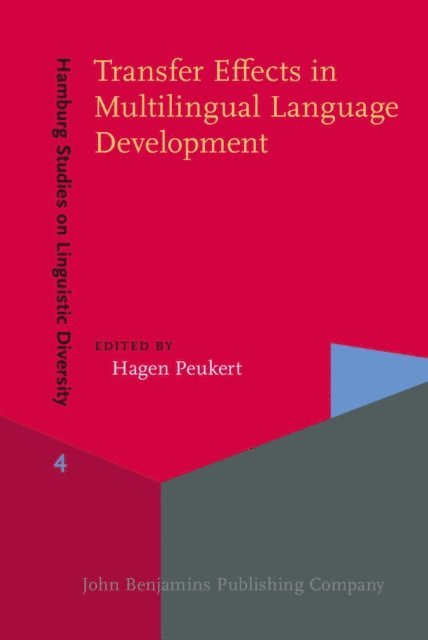
This volume, dedicated to language transfer, starts out with state-of-the-art psycholinguistic approaches to language transfer involving studies on psycho-typological transfer, lexical interference and foreign accent. The next chapter on Transfer in Language Learning, Contact, and Change presents new empirical data from several languages (English, German, Russian, French, Italian) on various transfer phenomena ranging from second language acquisition and contact-induced change in word order to cross-linguistic influences in word formation and the lexicon. Transfer in Applied Linguistics scrutinizes, on the one hand, the external sources of language transfer by investigating bilingual resources and the school context, but also by pointing out the differences in academic language in multilingual adolescents. On the other hand, internal sources of language transfer in multilingual classrooms are illuminated. A final chapter directs its focus on methodological issues that arise when more than one language is studied systematically and it offers a solution on causal effects for the investigation of heritage language proficiencies. The chapter also includes studies that exploit more innovative methodologies on L1 identification and clitic acquisition.