Philip E. Converse – författare
Visar alla böcker från författaren Philip E. Converse. Handla med fri frakt och snabb leverans.
5 produkter
American Voter
Av Angus Campbell, Philip E. Converse m. fl.
Häftad, 1980
580 kr
Lägg i varukorg
Here is the unabridged version of the classic theoretical study of voting behavior, originally published in 1960. It is a standard reference in the field of electoral research, presenting formulations of the theoretical issues that have been the focus of scholarly publication. No single study …
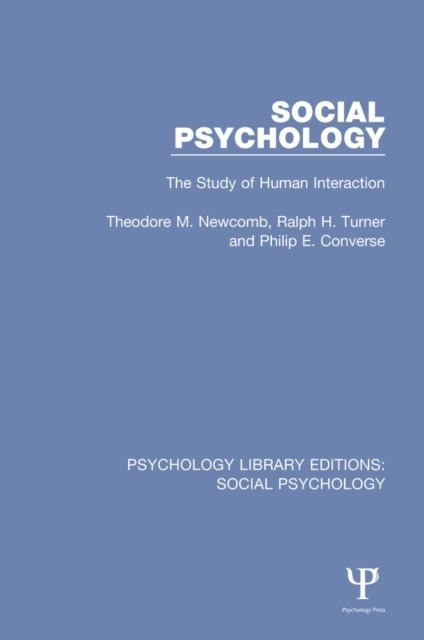
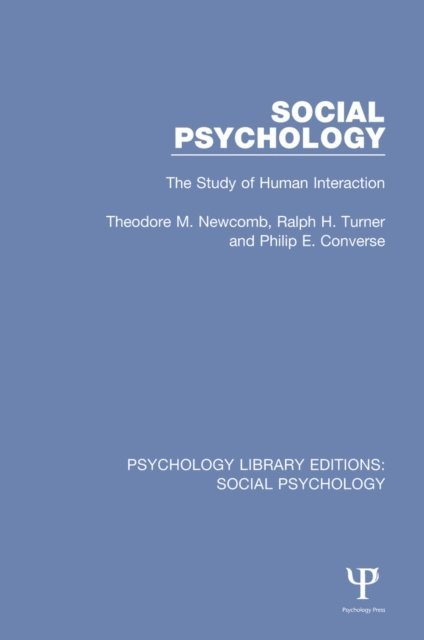
Social Psychology
The Study of Human Interaction
Av Theodore M. Newcomb, Ralph H. Turner m. fl.
Inbunden, 2015
3684 kr
Lägg i varukorg
Combining the efforts of sociologists and psychologists, this work, originally published in 1952 and revised in 1966, embraces these two disciplines to show how social-psychological problems must be viewed in individual as well as general terms. Human interaction is, therefore, the main theme of …
Social Psychology
The Study of Human Interaction
Av Theodore M. Newcomb, Ralph H. Turner m. fl.
Häftad, 2017
827 kr
Lägg i varukorg
Combining the efforts of sociologists and psychologists, this work, originally published in 1952 and revised in 1966, embraces these two disciplines to show how social-psychological problems must be viewed in individual as well as general terms. Human interaction is, therefore, the main theme of …
Social Psychology
The Study of Human Interaction
Av Philip E. Converse, Ralph H. Turner m. fl.
E-bok, 2015
976 kr
Lägg i varukorg
Combining the efforts of sociologists and psychologists, this work, originally published in 1952 and revised in 1966, embraces these two disciplines to show how social-psychological problems must be viewed in individual as well as general terms. Human interaction is, therefore, the main theme of …
Social Psychology
The Study of Human Interaction
Av Philip E. Converse, Ralph H. Turner m. fl.
E-bok, 2015
976 kr
Lägg i varukorg
Combining the efforts of sociologists and psychologists, this work, originally published in 1952 and revised in 1966, embraces these two disciplines to show how social-psychological problems must be viewed in individual as well as general terms. Human interaction is, therefore, the main theme of …