Philip E Harrold – författare
Visar alla böcker från författaren Philip E Harrold. Handla med fri frakt och snabb leverans.
6 produkter
6 produkter
Inbunden, Engelska, 2011
353 kr
Skickas inom 5-8 vardagar
Inbunden, Engelska, 2006
466 kr
Skickas inom 5-8 vardagar
Häftad, Engelska, 2006
298 kr
Skickas inom 5-8 vardagar
Häftad, Engelska, 2011
189 kr
Skickas inom 5-8 vardagar
E-bok
Engelska, 2011276 kr
Läs direkt efter köp
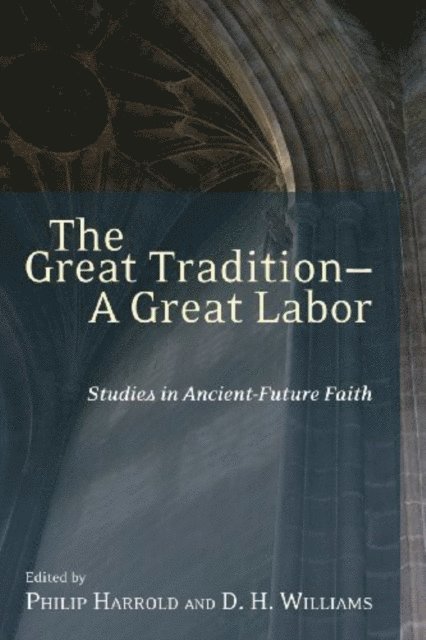
At a recent conference entitled Ancient Wisdom--Anglican Futures, theologians from across the denominational spectrum considered the question, What does it mean to inhabit the ''Great Tradition'' authentically? As an expression of what C. S. Lewis called Deep Church, Anglicanism offers a test case of Tradition with a capital T in late modernity. Of particular interest is the highly dynamic transmission that has preserved a recognizable Anglican Way over the centuries. The process has been enlivened through constant negotiation and exchange with surprising convergences that have brought new life and direction. The contributors to this volume show how profitable and commodious (as Richard Hooker has said) the Great Tradition can be in nurturing the worship, communal life, and mission of the Church. But it often demonstrates how hard it is to uphold the varied integrities of historic faith in the contemporary marketplace of religion and, especially, among evangelicals who continue to follow the Canterbury Trail.Contributors: Simon Chan, Tony Clark, Dominic Erdozain, Edith Humphrey, D. Stephen Long, George Sumner, and D. H. Williams.
E-bok
Engelska, 2006471 kr
Läs direkt efter köp
The story of secularization and religious disestablishment in American higher education is told from the standpoint of a lively community of professors, students, and administrators at the University of Michigan in the late nineteenth century. This campus culture--one of the most closely watched of its day--sheds new light on the personal and cultural meanings of these momentous changes in American intellectual and public life. Here we see how religion was not so much displaced or marginalized in the heyday of university reform as translated into new arenas of public service and scholarly pursuit. The main characters in this story--professors Calvin Thomas and Henry Carter Adams--underwent profound religious crises of faith accompanied by major adjustments in their interpersonal relationships. Together, with students and administrators, their lives constituted a communal biography of religious deconversion. A close examination of these private and public worlds provides a more complete understanding of the dynamics behind new academic policies and intellectual innovations in a leading public university. The non-cognitive, intersubjective, gendered, quasi-religious shadings of academic modernism and early pragmatist philosophy, in particular, come to light in vivid ways. As John Dewey later observed, Michigan became an experimental laboratory for new meanings to unfold, new acts to propose.