Philip G. Johnston – författare
Visar alla böcker från författaren Philip G. Johnston. Handla med fri frakt och snabb leverans.
3 produkter
3 produkter
470 kr
Skickas inom 5-8 vardagar
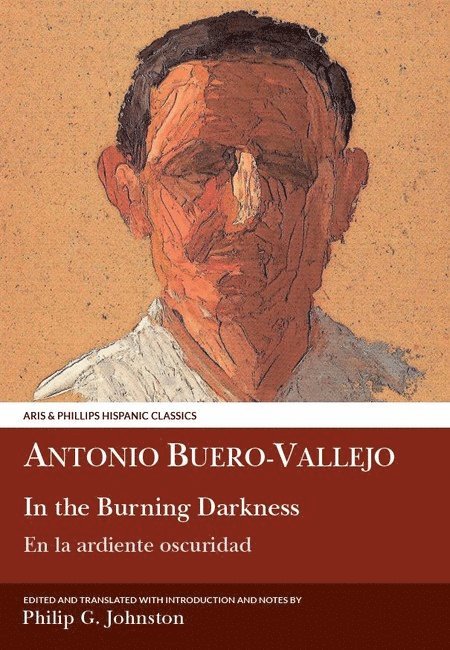
Arguably Spain's leading playwright of the twentieth century, Antonio Buero-Vallejo published thirty original plays. In the Burning Darkness was the first play he wrote. The seminal, and lasting, significance of this play was confirmed when an extract from it was read over Buero-Vallejo's grave on the day of his burial.In the Burning Darkness describes a teaching centre for young people who are blind, where a false unity is maintained by a mixture of fear, coercion and diversion where, when persuasion fails, violence is resorted to, and where "education" is seen to play a part in the regime's ideological apparatus and to encourage the acceptance of pleasant and reassuring myths. The play's principal protagonist is Iggy who, although blind like his classmates, is immediately seen to be different from the others because he carries a cane. When Iggy makes a move on Jane, part of the Centre's golden couple with her boyfriend Charles, he begins to challenge and destabilise the values cherished by the Centre.Buero-Vallejo described In the Burning Darkness as a work "loaded with future", and that observation points the way to why it is being translated now. Although it emerged in 1950 onto a dreary and trivial theatre scene in Francoist Spain, its themes, such as blindness and anxiety of an alienated protagonist, can speak to modern audiences and have a universal, rather than merely parochially Spanish, resonance. It poses a transcendental question about whether or not violence can ever be justified. The teaching centre and the blindness of those within is symbolic of post-Civil War Spain, where anti-democratic abuses were overlooked. The play operates on literal, political and philosophical levels.Challenging audiences and seeking hopefully to change mind-sets was the stock in trade of Antonio Buero-Vallejo as a dramatist. As he once stated himself: "Se escribe porque se espera" ("One writes because one hopes").
2 170 kr
Skickas inom 5-8 vardagar
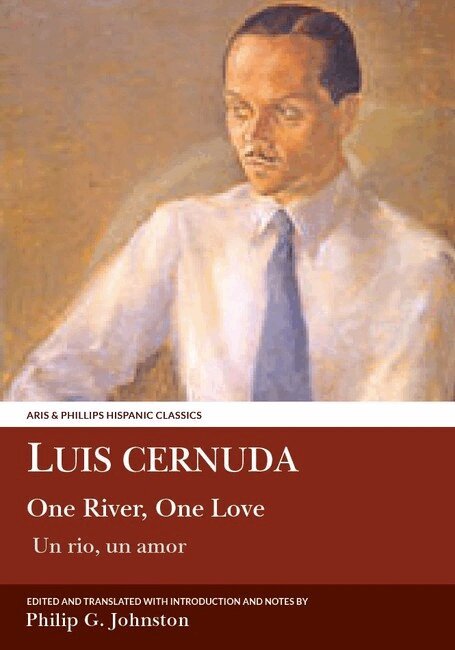
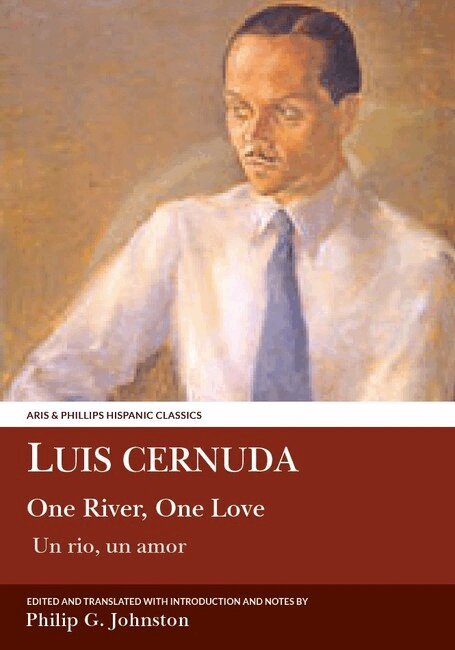
Philip G Johnston's new translation of Un rio, un amor (One River, One Love) by Luis Cernuda (1902-1963) is faithful to the author's quasi-Surrealist intentions. Written in France and Spain in 1928-1929, this collection reflects the influences, conflicts and impulses that governed the poet's life then. It speaks of the alienation of a marginalised, disaffected individual in a Spain which he described as "decrepit and decomposing", of a shy homosexual gradually and painfully coming to terms with his orientation in a rigid, hostile society, of a passion for American popular culture (Jazz, Blues and cinema), filtered through a Hispanic sensitivity, and eventually somewhat tempered by the disappointments of daily life. The collection's later poems see Cernuda finding an admirable and resonant voice of protest. Very much a part of the broad European Modernist ethos (Cernuda can justifiably be compared to, say, T S Eliot), One River, One Love is furthermore written in the spirit of Spain's famous Generation of 1927 (spearheaded by figures such as Dali, Lorca and Bunuel) which set about reacting to "what had already been said", seeking the radical reform of the Spanish aesthetic and, in doing so, created a second Spanish Golden Age. Intriguingly balanced between what Cernuda himself would later term "Reality and Desire", this collection also involves a significant flirtation with the conventions of Surrealism. Lautreamont's famous formula involving the sewing machine, the umbrella and the dissection table is most certainly nodded to here in the characteristic Cernudian harnessing of shocking, incongruous and unexpected elements in imagery. That flirtation, however, stops short of full consummation of the relationship (Cernuda never, for example, gives himself completely over to unfettered, automatic writing, or, "dictee de la pensee") -which fact in itself speaks of a peculiarly Spanish twist to the European avant-garde.
470 kr
Skickas inom 5-8 vardagar
Philip G Johnston's new translation of Un rio, un amor (One River, One Love) by Luis Cernuda (1902-1963) is faithful to the author's quasi-Surrealist intentions. Written in France and Spain in 1928-1929, this collection reflects the influences, conflicts and impulses that governed the poet's life then. It speaks of the alienation of a marginalised, disaffected individual in a Spain which he described as "decrepit and decomposing", of a shy homosexual gradually and painfully coming to terms with his orientation in a rigid, hostile society, of a passion for American popular culture (Jazz, Blues and cinema), filtered through a Hispanic sensitivity, and eventually somewhat tempered by the disappointments of daily life. The collection's later poems see Cernuda finding an admirable and resonant voice of protest. Very much a part of the broad European Modernist ethos (Cernuda can justifiably be compared to, say, T S Eliot), One River, One Love is furthermore written in the spirit of Spain's famous Generation of 1927 (spearheaded by figures such as Dali, Lorca and Bunuel) which set about reacting to "what had already been said", seeking the radical reform of the Spanish aesthetic and, in doing so, created a second Spanish Golden Age. Intriguingly balanced between what Cernuda himself would later term "Reality and Desire", this collection also involves a significant flirtation with the conventions of Surrealism. Lautreamont's famous formula involving the sewing machine, the umbrella and the dissection table is most certainly nodded to here in the characteristic Cernudian harnessing of shocking, incongruous and unexpected elements in imagery. That flirtation, however, stops short of full consummation of the relationship (Cernuda never, for example, gives himself completely over to unfettered, automatic writing, or, "dictee de la pensee") -which fact in itself speaks of a peculiarly Spanish twist to the European avant-garde.