Philip Hanson – författare
Visar alla böcker från författaren Philip Hanson. Handla med fri frakt och snabb leverans.
17 produkter
From Stagnation to Catastroika
Commentaries on the Soviet Economy, 1983-1991
Häftad, 1992
399 kr
Lägg i varukorg
This book is a collection of fascinating articles on the Soviet economy by an eminent economist. Most were written as current commentaries and were meant to report and to interpret developments in the Soviet economy under Gorbachev more or less as they occurred. Hanson's reflections cover more than …
From Stagnation to Catastroika
Commentaries on the Soviet Economy, 1983-1991
Inbunden, 1992
1095 kr
Lägg i varukorg
This book is a collection of fascinating articles on the Soviet economy by an eminent economist. Most were written as current commentaries and were meant to report and to interpret developments in the Soviet economy under Gorbachev more or less as they occurred. Hanson's reflections cover more than …
Rise and Fall of the The Soviet Economy
An Economic History of the USSR 1945 - 1991
Häftad, 2003
889 kr
Lägg i varukorg
Why did the Soviet economic system fall apart? Did the economy simply overreach itself through military spending? Was it the centrally-planned character of Soviet socialism that was at fault? Or did a potentially viable mechanism come apart in Gorbachev's clumsy hands? Does its failure mean that …
Advertising and socialism: The nature and extent of consumer advertising in the Soviet Union, Poland
The nature and extent of consumer advertising in the Soviet Union, Poland
Inbunden, 2017
994 kr
Lägg i varukorg
This title was first published in 1974.
Advertising and socialism: The nature and extent of consumer advertising in the Soviet Union, Poland
The nature and extent of consumer advertising in the Soviet Union, Poland
Häftad, 2019
718 kr
Lägg i varukorg
This title was first published in 1974.
Rise and Fall of the The Soviet Economy
An Economic History of the USSR 1945 - 1991
Inbunden, 2016
2578 kr
Lägg i varukorg
Why did the Soviet economic system fall apart? Did the economy simply overreach itself through military spending? Was it the centrally-planned character of Soviet socialism that was at fault? Or did a potentially viable mechanism come apart in Gorbachev's clumsy hands? Does its failure mean that …
Rise and Fall of the The Soviet Economy
An Economic History of the USSR 1945 - 1991
E-bok, 2014
1030 kr
Lägg i varukorg
Why did the Soviet economic system fall apart? Did the economy simply overreach itself through military spending? Was it the centrally-planned character of Soviet socialism that was at fault? Or did a potentially viable mechanism come apart in Gorbachev''s clumsy hands? Does its failure mean that …
Rise and Fall of the The Soviet Economy
An Economic History of the USSR 1945 - 1991
E-bok, 2014
1030 kr
Lägg i varukorg
Why did the Soviet economic system fall apart? Did the economy simply overreach itself through military spending? Was it the centrally-planned character of Soviet socialism that was at fault? Or did a potentially viable mechanism come apart in Gorbachev''s clumsy hands? Does its failure mean that …
Advertising and Socialism
The Nature and Extent of Consumer Advertising in the Soviet Union, Poland, Hungary and Yugoslavia
E-bok, 1974
785 kr
Lägg i varukorg
Advertising and Socialism
The Nature and Extent of Consumer Advertising in the Soviet Union, Poland, Hungary and Yugoslavia
Häftad, 1974
568 kr
Lägg i varukorg
Alexander Zinoviev as Writer and Thinker
Av Michael Kirkwood, Philip Hanson
E-bok, 1988
644 kr
Lägg i varukorg
Advertising and socialism: The nature and extent of consumer advertising in the Soviet Union, Poland
The nature and extent of consumer advertising in the Soviet Union, Poland
E-bok, 2017
874 kr
Lägg i varukorg
This study looks at the tiny but growing volume of consumer advertising even in countries such as the Soviet Union, which had detailed central planning, and substantially more in the recently decentralised Hungarian economy and pre-invasion Czechoslovakia. And of course, outside the Soviet orbit …
Advertising and socialism: The nature and extent of consumer advertising in the Soviet Union, Poland
The nature and extent of consumer advertising in the Soviet Union, Poland
E-bok, 2017
846 kr
Lägg i varukorg
This study looks at the tiny but growing volume of consumer advertising even in countries such as the Soviet Union, which had detailed central planning, and substantially more in the recently decentralised Hungarian economy and pre-invasion Czechoslovakia. And of course, outside the Soviet orbit …
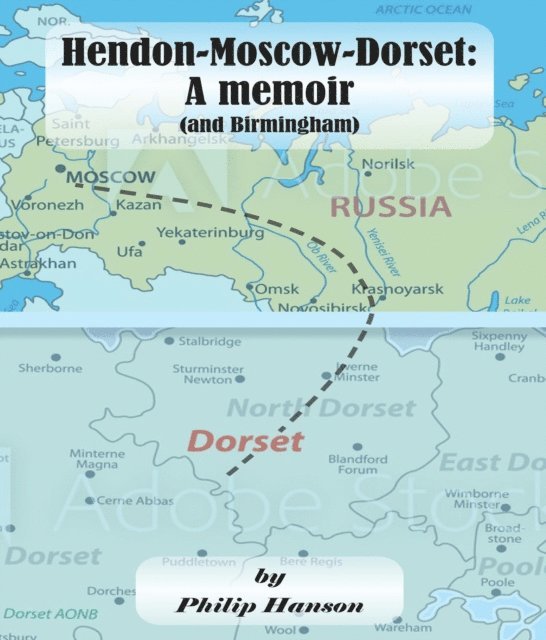
Hendon-Moscow-Dorset, a memoir (and Birmingham)
E-bok, 2020
84 kr
Lägg i varukorg
Philip Hanson is a jazz fan, a cricket fan and a Russia-watcher. He has also been a husband for many years and is the father of two sons who are, let''s face it, middle-aged, though you''d never know it. So now he is getting on a bit. His employment record suggests restlessness: the Treasury, …
Regional Economic Change in Russia
Av Philip Hanson, Michael Bradshaw
Inbunden, 2000
2306 kr
Lägg i varukorg
Since the demise of communism, Russia has become increasingly disparate. Some regions have grown in strength while others have been less successful. This book examines regional patterns of economic change in Russia by addressing questions such as:Is Russia a single economic area?Why are regional …