Philip L. Fuchs – författare
Visar alla böcker från författaren Philip L. Fuchs. Handla med fri frakt och snabb leverans.
9 produkter
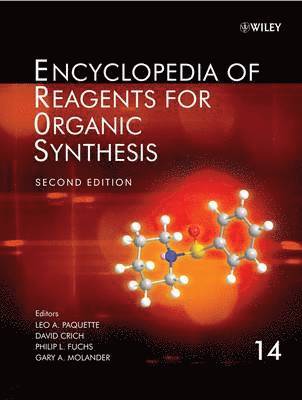
Encyclopedia of Reagents for Organic Synthesis, 14 Volume Set
Av Leo A. Paquette, David Crich m. fl.
Inbunden, 2009
89046 kr
Lägg i varukorg
At last, the long anticipated second edition of the highly successful Encyclopedia of Reagents for Organic Synthesis (EROS) is publishing in print in March 2009. With its wealth of valuable information, excellent editorial leadership and methodical classification, EROS has become the authoritative …
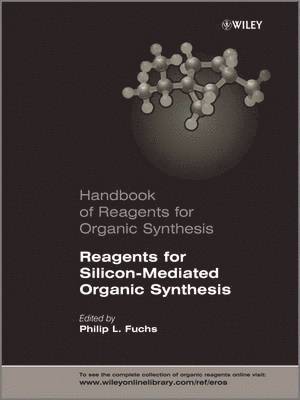
Reagents for Silicon-Mediated Organic Synthesis
E-bok, 2013
1939 kr
Lägg i varukorg
Over the last three decades the importance of organosilicon chemistry has greatly increased because it has opened a number of new synthetic strategies. Silicon reagents are usually low-cost, versatile and allow a wide range of reactions. This is the first Handbook to compile essential Silicon …
Catalytic Oxidation Reagents
E-bok, 2013
2439 kr
Lägg i varukorg
The Handbook is part of the Handbook of Reagents for Organic Chemistry series, aiming at collecting articles on a particular theme that individual researchers in academia or industry can use on a daily basis. The Handbook starts with a section discussing the most important aspects of heteroarene …
Catalytic Oxidation Reagents
E-bok, 2013
2439 kr
Lägg i varukorg
The Handbook is part of the Handbook of Reagents for Organic Chemistry series, aiming at collecting articles on a particular theme that individual researchers in academia or industry can use on a daily basis. The Handbook starts with a section discussing the most important aspects of heteroarene …
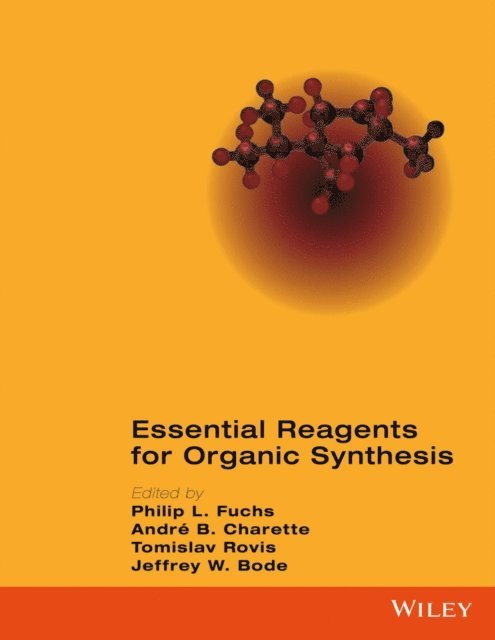
Essential Reagents for Organic Synthesis
Av Philip L. Fuchs, André B. Charette m. fl.
Häftad, 2016
1182 kr
Lägg i varukorg
From Boron Trifluoride to Zinc, the 52 most widely used reagents in organic synthesis are described in this unique desktop reference for every organic chemist. The list of reagents contains classics such as N-Bromosuccinimide (NBS) and Trifluoromethanesulfonic Acid side by side with recently …
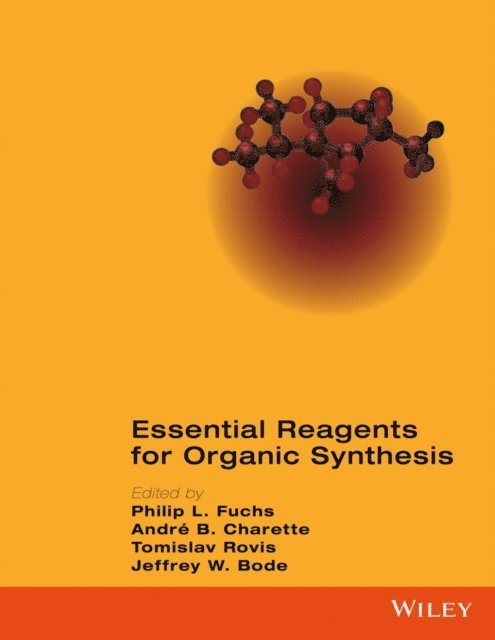
Essential Reagents for Organic Synthesis
Av Jeffrey W. Bode, Tomislav Rovis m. fl.
E-bok, 2016
1368 kr
Lägg i varukorg
From Boron Trifluoride to Zinc, the 52 most widely used reagents in organic synthesis are described in this unique desktop reference for every organic chemist. The list of reagents contains classics such as N-Bromosuccinimide (NBS) and Trifluoromethanesulfonic Acid side by side with recently …
Essential Reagents for Organic Synthesis
Av Jeffrey W. Bode, Tomislav Rovis m. fl.
E-bok, 2016
1339 kr
Lägg i varukorg
From Boron Trifluoride to Zinc, the 52 most widely used reagents in organic synthesis are described in this unique desktop reference for every organic chemist. The list of reagents contains classics such as N-Bromosuccinimide (NBS) and Trifluoromethanesulfonic Acid side by side with recently …
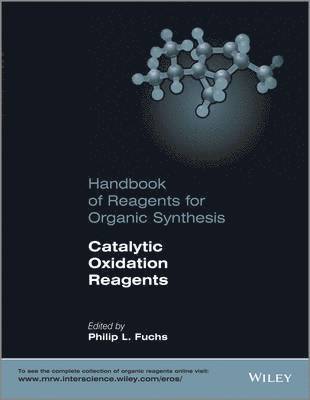
Catalytic Oxidation Reagents
Inbunden, 2013
1978 kr
Lägg i varukorg
The Handbook is part of the Handbook of Reagents for Organic Chemistry series, aiming at collecting articles on a particular theme that individual researchers in academia or industry can use on a daily basis. The Handbook starts with a section discussing the most important aspects of heteroarene …
Reagents for Silicon-Mediated Organic Synthesis
Inbunden, 2011
1436 kr
Tillfälligt slut
Over the last three decades the importance of organosilicon chemistry has greatly increased because it has opened a number of new synthetic strategies. Silicon reagents are usually low-cost, versatile and allow a wide range of reactions. This is the first Handbook to compile essential Silicon …