Philip Langdon – författare
Visar alla böcker från författaren Philip Langdon. Handla med fri frakt och snabb leverans.
4 produkter
4 produkter
Inbunden, Engelska, 2002
456 kr
Skickas inom 5-8 vardagar
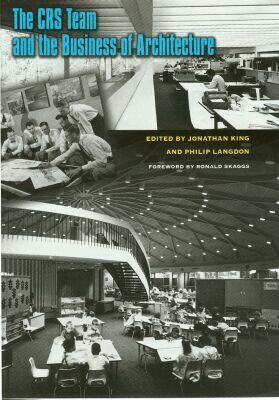
Since the end of the Second World War, few firms have influenced the practice of architecture as much as Caudill Rowlett Scott, or CRS. From its establishment in the 1940s as a three-man operation above a grocery store in College Station, Texas, CRS evolved into a world leader in programming, construction management, school design, and other dimensions of modern architectural practice. By the 1970s, CRS was a master at organizing complicated architectural undertakings and had earned a global reputation for sharing its insights with practitioners worldwide. This book about CRS will fill an important gap in architectural history. It explores the ways architects of the mid-twentieth century developed methods that allowed professionals to analyze projects systematically rather than relying on the traditional combination of information and intuition. Based on oral histories taken from many leaders and staff members of CRS, the book traces the company's development from its beginnings to its emergence as the largest architecture/engineering firm in the United States by the early 1980s and to its dismemberment in 1994. The main focus is on the period from the 1940s to CRS's merger with the South Carolina_based engineering firm Sirrine in 1983. Interspersed throughout the volume are pithy memos written by the firm's charismatic, intellectual leader, AIA Gold Medal winner Bill Caudill. The book is heavily illustrated with pictures of firm members at work and views of important CRS buildings such as the Jesse H. Jones Hall for the Performing Arts in Houston. The interviews that richly inform this book are set within a narrative that places the firm and its innovations in a broader perspective, connecting the CRS story to contemporary developments in architecture, the economy, and society.
Häftad, Engelska, 2017
425 kr
Skickas inom 5-8 vardagar
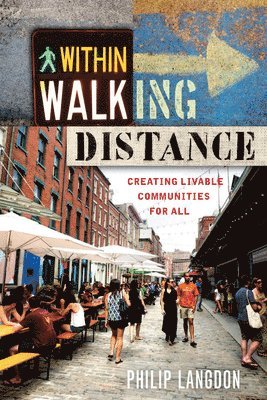
For five thousand years, human settlements were nearly always compact places. Everything a person needed on a regular basis lay within walking distance, But then the great project of the twentieth century, sorting people, businesses, and activities into separate zones, scattered across vast metropolises, took hold, exacting its toll on human health, natural resources, and the climate. Living where a things were beyond Walking distance ultimately became, for many people, a recipe for frustration. As a result, many people have begun seeking compact, walkable communities or looking for ways to make their current neighbourhood better connected, more self-sufficient, and more-pleasurable. In Within Walking Distance, journalist and urban critic Philip Langdon looks at why and how Americans are shifting toward a more human-stale way of building and living. He shows how people are creating, improving, and caring for walkable communities. There is no one-size-fits-all approach. Starting conditions differ radically, as do-the attitudes and interests of residents.To draw the most important lessons, Langdon spent time in six communities that differ in size, history, wealth, diversity, and education, yet share crucial traits: compactness, a mix- of uses and activities, and human scale.The six are Center City Philadelphia; the East Rock section of New Haven, Connecticut; Brattleboro, Vermont; the Little Village section of Chicago; the Pearl District in Portland, Oregon, and the Cotton District in Starkville, Mississippi. In these communities, Langdon examines safe, comfortable streets: sociable sidewalks; how buildings connect to the public realm, bicycling; public transportation; and incorporation of nature and parks into-city or-town life. In all these varied settings, he pays special attention to a vital ingredient: local commitment. To improve conditions and opportunities for everyone, Langdon argues that places where the best-of life is within walking distance ought to be at the core of our thinking. This book is for anyone who wants to understand what can be done to build, rebuild, or improve a community while retaining the things that make it distinctive.
E-bok
PDF, Engelska, 2023148 kr
Läs direkt efter köp
Climate change, and the inevitability of sea level rise, will require much more of us than simply pulling back from the coastline. The thesis of Weston Wright''s More Water Less Land New Architecture is that we need to start thinking in an entirely different way about the relationship of cities to waterfront sites and of the relationship of buildings to water, which means rethinking many of architecture''s implicit premises. If architecture has been confrontational with water—think bold towers erected beside the sea, as if to dare the water to challenge them—Wright''s argument is that we will need to be modest, accommodating, and accepting of the power and presence of water if our cities are to survive. He knows that nature is stronger than we are, and that best chance mankind has to build successfully will be to build with, not against, the reality of water. This is an important book, not least because its quiet, sober tone balances natural history with architectural history, and reaches across the world to show examples of architecture that accommodates to the water ranging from small vernacular houses on stilts to huge megastructures anchored like islands in the sea. Although Wright''s argument transcends aesthetics or style, his book is, in the end, a case for the strength that comes from restraint, and perhaps even for the lasting power of gentlenes
E-bok
Engelska, 2023153 kr
Läs direkt efter köp
Climate change, and the inevitability of sea level rise, will require much more of us than simply pulling back from the coastline. The thesis of Weston Wright''s More Water Less Land New Architecture is that we need to start thinking in an entirely different way about the relationship of cities to waterfront sites and of the relationship of buildings to water, which means rethinking many of architecture''s implicit premises. If architecture has been confrontational with water—think bold towers erected beside the sea, as if to dare the water to challenge them—Wright''s argument is that we will need to be modest, accommodating, and accepting of the power and presence of water if our cities are to survive. He knows that nature is stronger than we are, and that best chance mankind has to build successfully will be to build with, not against, the reality of water. This is an important book, not least because its quiet, sober tone balances natural history with architectural history, and reaches across the world to show examples of architecture that accommodates to the water ranging from small vernacular houses on stilts to huge megastructures anchored like islands in the sea. Although Wright''s argument transcends aesthetics or style, his book is, in the end, a case for the strength that comes from restraint, and perhaps even for the lasting power of gentlenes