Philip Robbins – författare
Visar alla böcker från författaren Philip Robbins. Handla med fri frakt och snabb leverans.
9 produkter
9 produkter
Häftad, Engelska, 2008
694 kr
Skickas inom 7-10 vardagar
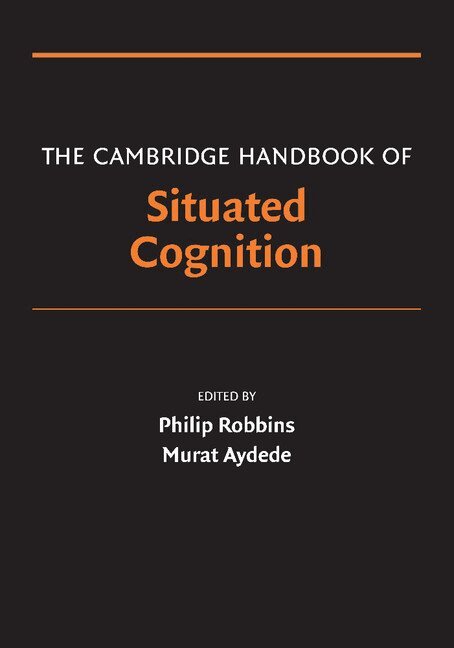
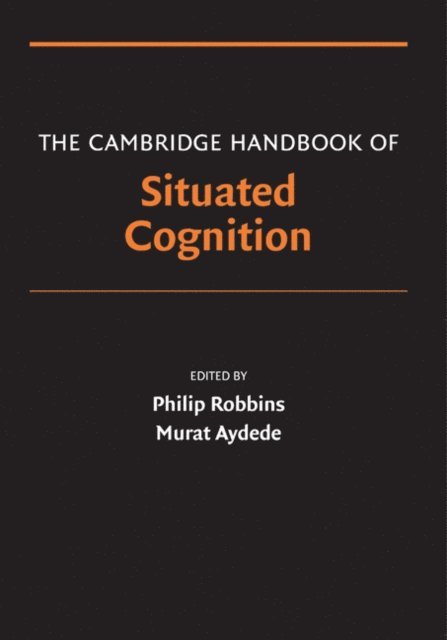
Since its inception some fifty years ago, cognitive science has seen a number of sea changes. Perhaps the best known is the development of connectionist models of cognition as an alternative to classical, symbol-based approaches. A more recent - and increasingly influential - trend is that of dynamical-systems-based, ecologically oriented models of the mind. Researchers suggest that a full understanding of the mind will require systematic study of the dynamics of interaction between mind, body, and world. Some argue that this new orientation calls for a revolutionary new metaphysics of mind, according to which mental states and processes, and even persons, literally extend into the environment. This book is a guide to this movement in cognitive science. Each chapter tackles either a specific area of empirical research or specific sector of the conceptual foundation underlying this research.
Inbunden, Engelska, 2008
1 306 kr
Skickas inom 7-10 vardagar
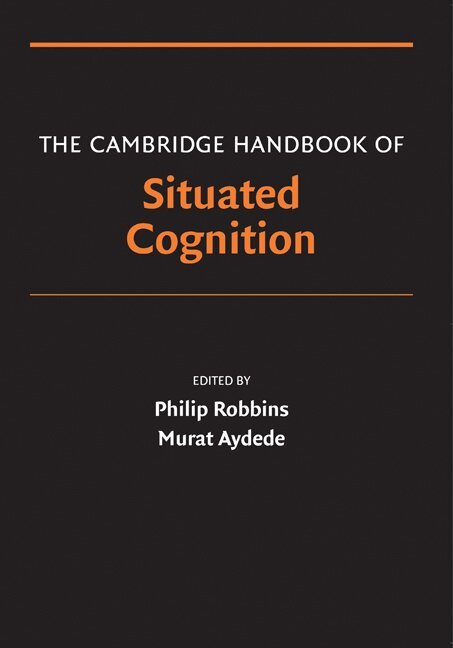
Since its inception some fifty years ago, cognitive science has seen a number of sea changes. Perhaps the best known is the development of connectionist models of cognition as an alternative to classical, symbol-based approaches. A more recent - and increasingly influential - trend is that of dynamical-systems-based, ecologically oriented models of the mind. Researchers suggest that a full understanding of the mind will require systematic study of the dynamics of interaction between mind, body, and world. Some argue that this new orientation calls for a revolutionary new metaphysics of mind, according to which mental states and processes, and even persons, literally extend into the environment. This book is a guide to this movement in cognitive science. Each chapter tackles either a specific area of empirical research or specific sector of the conceptual foundation underlying this research.
179 kr
Läs direkt efter köp
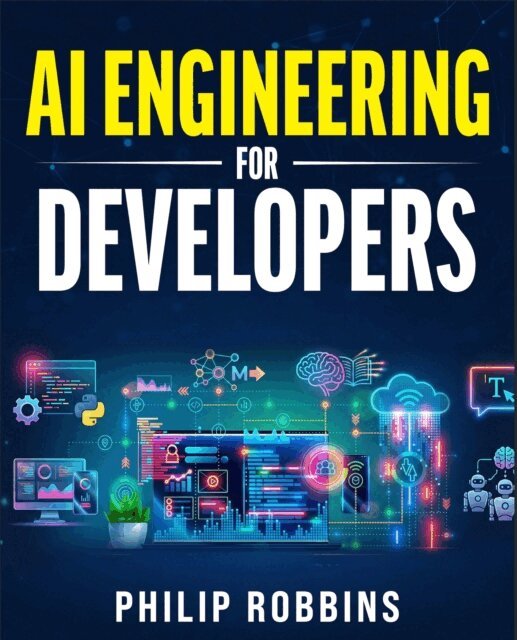
Author's note: This book was 100% written by a human, not AI.Approved and edited by a Ph.D in Artificial Intelligence (AI & NLP Researcher) Dr Manju Vallayil, Auckland University of Technology.Have you ever looked at the rapid rise of AI and felt... left behind?Maybe you've been worrying that one day soon your job could be automated by AI.Or perhaps you've even tried diving into machine learning, only to get lost in endless math formulas and research papers.If that's you, then you're not alone.Thousands of brilliant developers share this anxiety. With AI moving at such a rapid pace, most have never been given the tools or guidance to adapt.Because the real story behind every AI layoff is not replacement, it's relevance.But here's the good news: turning your fear into opportunity is much easier than you think.You don't need a PhD. You don't need years of experience in machine learning research.And you certainly don't need to suffer through sleepless nights wondering if you'll ever "e;measure up."e;What you need is a clear, step-by-step path-one that demystifies AI engineering and empowers you to use the skills you already have.That's exactly what this book gives you.?? Introducing: AI Engineering for DevelopersWritten by best selling tech author Philip Robbins, this book is your practical blueprint for moving from traditional development to AI-powered engineering-in just 7 days.Inside, you'll discover:? Why most developers are (unknowingly) approaching AI the wrong way-and how to avoid the same trap? The 3 languages that truly matter for AI engineering (you can ignore the rest)? How to design and deploy production-ready AI systems, even if you've never built one before? The "e;RAG technique"e; that makes you indispensable to any company using AI? Why coding bootcamps are quietly failing developers-and the smarter alternative that works? The "e;Portfolio Trinity"e; that attracts recruiters like a magnet? The hidden salary accelerator that can take you from $120k to $250k+-faster than you think? The breakthrough method for building real-world AI agents (not just toy projects)? Proven strategies to pass any AI technical interview-even at top-tier companies? Bonuses: i. Real AI Interview Prep & Technical Assessment Guide, inspiring case studies, hands-on guidance, and confidence-building frameworks.ii. GitHub Code Repository. Every code example in the book, ready to run. Scan the QR code and start building in minutes.Imagine This for a Moment...// Instead of dreading the future, you're creating it.// Instead of fearing AI, you're harnessing it.// And instead of worrying about being replaced, you've become the one person no company can afford to lose.That's the transformation waiting for you inside this book.Even if you're self-taught.Even if you struggle with imposter syndrome.Even if you think AI is "e;too advanced"e; for you.Your future as a highly-paid AI engineer is closer than you think.Because the truth is simple: you already have what it takes. You just need the right roadmap.The Next Step Is SimpleIf you're ready to let go of fear, step into confidence, and shape the next chapter of your career, then click the BUY button.Congratulations on taking your first step to future-proof your dev career without the overwhelm.
Häftad, Engelska, 2025
633 kr
Skickas inom 7-10 vardagar
The Cambridge Handbook of Moral Psychology is an essential guide to the study of moral cognition and behavior. Originating as a philosophical exploration of values and virtues, moral psychology has evolved into a robust empirical science intersecting psychology, philosophy, anthropology, sociology, and neuroscience. Contributors to this interdisciplinary handbook explore a diverse set of topics, including moral judgment and decision making, altruism and empathy, and blame and punishment. Tailored for graduate students and researchers across psychology, philosophy, anthropology, neuroscience, political science, and economics, it offers a comprehensive survey of the latest research in moral psychology, illuminating both foundational concepts and cutting-edge developments.
Inbunden, Engelska, 2025
1 944 kr
Skickas inom 7-10 vardagar
The Cambridge Handbook of Moral Psychology is an essential guide to the study of moral cognition and behavior. Originating as a philosophical exploration of values and virtues, moral psychology has evolved into a robust empirical science intersecting psychology, philosophy, anthropology, sociology, and neuroscience. Contributors to this interdisciplinary handbook explore a diverse set of topics, including moral judgment and decision making, altruism and empathy, and blame and punishment. Tailored for graduate students and researchers across psychology, philosophy, anthropology, neuroscience, political science, and economics, it offers a comprehensive survey of the latest research in moral psychology, illuminating both foundational concepts and cutting-edge developments.
E-bok
Engelska, 2025742 kr
Läs direkt efter köp
E-bok
PDF, Engelska, 2025742 kr
Läs direkt efter köp
E-bok
PDF, Engelska, 2008846 kr
Läs direkt efter köp
Since its inception some fifty years ago, cognitive science has seen a number of sea changes. Perhaps the best known is the development of connectionist models of cognition as an alternative to classical, symbol-based approaches. A more recent - and increasingly influential - trend is that of dynamical-systems-based, ecologically oriented models of the mind. Researchers suggest that a full understanding of the mind will require systematic study of the dynamics of interaction between mind, body, and world. Some argue that this new orientation calls for a revolutionary new metaphysics of mind, according to which mental states and processes, and even persons, literally extend into the environment. This book is a guide to this movement in cognitive science. Each chapter tackles either a specific area of empirical research or specific sector of the conceptual foundation underlying this research.
E-bok
Engelska, 2008854 kr
Läs direkt efter köp
Since its inception some fifty years ago, cognitive science has seen a number of sea changes. Perhaps the best known is the development of connectionist models of cognition as an alternative to classical, symbol-based approaches. A more recent - and increasingly influential - trend is that of dynamical-systems-based, ecologically oriented models of the mind. Researchers suggest that a full understanding of the mind will require systematic study of the dynamics of interaction between mind, body, and world. Some argue that this new orientation calls for a revolutionary new metaphysics of mind, according to which mental states and processes, and even persons, literally extend into the environment. This book is a guide to this movement in cognitive science. Each chapter tackles either a specific area of empirical research or specific sector of the conceptual foundation underlying this research.